
New Kind of Dark Matter Could Explain Universe’s Mysteries
Scientists are investigating an innovative proposal: dark matter interacts with itself. This model promises to explain anomalies in galactic matter distribution.

Scientists within the astrophysics community are investigating a new type of dark matter that could unravel some of the universe's most persistent mysteries. This innovative proposal suggests that dark matter particles are not entirely "antisocial" but interact with each other. The research aims to offer solutions to observed anomalies in the distribution of matter across the cosmos. This advancement is crucial for refining our understanding of how galaxies form and evolve.
Dark matter is an invisible substance that neither emits nor reflects light, yet its presence is inferred by its gravitational effects. It constitutes approximately 27% of the universe's total mass-energy. Without it, galaxies would not rotate as rapidly as they do, and the large-scale structure of the cosmos would not have formed. It remains one of modern physics' greatest enigmas.
The standard cosmological model posits the existence of "cold dark matter" (CDM), whose particles barely interact with each other. Imagine a crowd of people who completely ignore one another. However, this model faces challenges in explaining certain observations in small galaxies. This is where the concept of "self-interacting dark matter" (SIDM) comes into play.
Self-interacting dark matter (SIDM) proposes that its particles do collide and scatter energy among themselves. A scientist described it this way: "The difference is like a crowd of people who ignore each other versus one where everyone is constantly bumping into one another." These internal interactions could alter how dark matter is distributed.
Self-interacting dark matter would smooth out matter concentrations in galactic centers.
This new approach could resolve issues like the "cusp-halo problem" in galactic centers. Self-interacting dark matter would smooth out matter concentrations in galactic centers. It might also explain the scarcity of small satellite galaxies predicted by the CDM model. It offers a compelling alternative to align cosmological simulations with real observations.
While still a theoretical hypothesis, self-interacting dark matter opens new avenues for research. Scientists will continue to search for observational and experimental evidence supporting this model. Its confirmation would radically transform our view of the universe. It would bring us closer to understanding the true nature of this mysterious cosmic component.
Article topics
Related articles
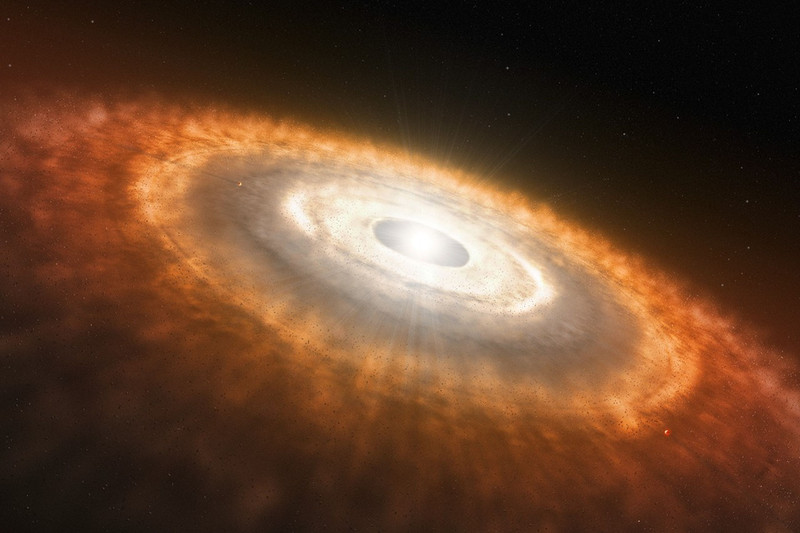
NASA Reveals New Path for Earth's Essential Life Elements
A recent study, published in Science Advances, uncovers how early Earth may have received phosphorus and nitrogen, highlighting Jupiter's critical role.
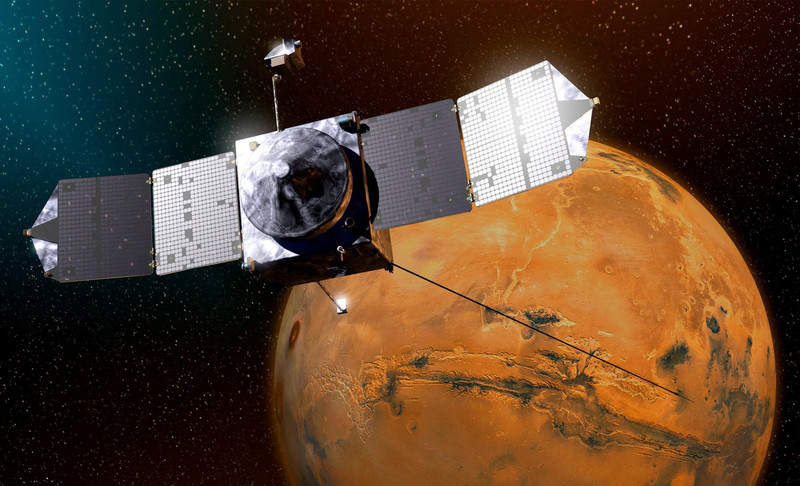
NASA's Maven Mars Orbiter Declared Out of Service After Six Months of Silence
Following an anomaly that disrupted its orbit and depleted its batteries, the Maven spacecraft, vital for understanding Mars' atmosphere, has ended its active mission. Its scientific data remains an invaluable legacy.
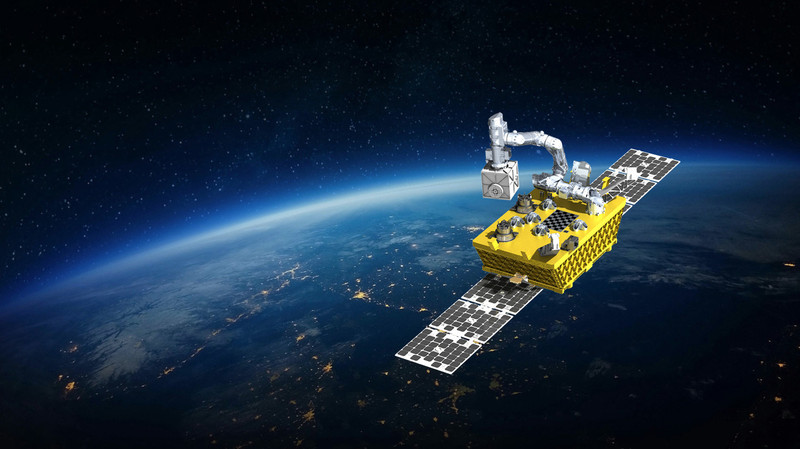
NASA Space Robotics Challenge
NASA invites U.S. researchers to submit proposals for experiments using a robotic arm that will be sent to low Earth orbit as part of the Fly Foundational Robots mission.
Latest news
View all
Stuntman Hollywood: Returns After 19 Years to PS5, Xbox Series, and PC
The iconic action and vehicular stunt franchise makes its comeback courtesy of Saber Interactive, promising a dose of nostalgia and adrenaline for the new generation.

Windows Drops NTLM: Microsoft Boosts Security with Kerberos
Microsoft is taking a crucial step to bolster security in Windows 11, announcing the deprecation of NTLM, its oldest authentication protocol, in favor of Kerberos.

Google Launches Gemma 4 12B: Local AI for Your Laptop with 16GB RAM
Google's new artificial intelligence model aims to democratize access to generative AI, allowing it to run on average consumer computers.
Comments (0)
No comments yet. Be the first!
Leave a comment