
NASA Seeks New Mars Communications Orbiter Amidst Mars Sample Return Debate
The US space agency is allocating $700 million for a new satellite, but the procurement requirements hint at a potential revival of the canceled Mars Sample Return mission.

NASA is gearing up for a new and potentially controversial procurement to build a communications orbiter for Mars. The project has $700 million already appropriated by Congress, earmarked for the construction and launch of a spacecraft that will serve as a communication link between Earth and the Red Planet. However, the implications of this acquisition could be far greater, including the possible revival of the recently canceled Mars Sample Return mission.
The space agency has stated that the procurement will be conducted under a "full and open competition." Nevertheless, this assertion raises questions among those involved in the contracting process, who fear that the competition could become complex and contentious. The need for a new spacecraft capable of relaying communications from Mars is undeniable. NASA's current primary communications relay, the Mars Reconnaissance Orbiter, has been operational for two decades and, while an exceptional spacecraft, is showing its age.
The US Congress, in a surprise move, allocated $700 million for a new Mars Telecommunications Orbiter (MTO) in legislation passed in 2025. This substantial appropriation for a relatively straightforward spacecraft design has generated significant industry interest and speculation.
The need for a new spacecraft capable of relaying communications from Mars is undeniable.
Proposals for the construction of this spacecraft, now named the Mars Telecommunications Network (MTN), were due by June 15, with a contract expected to be awarded by October 1, less than five months away. The legislation funding the Mars orbiter contains a specific clause: the spacecraft must be selected from among US companies that received funding in fiscal years 2024 or 2025 for commercial design studies for Mars Sample Return, and who also proposed an independently launched Mars telecommunication orbiter to support an end-to-end Mars Sample Return mission.
This requirement has drawn attention, as it links the procurement of a relatively simple communications orbiter with the prior need to have proposed a solution for a sample return mission. The question arises whether Congress was seeking to favor a particular company. A hint of what might be unfolding comes from Rocket Lab's "Q2 Investor Update." In it, the company included a slide about its plans for Mars missions, mentioning the $700 million appropriation for an MTO. Rocket Lab stated it was the only commercial provider to propose an MTO as part of a Mars Sample Return mission, designed to support human exploration and science missions to Mars.
Rocket Lab is among the eligible companies to compete, alongside others such as Blue Origin, L3Harris, Lockheed Martin, Northrop Grumman, SpaceX, Quantum Space, and Whittinghill Aerospace. These companies met the requirement of having received funding for Mars Sample Return design studies. NASA had initially indicated that the solicitation would be released by May 1, but it suffered a two-week delay. These timelines are critical, as the agency aims to have the spacecraft built and launched before the next Mars launch window in late 2028.
Sources suggest that the delay in releasing the solicitation may be partly due to a letter sent by Senator Roger Wicker, which was interpreted as favorable to Rocket Lab's position in the competition. Despite efforts, a copy of this letter has not been obtained, and NASA, in an informational "blackout" period due to the solicitation, declined to confirm its existence or release it.
Senator Wicker's interest in Rocket Lab, a company with origins in New Zealand and headquarters in California, could be linked to the Stennis Space Center in Mississippi. Rocket Lab already tests its rocket engines there and plans to do so for its Mars orbiter. Furthermore, it has been indicated that the company might expand its testing activities at the center if the Mars Sample Return (MSR) program were to be resurrected. This mission, which aimed to bring Martian rocks and soil back to Earth, faced severe scrutiny three years ago due to a projected cost increase to $10 billion, leading NASA to solicit more economical commercial proposals.
Although the Mars Sample Return mission was officially canceled in January by the White House and Congress, there's a possibility it's not entirely dead. In March, the US Senate Committee on Commerce, Science, and Transportation unanimously passed a new NASA Authorization Act calling for the reinstatement of Mars Sample Return, setting a maximum cost of $8 billion. While this legislation has not yet been approved by the full Congress, it suggests a potential revival of the mission, which could benefit companies like Rocket Lab in future contracts, including testing in Mississippi.
Article topics
Related articles

NASA Reveals New Path for Earth's Essential Life Elements
A recent study, published in Science Advances, uncovers how early Earth may have received phosphorus and nitrogen, highlighting Jupiter's critical role.
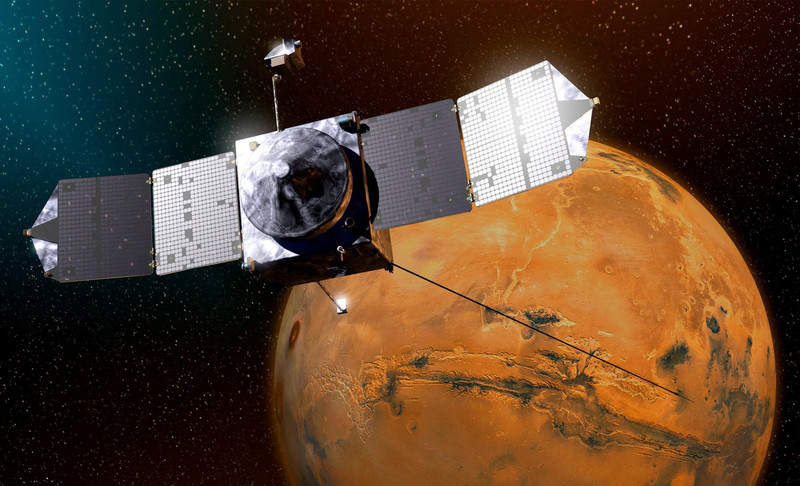
NASA's Maven Mars Orbiter Declared Out of Service After Six Months of Silence
Following an anomaly that disrupted its orbit and depleted its batteries, the Maven spacecraft, vital for understanding Mars' atmosphere, has ended its active mission. Its scientific data remains an invaluable legacy.
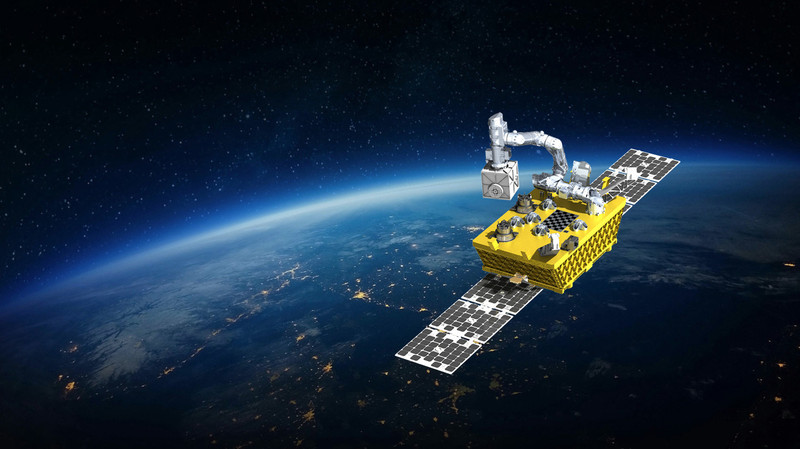
NASA Space Robotics Challenge
NASA invites U.S. researchers to submit proposals for experiments using a robotic arm that will be sent to low Earth orbit as part of the Fly Foundational Robots mission.
Latest news
View all
Stuntman Hollywood: Returns After 19 Years to PS5, Xbox Series, and PC
The iconic action and vehicular stunt franchise makes its comeback courtesy of Saber Interactive, promising a dose of nostalgia and adrenaline for the new generation.

Windows Drops NTLM: Microsoft Boosts Security with Kerberos
Microsoft is taking a crucial step to bolster security in Windows 11, announcing the deprecation of NTLM, its oldest authentication protocol, in favor of Kerberos.
Google Launches Gemma 4 12B: Local AI for Your Laptop with 16GB RAM
Google's new artificial intelligence model aims to democratize access to generative AI, allowing it to run on average consumer computers.
Comments (0)
No comments yet. Be the first!
Leave a comment