
Muse: Meta's New AI Trained by Over 1,000 Doctors to Revolutionize Healthcare
Meta has unveiled Muse, an innovative general-purpose artificial intelligence meticulously trained by over 1,000 medical professionals to transform the healthcare sector. This system promises to be an unprecedented clinical and scientific support tool, enhancing efficiency and accuracy in medical decision-making.
Meta has taken a significant leap in the field of artificial intelligence applied to healthcare with the introduction of Muse. This general-purpose AI has been developed with a singular focus: to transform healthcare, and to achieve this, it has directly collaborated with over 1,000 doctors. The company assembled a multidisciplinary team of experts, including physicians, data scientists, and engineers, who actively participated in the design, data feeding, and validation of this system. The objective is clear: to establish Muse as a cutting-edge clinical and scientific support tool, capable of offering unprecedented backing in the healthcare sector, from research to daily consultations.
A Project with a Clinical Focus from Inception
What sets Muse apart from other AI models is its deep grounding in clinical practice from its earliest stages. According to Meta's official statement, medical professionals not only supervised but actively collaborated in every phase of the training process. The system was fed with a vast and complex database that integrates specialized medical texts, thousands of peer-reviewed scientific articles, and a large volume of real, anonymized clinical cases. This combination of sources allows Muse to understand and analyze health information with a depth and nuance that few current systems can match, ensuring that its responses are not only accurate but also contextually relevant to the medical environment.
One of Muse's major differentiators is its ability to interpret complex clinical questions and provide evidence-based answers, transparently citing relevant sources and bibliography. Meta's developers emphasized that the model's training included a wide range of real-world scenarios and clinical simulations, which is crucial to ensure that the AI can effectively respond to both basic queries and highly complex consultations. The direct participation of doctors was fundamental in detecting and correcting inherent data biases, adjusting technical language to make responses understandable and useful, and ensuring the tool is practical for both healthcare professionals and patients seeking to better understand their condition.
Key Capabilities in Healthcare
The development of Muse represents a significant advancement in the application of artificial intelligence to medicine, offering a range of capabilities designed to optimize clinical practice. The system is capable of answering complex clinical questions with high precision, interpreting detailed medical histories, analyzing laboratory and imaging study results, and even suggesting possible differential diagnoses based on the information provided. This functionality is invaluable for doctors, allowing them to quickly access relevant information and consider various diagnostic perspectives, thereby improving the quality of care.
In addition to its diagnostic capabilities, Muse can propose care protocols based on the latest clinical guidelines and alert about possible inconsistencies or errors in medical reports, acting as an additional layer of safety. Another of its standout functions is the ability to explain technical terms and complex medical concepts in simple, accessible language, facilitating effective communication between medical teams of different specialties and, crucially, between healthcare professionals and their patients. In internal tests, Muse demonstrated superior accuracy compared to the average of other AI models in various clinical tasks, underscoring its potential. Furthermore, the system allows its responses to be adapted according to the specific context and medical specialty, greatly expanding its potential for use in hospitals, research centers, clinics, and remote consultations, promoting more personalized and efficient medicine.
Other Capabilities of Muse and Meta's AI Ambition
While its application in medicine is a fundamental pillar, Muse was designed by Meta as a general-purpose artificial intelligence, granting it remarkable versatility beyond the healthcare sector. The system is capable of engaging in open and fluid conversations, generating complex and coherent texts on a wide variety of topics, summarizing information from multiple sources concisely, and solving logic and mathematical problems with high precision. This inherent flexibility allows Muse to adapt to different contexts and needs, demonstrating the scope of Meta's vision in AI development.
Meta's ambition with Muse extends beyond a single application; it seeks to create a robust and adaptable AI infrastructure that can serve as a foundation for future innovations. Muse's ability to process and generate natural language, coupled with its logical reasoning skills, positions it as a powerful tool for various industries. In the healthcare context, this versatility means that, in addition to clinical functions, Muse could be used for medical training, hospital information management, or even the development of new therapies. The integration of Muse into healthcare environments ultimately aims to reduce interpretation errors, increase efficiency in analyzing massive data, and support medical decision-making with verified and high-quality information, marking a milestone at the intersection of technology and health.
Article topics
Related articles
Google Launches Gemma 4 12B: Local AI for Your Laptop with 16GB RAM
Google's new artificial intelligence model aims to democratize access to generative AI, allowing it to run on average consumer computers.
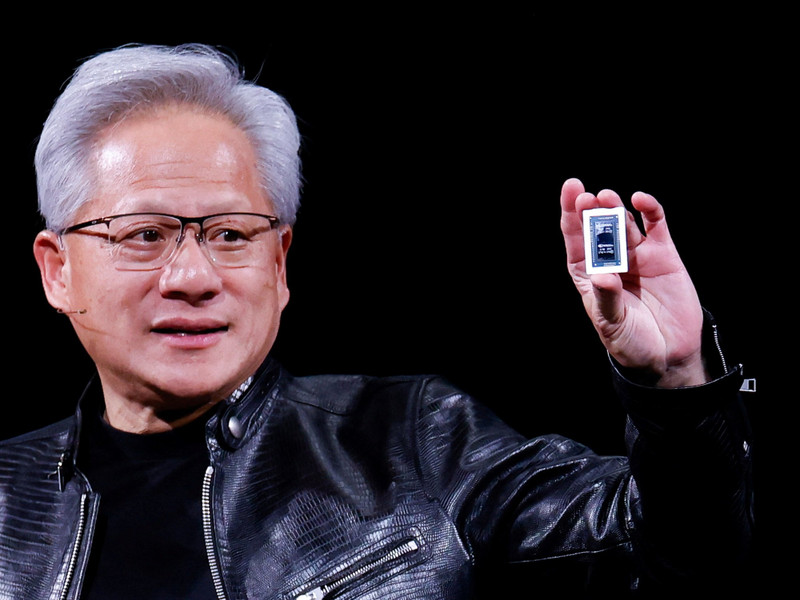
Nvidia Challenges Intel and AMD with RTX Spark Superchip for PCs
Nvidia introduced RTX Spark, a processor promising to bring advanced artificial intelligence directly to your PC, without cloud dependence, and boost gaming to unprecedented levels on conventional machines.

Anthropic's Claude Opus 4.8 boosts "honesty" and reduces code flaws
Anthropic's new AI model, Claude Opus 4.8, launches this Thursday with a focus on transparency and error reduction, giving users more control over computational effort.
Latest news
View all
Stuntman Hollywood: Returns After 19 Years to PS5, Xbox Series, and PC
The iconic action and vehicular stunt franchise makes its comeback courtesy of Saber Interactive, promising a dose of nostalgia and adrenaline for the new generation.
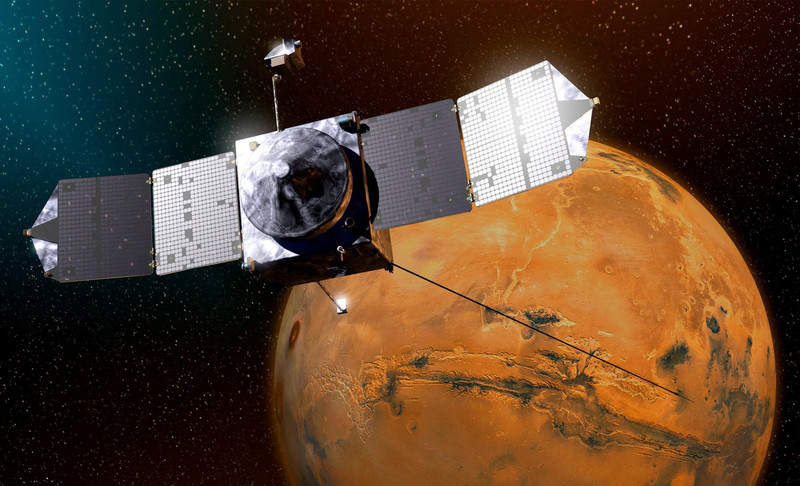
NASA's Maven Mars Orbiter Declared Out of Service After Six Months of Silence
Following an anomaly that disrupted its orbit and depleted its batteries, the Maven spacecraft, vital for understanding Mars' atmosphere, has ended its active mission. Its scientific data remains an invaluable legacy.

Windows Drops NTLM: Microsoft Boosts Security with Kerberos
Microsoft is taking a crucial step to bolster security in Windows 11, announcing the deprecation of NTLM, its oldest authentication protocol, in favor of Kerberos.
Comments (0)
No comments yet. Be the first!
Leave a comment