
Moving Beyond Bots and Humans in Online Detection
The line between bots and humans online is blurring, requiring systems to better understand intent and behavior.
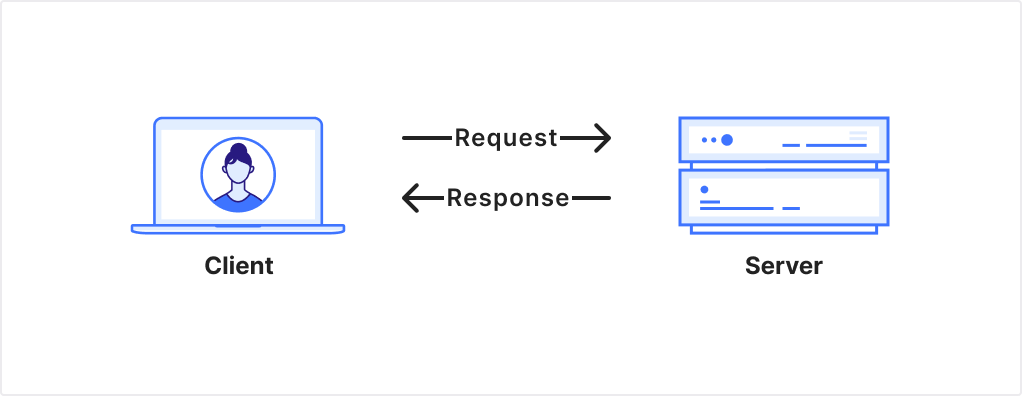
Humans interact with the digital world through devices, keyboards, screens, and browsers. What’s called "human detection" online involves recognizing patterns in how people use these tools. Recently, these patterns have shifted: CEOs summarize news via browsers, enthusiasts automate ticket purchases, visually impaired users customize screen readers, and companies route traffic through zero trust proxies.
Website owners aim to protect data, manage resources, control content, and prevent abuse. These challenges aren’t solved simply by knowing if a client is human or a bot. There are desired bots and unwanted humans. The focus should be on understanding intent and behavior instead of just identity.
Detecting automation remains crucial, but as distinctions between actors fade, systems must adapt to a future where "bots vs. humans" is no longer the main focus. What truly matters are questions like: Is this attack traffic? Is crawler load proportional? Is this user connecting from a new country? Are my ads being manipulated?
When we talk about "bots," we’re really discussing two issues. The first is whether website owners should allow known crawlers when they don’t generate useful traffic. The second involves new clients that don’t behave like traditional browsers, impacting systems like private rate limiting.
This piece explores how web protection works today and how it must evolve as the line between bots and humans continues to fade.
Article topics
Related articles

Google Launches Gemma 4 12B: Local AI for Your Laptop with 16GB RAM
Google's new artificial intelligence model aims to democratize access to generative AI, allowing it to run on average consumer computers.

Nvidia Challenges Intel and AMD with RTX Spark Superchip for PCs
Nvidia introduced RTX Spark, a processor promising to bring advanced artificial intelligence directly to your PC, without cloud dependence, and boost gaming to unprecedented levels on conventional machines.

Anthropic's Claude Opus 4.8 boosts "honesty" and reduces code flaws
Anthropic's new AI model, Claude Opus 4.8, launches this Thursday with a focus on transparency and error reduction, giving users more control over computational effort.
Latest news
View all
Stuntman Hollywood: Returns After 19 Years to PS5, Xbox Series, and PC
The iconic action and vehicular stunt franchise makes its comeback courtesy of Saber Interactive, promising a dose of nostalgia and adrenaline for the new generation.

NASA's Maven Mars Orbiter Declared Out of Service After Six Months of Silence
Following an anomaly that disrupted its orbit and depleted its batteries, the Maven spacecraft, vital for understanding Mars' atmosphere, has ended its active mission. Its scientific data remains an invaluable legacy.

Windows Drops NTLM: Microsoft Boosts Security with Kerberos
Microsoft is taking a crucial step to bolster security in Windows 11, announcing the deprecation of NTLM, its oldest authentication protocol, in favor of Kerberos.
Comments (0)
No comments yet. Be the first!
Leave a comment