
Meta acquires ARI to advance in humanoid robots with AI
Meta has acquired ARI, a startup focused on developing AI for humanoid robots, strengthening its push into advanced robotics. The move highlights their focus on physical interaction capabilities.
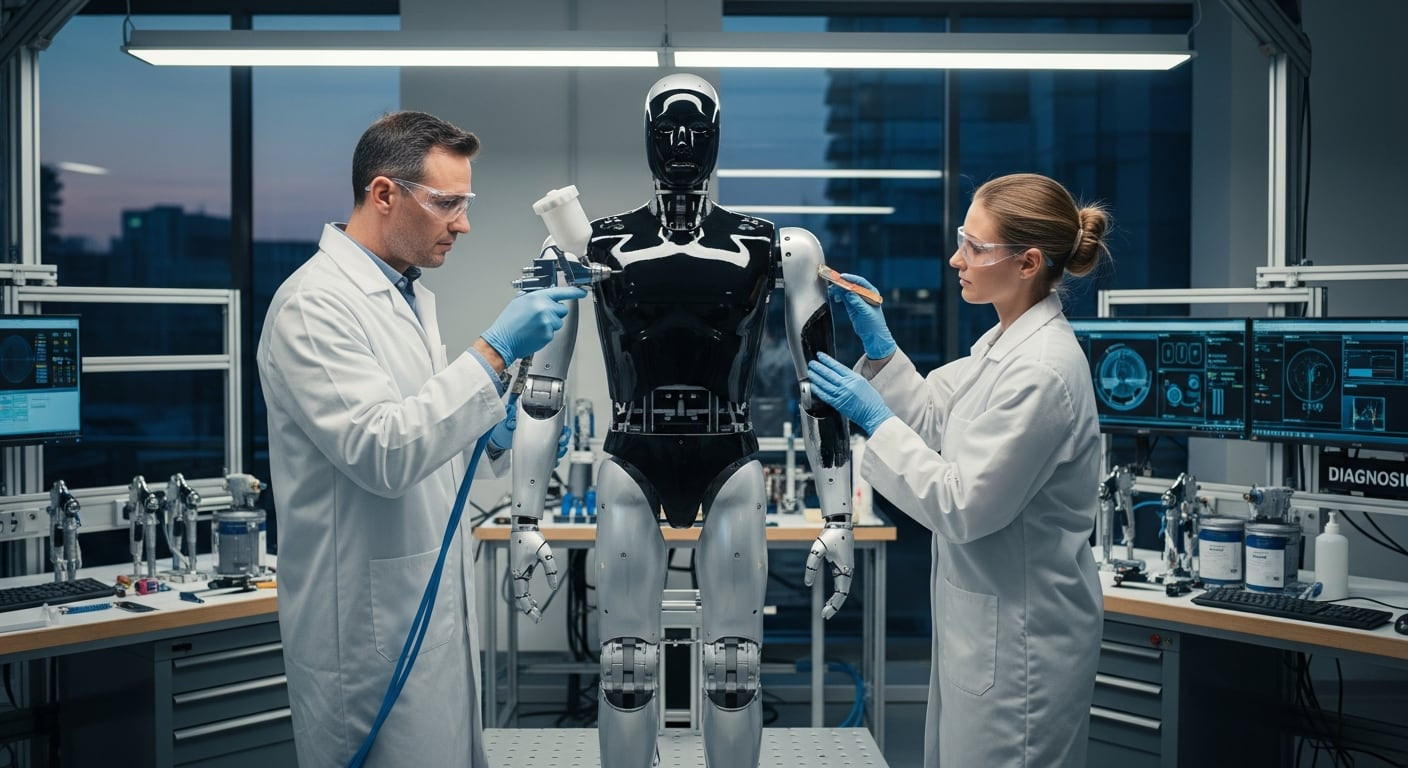
Meta, the parent company of Facebook, made a strategic move by acquiring Assured Robot Intelligence (ARI), a startup dedicated to creating AI models for humanoid robots. The news, initially reported by Bloomberg, was confirmed by both Meta and its investor AIX Ventures. Founded in San Diego last May, ARI has a team of about 20 specialists in advanced AI and robotics.
The founders, Xiaolong Wang and Lerrel Pinto, bring notable backgrounds. Wang was a researcher at Nvidia and now teaches at the University of California, San Diego. Pinto, CEO of ARI, is also a professor at New York University and co-founded Fauna Robotics, acquired by Amazon. A Meta spokesperson described ARI as "being at the forefront of robotic intelligence designed to help robots understand, predict, and adapt to human behaviors in complex environments".
The ARI team, including its founders, will join Meta Superintelligence Labs (MSL), the company’s AI research lab. This acquisition underscores Meta’s focus on developing robots with skills like manipulation and dexterity, essential for physical interaction with objects in industrial or domestic settings.
Meta has been working for years on humanoid robotics, combining AI models with hardware. Although it has yet to launch a consumer robot, its strategy aims at creating machines that learn through direct interaction with the physical world. Many experts see this approach as crucial for achieving artificial general intelligence (AGI). The ARI acquisition strengthens Meta’s position in a competitive sector where startups like Physical Intelligence, Generalist AI, and Genesis AI are also working on enabling robots to operate in diverse environments and with different forms.
Meta’s acquisition of ARI emphasizes its commitment to developing robots that learn through physical interaction, a key step toward AGI.
The industry trend points toward training robots in real-world environments rather than just digital data, to develop more human-like intelligence. The race for advanced humanoid robots continues, with Meta positioning itself as a major player in this evolving field.
Article topics
Related articles

Windows Drops NTLM: Microsoft Boosts Security with Kerberos
Microsoft is taking a crucial step to bolster security in Windows 11, announcing the deprecation of NTLM, its oldest authentication protocol, in favor of Kerberos.

Google Launches Gemma 4 12B: Local AI for Your Laptop with 16GB RAM
Google's new artificial intelligence model aims to democratize access to generative AI, allowing it to run on average consumer computers.

Nvidia Challenges Intel and AMD with RTX Spark Superchip for PCs
Nvidia introduced RTX Spark, a processor promising to bring advanced artificial intelligence directly to your PC, without cloud dependence, and boost gaming to unprecedented levels on conventional machines.
Latest news
View all
Stuntman Hollywood: Returns After 19 Years to PS5, Xbox Series, and PC
The iconic action and vehicular stunt franchise makes its comeback courtesy of Saber Interactive, promising a dose of nostalgia and adrenaline for the new generation.
NASA's Maven Mars Orbiter Declared Out of Service After Six Months of Silence
Following an anomaly that disrupted its orbit and depleted its batteries, the Maven spacecraft, vital for understanding Mars' atmosphere, has ended its active mission. Its scientific data remains an invaluable legacy.

NASA Reveals New Path for Earth's Essential Life Elements
A recent study, published in Science Advances, uncovers how early Earth may have received phosphorus and nitrogen, highlighting Jupiter's critical role.
Comments (0)
No comments yet. Be the first!
Leave a comment