
Lithium-Air Batteries: A New Era of Energy Storage Promising 10x More Capacity
Researchers in South Korea have developed an innovative lithium-air battery technology that promises to store up to ten times more energy than current lithium-ion batteries, thanks to a modified tungsten diselenide catalyst. This breakthrough could revolutionize electric vehicles and renewable energy systems.
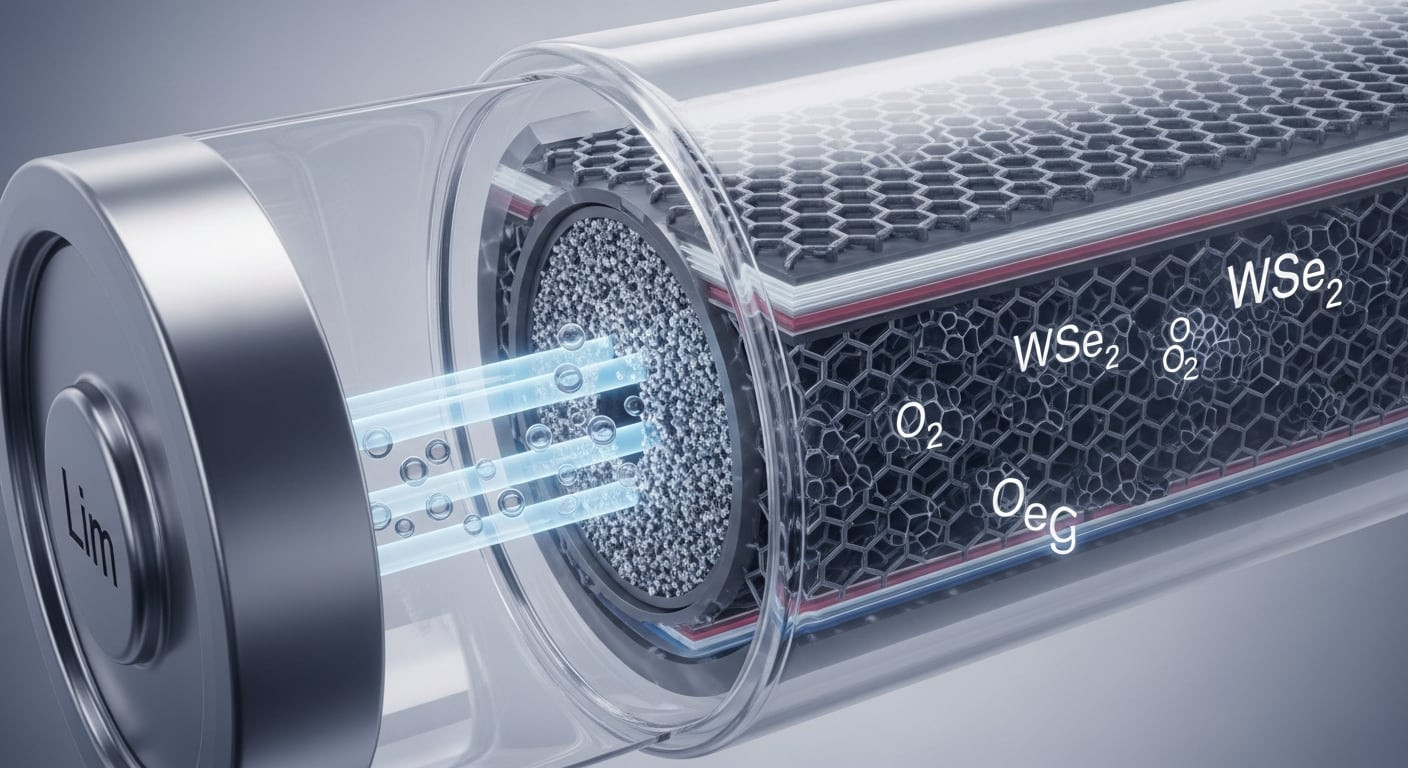
The future of electric mobility and sustainable energy hinges significantly on our ability to store energy efficiently and at scale. While lithium-ion batteries have been instrumental in the technological revolution of recent decades, they face inherent limitations in energy density and cycle life that hinder the development of longer-range electric vehicles and more robust renewable energy storage systems. In this relentless pursuit of superior solutions, a team of researchers from the Korea Institute of Science and Technology (KIST) and the Institute for Advanced Engineering (IAE) has unveiled a breakthrough that could fundamentally change the game: a new lithium-air battery technology with the potential for up to ten times greater energy storage capacity.
The Technological Leap of Lithium-Air Batteries
Lithium-air (Li-air) batteries represent one of the most promising emerging technologies in the field of energy storage. Their primary appeal lies in their theoretical capacity to offer significantly higher energy densities than any other commercially available solution, far surpassing the limitations of lithium-ion batteries. This is because they utilize oxygen from the air as one of their reactants, eliminating the need to store a heavy oxidant within the battery, which drastically reduces weight and volume. However, despite their immense potential, lithium-air batteries have faced considerable challenges that have prevented their commercialization, primarily the sluggishness of chemical reactions during charging and discharging, and a very short lifespan due to material degradation.
These obstacles largely stem from the scarcity of active catalytic sites on the electrodes, which are essential for the oxygen reduction reactions (during discharge) and oxygen evolution reactions (during charge). Without efficient catalysis, reactions are slow, energy is lost as heat, and the battery degrades rapidly. The research from KIST and IAE directly addresses these limitations, opening a window to the practical viability of this high-energy-density technology, which could power a new generation of devices and systems with unprecedented energy demands.
An Innovative Catalyst: Modified Tungsten Diselenide
The key to this breakthrough lies in the development of a revolutionary catalyst, fabricated from tungsten diselenide (WSe₂), a two-dimensional material known for its unique properties. Until now, the surface of WSe₂ was only partially active in the fundamental electrochemical reactions required for lithium-air battery operation. The research team managed to overcome this limitation through an ingenious structural modification: the incorporation of platinum atoms and the deliberate creation of "atomic vacancies"—that is, empty spaces in the material's crystal lattice—within the WSe₂ structure. This manipulation transformed the entire surface of the material into a fully active catalytic plane.
These atomic vacancies act as ideal anchoring points for oxygen molecules, facilitating and accelerating both oxygen reduction and evolution reactions. The addition of platinum atoms, a noble metal with excellent catalytic properties, further boosts this activity. This clever design not only maximizes the catalytic efficiency of WSe₂ but also maintains excellent electrical conductivity, a critical factor for overall battery performance. The detailed results of this research were published in the prestigious journal Sustainable Energy & Fuels, validating the scientific robustness of this discovery.
Superior Performance and Enhanced Stability
The effectiveness of this new catalyst has been demonstrated through rigorous testing. The lithium-air battery equipped with the modified WSe₂ achieved a stable cycle life of over 550 charge and discharge cycles. This number is extraordinarily high for a lithium-air battery, especially considering it was maintained even under rapid operating conditions, where batteries typically degrade more quickly. To put it in perspective, this durability and stability significantly surpassed traditional high-cost catalysts such as platinum on carbon (Pt/C) and ruthenium oxide (RuO₂), which are industry standards but have limitations in lifespan and cost.
The achieved operational longevity represents a critical advancement, as rapid degradation has been one of the biggest hurdles for the adoption of lithium-air batteries. The researchers emphasize that the success lies in the catalyst's design, which not only increases the number of active sites but distributes them uniformly across the entire material surface. This overcomes the structural limitations of conventional two-dimensional materials, where only specific edges or defects are typically catalytically active, leading to suboptimal performance and limited lifespan.
Implications for the Future of Energy
The implications of this technology are vast and transformative. A battery capable of storing ten times more energy than current lithium-ion batteries could mean electric vehicles with ranges exceeding 1,000 kilometers on a single charge, eliminating "range anxiety" and accelerating the transition to sustainable transportation. In the realm of renewable energy, it would enable much more efficient and compact grid-scale energy storage systems, facilitating the integration of intermittent sources like solar and wind, and stabilizing electrical grids.
Beyond vehicles and the grid, this innovation could power a new generation of portable electronic devices, drones with extended flight times, and autonomous robots with prolonged operational capabilities. While the commercialization of this technology still requires overcoming challenges such as production scalability and the optimization of other battery components, this breakthrough from KIST and IAE marks a fundamental milestone. It demonstrates that the path to unprecedented energy density is feasible, bringing us closer to a future where clean, abundant energy is an everyday reality.
Related articles

NASA Reveals New Path for Earth's Essential Life Elements
A recent study, published in Science Advances, uncovers how early Earth may have received phosphorus and nitrogen, highlighting Jupiter's critical role.
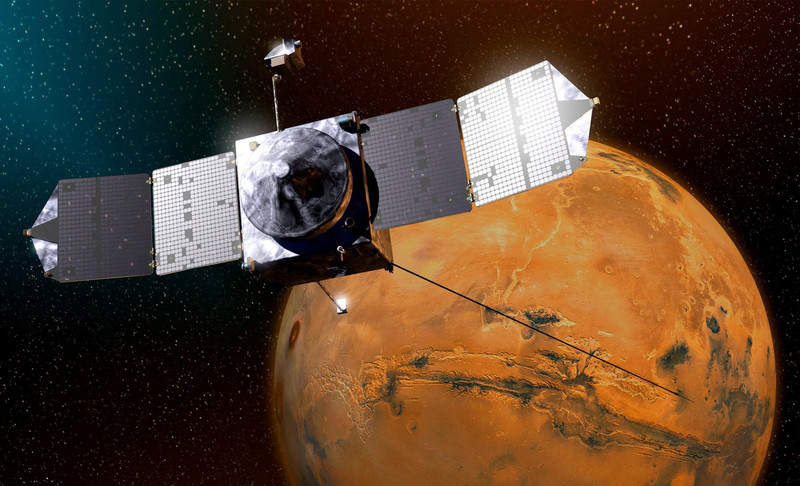
NASA's Maven Mars Orbiter Declared Out of Service After Six Months of Silence
Following an anomaly that disrupted its orbit and depleted its batteries, the Maven spacecraft, vital for understanding Mars' atmosphere, has ended its active mission. Its scientific data remains an invaluable legacy.
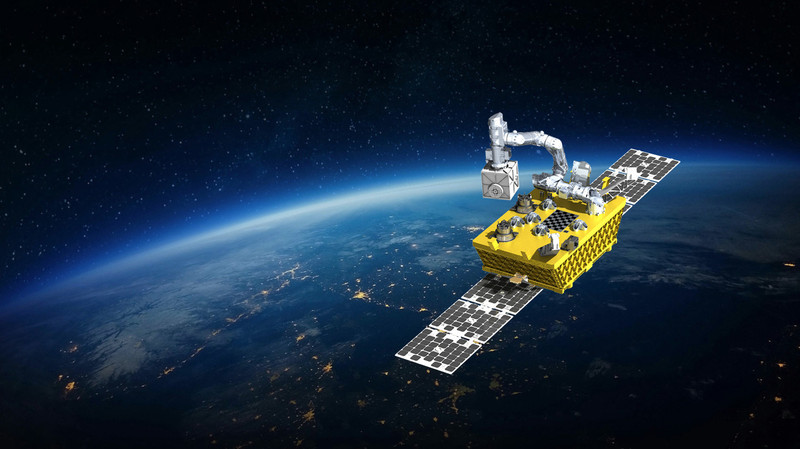
NASA Space Robotics Challenge
NASA invites U.S. researchers to submit proposals for experiments using a robotic arm that will be sent to low Earth orbit as part of the Fly Foundational Robots mission.
Latest news
View all
Stuntman Hollywood: Returns After 19 Years to PS5, Xbox Series, and PC
The iconic action and vehicular stunt franchise makes its comeback courtesy of Saber Interactive, promising a dose of nostalgia and adrenaline for the new generation.

Windows Drops NTLM: Microsoft Boosts Security with Kerberos
Microsoft is taking a crucial step to bolster security in Windows 11, announcing the deprecation of NTLM, its oldest authentication protocol, in favor of Kerberos.

Google Launches Gemma 4 12B: Local AI for Your Laptop with 16GB RAM
Google's new artificial intelligence model aims to democratize access to generative AI, allowing it to run on average consumer computers.
Comments (0)
No comments yet. Be the first!
Leave a comment