
Hubble uncovers a spiral galaxy with a supermassive black hole
NASA released an exclusive image of NGC 3137, a galaxy 53 million light-years away with a core hosting a black hole of 60 million suns.
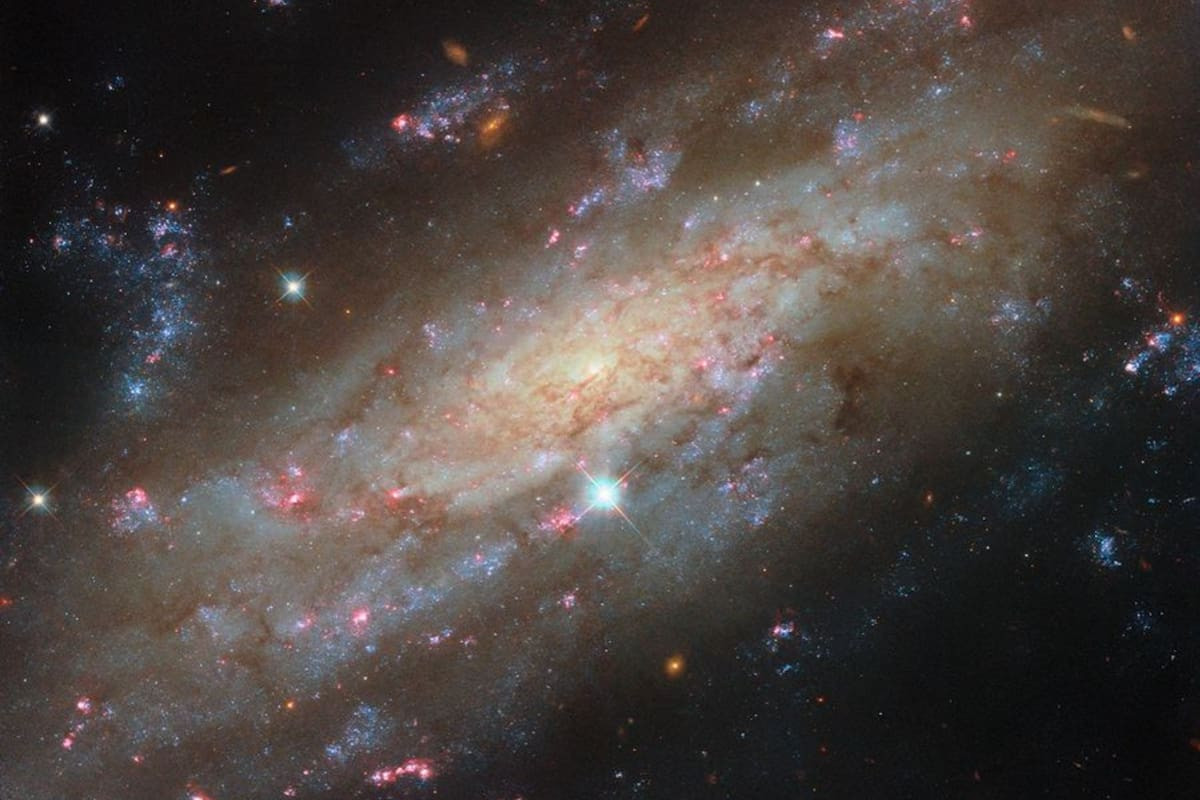
The Hubble Space Telescope captured an extraordinary image of NGC 3137, a spiral galaxy located in the constellation Antlia. This galaxy, about 53 million light-years from Earth, stands out for its bright clusters and gas clouds. The image reveals new details about its structure and composition.
According to NASA’s report published on May 1, this galaxy features a nucleus that contains a supermassive black hole with a mass equivalent to 60 million suns. The observation was made from an inclined perspective, allowing a clear view of its spiral arms and star-forming regions.
The image shows an inclined structure from the Earth's perspective, with a yellowish core and outer blue regions, indicating different star types.
The galaxy’s core appears bright in yellow tones, caused by older, cooler stars, contrasting with the hot, young stars seen in blue on the outskirts. Dust clouds and star formation regions are also visible in the image.
The black hole at the center is one of the most intriguing features for astronomers. While it cannot be observed directly, its gravitational effects on surrounding material reveal its presence. Its estimated mass is about 60 million times that of the Sun.
The spiral structure, viewed from this angle, shows more diffuse and “feathery” arms than typical galaxies. NGC 3137 is part of the NGC 3175 group, which shares similarities with the Local Group where the Milky Way resides.
This group, still under study, is dominated by NGC 3137 and NGC 3175, with over 500 dwarf galaxy candidates identified. Studying these nearby environments helps astronomers understand galaxy evolution and black hole growth in different settings.
This Hubble discovery broadens our understanding of spiral galaxies and their active nuclei, raising new questions about the formation and development of supermassive black holes across the universe.
Related articles
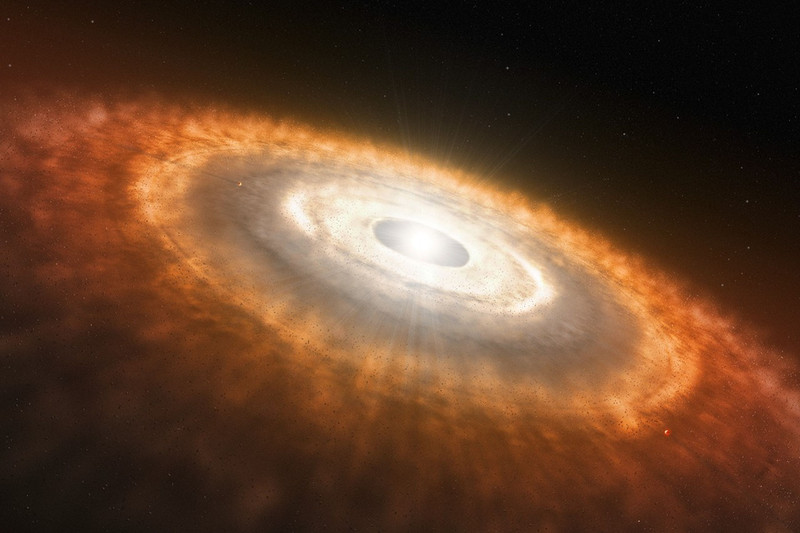
NASA Reveals New Path for Earth's Essential Life Elements
A recent study, published in Science Advances, uncovers how early Earth may have received phosphorus and nitrogen, highlighting Jupiter's critical role.
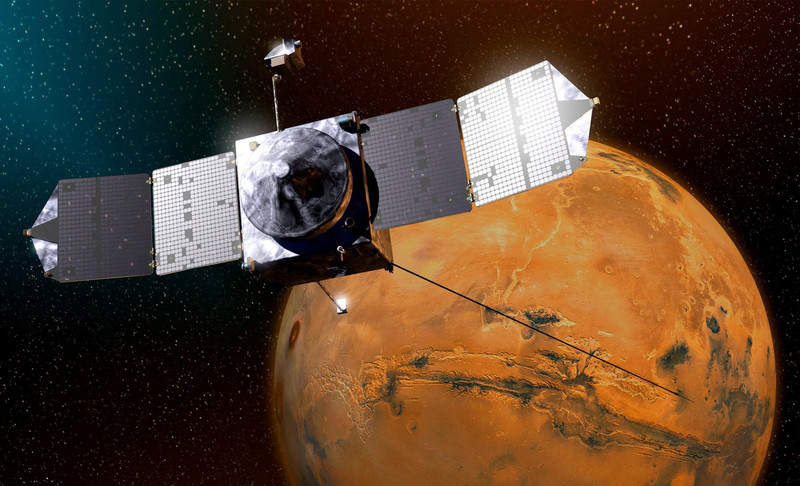
NASA's Maven Mars Orbiter Declared Out of Service After Six Months of Silence
Following an anomaly that disrupted its orbit and depleted its batteries, the Maven spacecraft, vital for understanding Mars' atmosphere, has ended its active mission. Its scientific data remains an invaluable legacy.
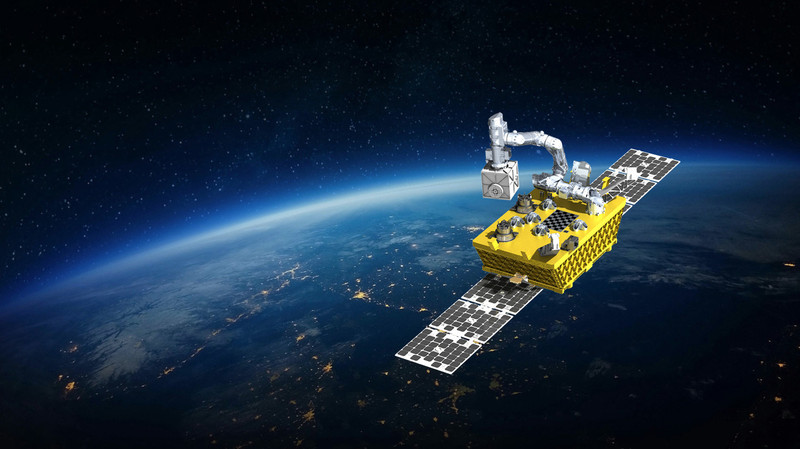
NASA Space Robotics Challenge
NASA invites U.S. researchers to submit proposals for experiments using a robotic arm that will be sent to low Earth orbit as part of the Fly Foundational Robots mission.
Latest news
View all
Stuntman Hollywood: Returns After 19 Years to PS5, Xbox Series, and PC
The iconic action and vehicular stunt franchise makes its comeback courtesy of Saber Interactive, promising a dose of nostalgia and adrenaline for the new generation.

Windows Drops NTLM: Microsoft Boosts Security with Kerberos
Microsoft is taking a crucial step to bolster security in Windows 11, announcing the deprecation of NTLM, its oldest authentication protocol, in favor of Kerberos.
Google Launches Gemma 4 12B: Local AI for Your Laptop with 16GB RAM
Google's new artificial intelligence model aims to democratize access to generative AI, allowing it to run on average consumer computers.
Comments (0)
No comments yet. Be the first!
Leave a comment