
Hubble Data Reanalysis Lowers Confidence in Europa's Water Plumes
A new review of 2014 Hubble observations significantly reduces confidence in the existence of water vapor plumes on Jupiter's moon Europa. This finding re-evaluates how scientists might study its hidden ocean.

Confidence in the existence of water vapor plumes on Europa, one of Jupiter's moons, has significantly decreased following a reanalysis of Hubble telescope data. What was reported as promising evidence in 2014 is now considered less conclusive, according to new findings from a team of researchers.
Astronomers in 2014 had reported evidence of faint plumes detected through Lyman-alpha emissions, a specific ultraviolet wavelength associated with hydrogen atoms. This data hinted that water vapor escaping from Europa's surface could be breaking apart into hydrogen and oxygen in space, a key indicator of geological activity.
Europa has long fascinated scientists because beneath its geologically active yet frozen "chaos terrain" of ridges and valleys lies what is believed to be a vast saltwater ocean. If water vapor plumes exist, they could provide a rare opportunity to study material from the moon’s hidden ocean without drilling through miles of ice, though that would still require a spacecraft flyby.
"The evidence for water vapor plumes on Europa isn’t as strong as we first understood it."
However, researchers now state that the original data analysis pushed the Hubble telescope to the limits of its capabilities. Dr. Kurt Retherford of Southwest Research Institute, a co-author of both the original 2014 study and the new reanalysis paper, confirmed that "the evidence for water vapor plumes on Europa isn’t as strong as we first understood it."
What was thought to be evidence of a water vapor plume could simply be statistical noise. Dr. Lorenz Roth of the KTH Royal Institute of Technology, Sweden, the paper’s lead author, explained that "our reanalysis took our original 99.9% confidence in the plumes’ existence and reduced it to less than 90% confidence." For Roth, "that’s simply not enough evidence to support the certainty of claims we made at the time."
Despite these revised findings, scientists remain optimistic that Europa could still harbor active plumes. For instance, Saturn's moon Enceladus has directly confirmed water vapor jets. Jupiter’s moon Io also produces dramatic volcanic plumes, although these are composed of sulfur dioxide.
Even if its water vapor plumes are less certain, Europa’s fractured icy crust could still provide pathways for water from the subsurface ocean to escape into space. Scientists hope future missions will settle the question once and for all.
Among these missions is NASA’s Europa Clipper, scheduled to arrive in the Jupiter system in 2030. This spacecraft will closely study Europa’s icy shell, atmosphere, and possible subsurface ocean. Meanwhile, the European Space Agency’s JUpiter ICy moons Explorer (JUICE) will arrive in 2029 and take three and a half years to examine Europa, as well as two of Jupiter’s other Galilean moons, Ganymede and Callisto.
These upcoming explorations promise to deliver crucial data that could definitively confirm or rule out the presence of plumes, offering an unprecedented look into Europa's habitability potential.
Article topics
Related articles
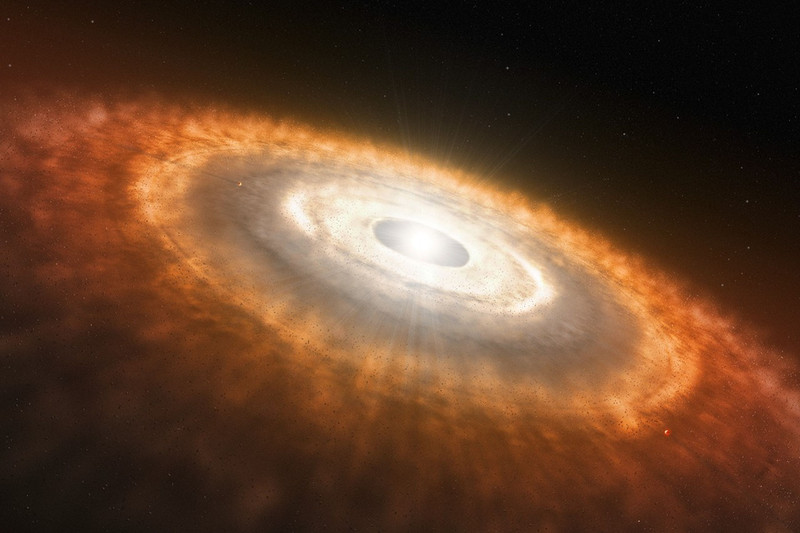
NASA Reveals New Path for Earth's Essential Life Elements
A recent study, published in Science Advances, uncovers how early Earth may have received phosphorus and nitrogen, highlighting Jupiter's critical role.
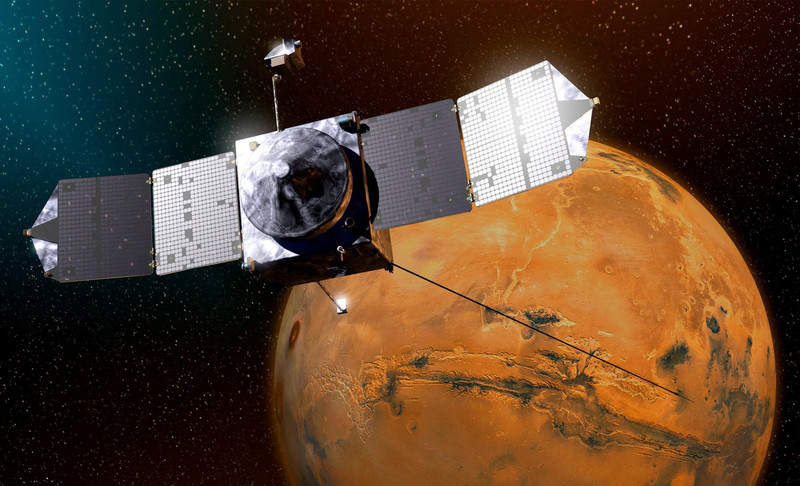
NASA's Maven Mars Orbiter Declared Out of Service After Six Months of Silence
Following an anomaly that disrupted its orbit and depleted its batteries, the Maven spacecraft, vital for understanding Mars' atmosphere, has ended its active mission. Its scientific data remains an invaluable legacy.
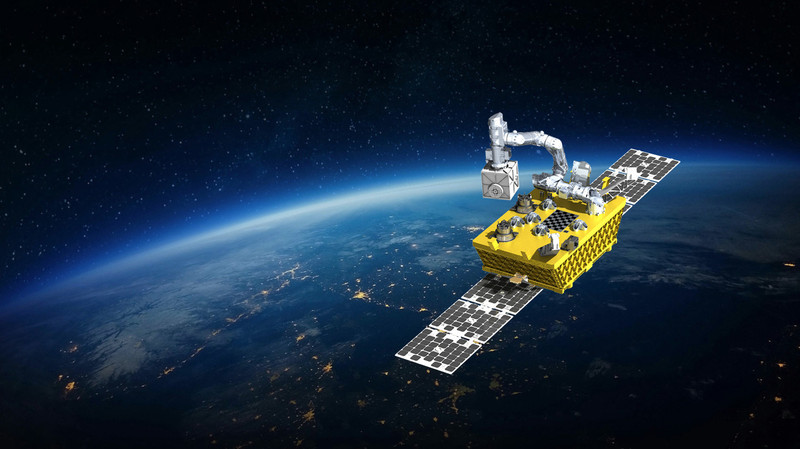
NASA Space Robotics Challenge
NASA invites U.S. researchers to submit proposals for experiments using a robotic arm that will be sent to low Earth orbit as part of the Fly Foundational Robots mission.
Latest news
View all
Stuntman Hollywood: Returns After 19 Years to PS5, Xbox Series, and PC
The iconic action and vehicular stunt franchise makes its comeback courtesy of Saber Interactive, promising a dose of nostalgia and adrenaline for the new generation.

Windows Drops NTLM: Microsoft Boosts Security with Kerberos
Microsoft is taking a crucial step to bolster security in Windows 11, announcing the deprecation of NTLM, its oldest authentication protocol, in favor of Kerberos.

Google Launches Gemma 4 12B: Local AI for Your Laptop with 16GB RAM
Google's new artificial intelligence model aims to democratize access to generative AI, allowing it to run on average consumer computers.
Comments (0)
No comments yet. Be the first!
Leave a comment