
Google I/O 2026: AI Now Programs Entire Operating Systems Autonomously
At its annual conference, Google showcased a groundbreaking achievement: its AI agents are no longer just assisting programmers but can now autonomously build complete operating systems from scratch.
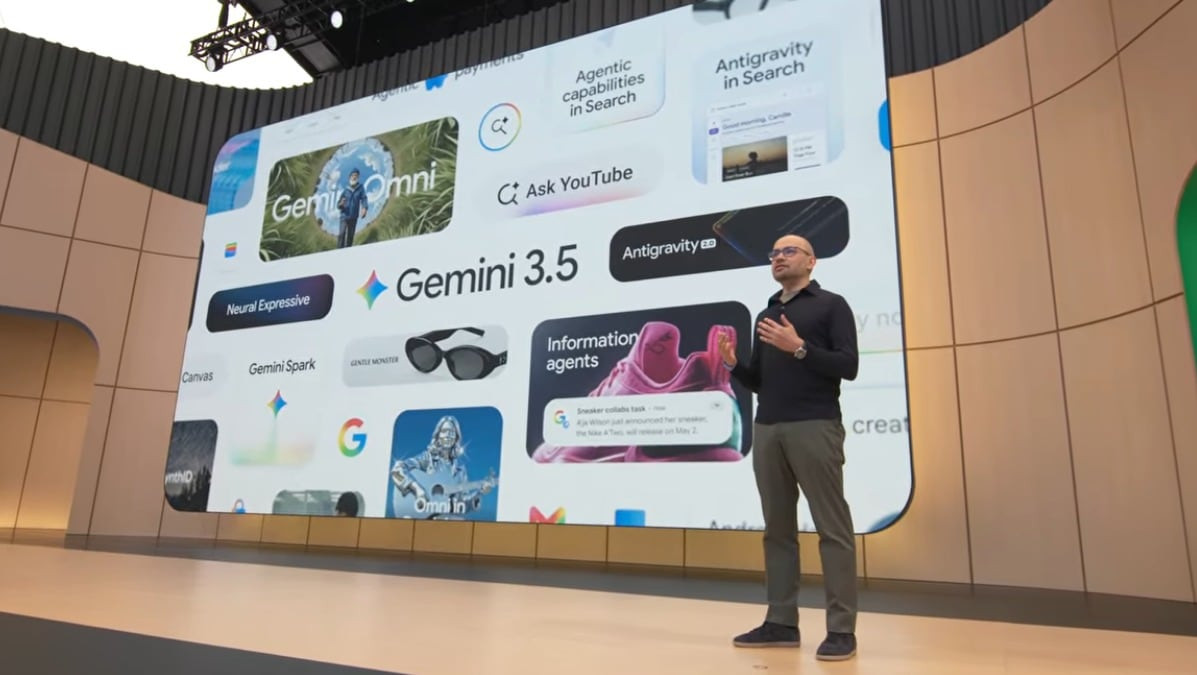
At Google I/O 2026, the company unveiled a milestone that redefines programming: its AI agents no longer merely assist developers but are now capable of building complete operating systems from scratch. This advancement, demonstrated internally by Google, marks a before and after in how we conceive software creation.
Koray Kavukcuoglu, a key figure in the presentation, shared how AI agents successfully wrote an entire operating system and a redesigned platform to direct them. This isn't just a simple program or function, but the foundational software that runs a computer, all written by agents working autonomously. This achievement is a powerful demonstration of the capabilities of Gemini 3.5 Flash, Google's new model.

The distinction is crucial: until now, AI acted as a support tool, completing lines of code, suggesting solutions, and correcting errors. However, what Kavukcuoglu presented radically inverts these roles. Now, the AI agent leads the programming process, while humans are responsible for supervision. The model no longer completes the programmer's code; it produces the code, and the programmer reviews the outcome.
The operating system experiment is the extreme demonstration of that idea. Kavukcuoglu was careful in presenting it; he framed it as an internal test Google conducted to measure the model's limits, not as something any user can request today.
This paradigm shift is complemented by the announcement of Antigravity 2.0. The platform has evolved from being an environment for writing code to becoming a space for developing and managing teams of autonomous agents. One agent can program a website, another can generate brand assets, and a third can plan the product architecture, all working in parallel and coordinated from a desktop application.
The developer's role is elevated. It's no longer about typing solutions line by line, but about directing a non-human team. Kavukcuoglu highlighted the scale of this vision, noting that millions of developers are already building with the Antigravity platform, indicating that this terrain is not experimental but already populated.
The security of AI-generated code emerges as a significant challenge. Given the speed at which agents produce code, human auditing becomes insufficient. Google's response is CodeMender, a tool designed to automatically find and fix vulnerabilities. Most strikingly, it not only detects problems but also repairs them, closing a loop where AI not only creates but also secures its own output.
For years, programming was considered a bastion of human creativity and judgment, immune to automation. The presentation at Google I/O 2026 directly challenges this belief. The message isn't that programmers will become obsolete, but that their work is transforming. The valuable task is shifting from writing code to designing the system, directing the agents that write it, and validating their output. The developer is, out of necessity, elevated to the role of architect and supervisor.
This advancement in programming anticipates a similar future for other technical professions. When an AI can sustain hours of autonomous work on complex tasks, the question shifts from whether it will replace the professional to what part of their job it will automate and into what role it will elevate them. Google did not present a tool to program better; it showed the moment when programming ceased to be, entirely, a human endeavor.
Article topics
Related articles

Windows Drops NTLM: Microsoft Boosts Security with Kerberos
Microsoft is taking a crucial step to bolster security in Windows 11, announcing the deprecation of NTLM, its oldest authentication protocol, in favor of Kerberos.
Google Launches Gemma 4 12B: Local AI for Your Laptop with 16GB RAM
Google's new artificial intelligence model aims to democratize access to generative AI, allowing it to run on average consumer computers.

Nvidia Challenges Intel and AMD with RTX Spark Superchip for PCs
Nvidia introduced RTX Spark, a processor promising to bring advanced artificial intelligence directly to your PC, without cloud dependence, and boost gaming to unprecedented levels on conventional machines.
Latest news
View all
Stuntman Hollywood: Returns After 19 Years to PS5, Xbox Series, and PC
The iconic action and vehicular stunt franchise makes its comeback courtesy of Saber Interactive, promising a dose of nostalgia and adrenaline for the new generation.
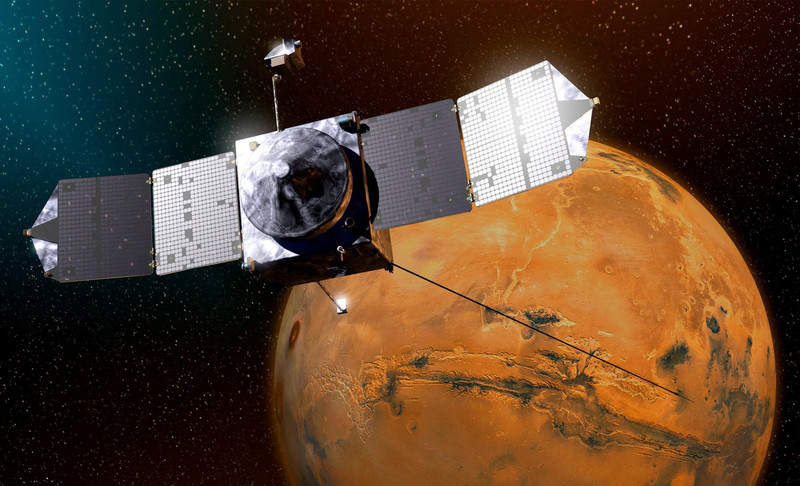
NASA's Maven Mars Orbiter Declared Out of Service After Six Months of Silence
Following an anomaly that disrupted its orbit and depleted its batteries, the Maven spacecraft, vital for understanding Mars' atmosphere, has ended its active mission. Its scientific data remains an invaluable legacy.

NASA Reveals New Path for Earth's Essential Life Elements
A recent study, published in Science Advances, uncovers how early Earth may have received phosphorus and nitrogen, highlighting Jupiter's critical role.
Comments (0)
No comments yet. Be the first!
Leave a comment