
CSIC Breakthrough: New Membrane Boosts Hydrogen Purification Tenfold
A team from Spain's Institute of Materials Science of Madrid (ICMM) at CSIC has made a pivotal discovery. They developed a membrane that dramatically improves hydrogen purification efficiency, a critical step for clean energy.

A research team from the Institute of Materials Science of Madrid (ICMM) of the Spanish National Research Council (CSIC) has achieved an extraordinary breakthrough. They developed an innovative membrane that boosts hydrogen purification efficiency by nearly tenfold. This milestone promises to revolutionize key industries, paving a faster and more sustainable path toward clean energy.
The new membrane is crafted from polysulfone, a robust polymer, reinforced with a porous material. It was manufactured using mechanochemical synthesis, a process that optimizes its structure. Data from the study, published in the “Journal of Membrane Science”, is compelling. The membrane increases hydrogen permeability by over 800% and improves selectivity by approximately 30%.
This technological advancement allows for obtaining purer hydrogen more quickly and with less waste generation. It represents a significant opportunity for industrial sectors requiring efficient and sustainable purification processes. The technology incorporates porous components into the base material. This enables precise discrimination between gas molecules, ensuring only hydrogen efficiently and selectively passes through the barrier.
We now complete a synthesis in three hours that traditionally takes three days.
Eva Maya, leader of the research team, explained the design's crucial aspect. The membrane “must withstand hydrogen pressure while possessing a certain elastic component.” This combination of robustness and elasticity is essential for operating under the intense gas flow typical of industrial environments.
The mechanochemical synthesis process used to manufacture the membrane significantly shortens production times. “We now complete a synthesis in three hours that traditionally takes three days,” Maya stated in a CSIC press release. Furthermore, this method reduces the use of toxic solvents and energy consumption. This reinforces the innovation's sustainable nature and minimizes the environmental impact associated with advanced material manufacturing.
The demand for pure hydrogen is growing in sectors focused on decarbonization and energy efficiency. The petrochemical industry, for example, requires advanced solutions to purify this strategic gas. The membrane developed at ICMM-CSIC addresses these industrial demands. It offers reduced synthesis times and optimized hydrogen segregation. These aspects position it as a relevant option for modernizing production facilities.
This design also helps to decrease the generation of hazardous waste, a common challenge in the chemical industry. The technology developed at ICMM-CSIC represents a technical improvement with high potential. It can transform hydrogen production and purification processes in industry. This will allow meeting growing demand without increasing the environmental footprint and promoting cleaner, more efficient practices. A greener future is increasingly within reach!
Article topics
Related articles

NASA Reveals New Path for Earth's Essential Life Elements
A recent study, published in Science Advances, uncovers how early Earth may have received phosphorus and nitrogen, highlighting Jupiter's critical role.
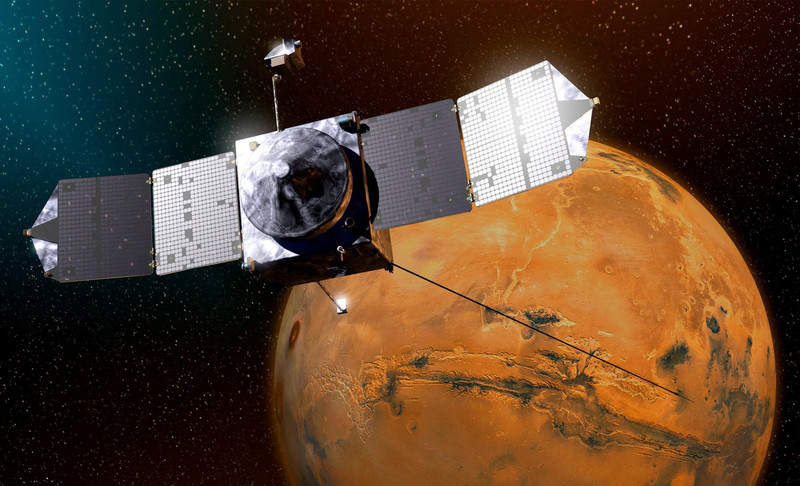
NASA's Maven Mars Orbiter Declared Out of Service After Six Months of Silence
Following an anomaly that disrupted its orbit and depleted its batteries, the Maven spacecraft, vital for understanding Mars' atmosphere, has ended its active mission. Its scientific data remains an invaluable legacy.

NASA Space Robotics Challenge
NASA invites U.S. researchers to submit proposals for experiments using a robotic arm that will be sent to low Earth orbit as part of the Fly Foundational Robots mission.
Latest news
View all
Stuntman Hollywood: Returns After 19 Years to PS5, Xbox Series, and PC
The iconic action and vehicular stunt franchise makes its comeback courtesy of Saber Interactive, promising a dose of nostalgia and adrenaline for the new generation.

Windows Drops NTLM: Microsoft Boosts Security with Kerberos
Microsoft is taking a crucial step to bolster security in Windows 11, announcing the deprecation of NTLM, its oldest authentication protocol, in favor of Kerberos.
Google Launches Gemma 4 12B: Local AI for Your Laptop with 16GB RAM
Google's new artificial intelligence model aims to democratize access to generative AI, allowing it to run on average consumer computers.
Comments (0)
No comments yet. Be the first!
Leave a comment