
China Achieves Record Depth in High-Speed Underwater Tunnel Construction
This engineering feat, part of the Shenzhen-Jiangmen line, now reaches 113 meters below the seabed, navigating extreme geological and pressure conditions.
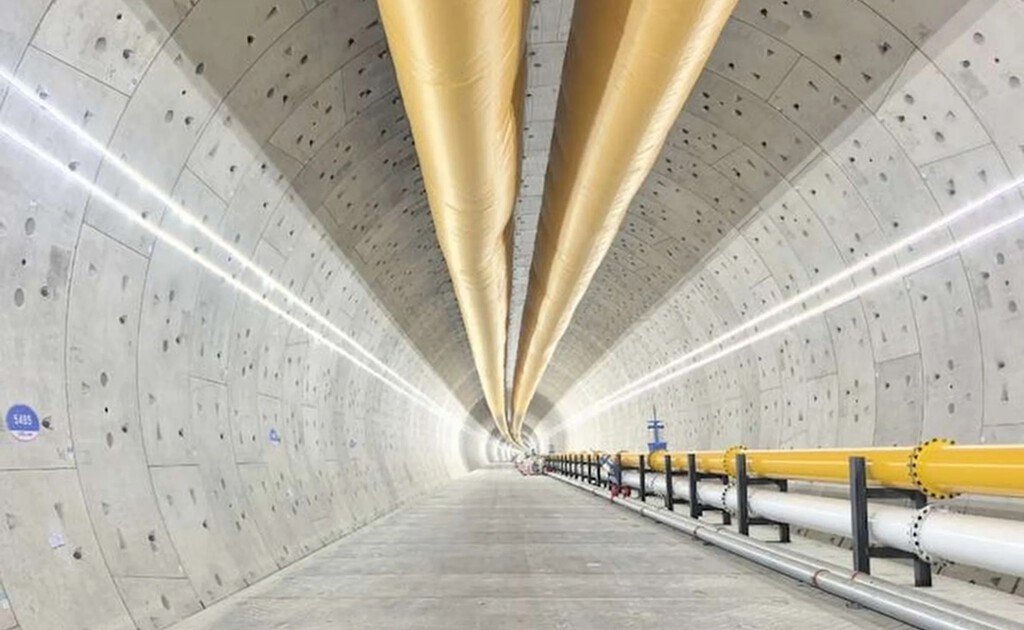
China has achieved a remarkable engineering milestone, reaching a record depth of 113 meters below the seabed in its high-speed underwater tunnel construction. This critical advancement is part of the Shenzhen-Jiangmen railway line, a vital infrastructure project in the country's south. The depth attained presents significant technical challenges due to complex geological conditions and immense water pressure. This project will connect two key cities in under an hour, integrating into China's coastal high-speed corridor.
The Shenzhen-Jiangmen high-speed line spans 116 kilometers. Its primary goal is to drastically cut travel times between these two urban centers. This connection is crucial for the Chinese railway network, boosting regional integration and economic development. The tunnel beneath the Pearl River estuary stands out as the most technically complex section of the entire undertaking.
At the core of this technical challenge operates the "Shenjiang-1" tunnel boring machine (TBM), a large-diameter marvel developed entirely in China. This engineering wonder enables continuous excavation, even during significant holidays like Qingming. The "Shenjiang-1" not only drills through the ground but also simultaneously constructs the tunnel's inner lining. This system aims to maximize efficiency in such a delicate environment.
The depth attained presents significant technical challenges due to complex geological conditions and immense water pressure.
The terrain presents a formidable challenge for the TBM. It must traverse 13 distinct geological strata, including five types of composite geology and six fault zones. Each layer reacts differently to excavation, demanding constant operational adjustments. Progress relies not only on the machine's power but also on precise control within this ever-changing environment.
Adding to the geological complexity is the extreme hydraulic pressure at these depths. The tunnel is designed to reach a maximum of 116 meters below the seabed. To operate under these conditions, the system employs a slurry circuit with a dual function. First, it reduces friction at the excavation face, facilitating advancement. Second, it transports the excavated material to the surface for subsequent separation and reuse.
As the "Shenjiang-1" advances, the tunnel takes shape without interruption. Construction teams work directly behind the excavation front. They ensure the continuous installation of the inner lining. This guarantees the structure's stability and safety as drilling progresses.
Article topics
Related articles

NASA Reveals New Path for Earth's Essential Life Elements
A recent study, published in Science Advances, uncovers how early Earth may have received phosphorus and nitrogen, highlighting Jupiter's critical role.
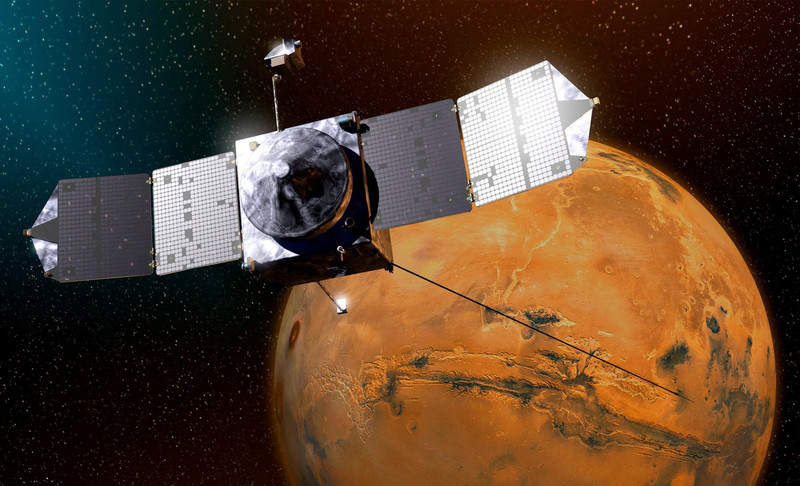
NASA's Maven Mars Orbiter Declared Out of Service After Six Months of Silence
Following an anomaly that disrupted its orbit and depleted its batteries, the Maven spacecraft, vital for understanding Mars' atmosphere, has ended its active mission. Its scientific data remains an invaluable legacy.
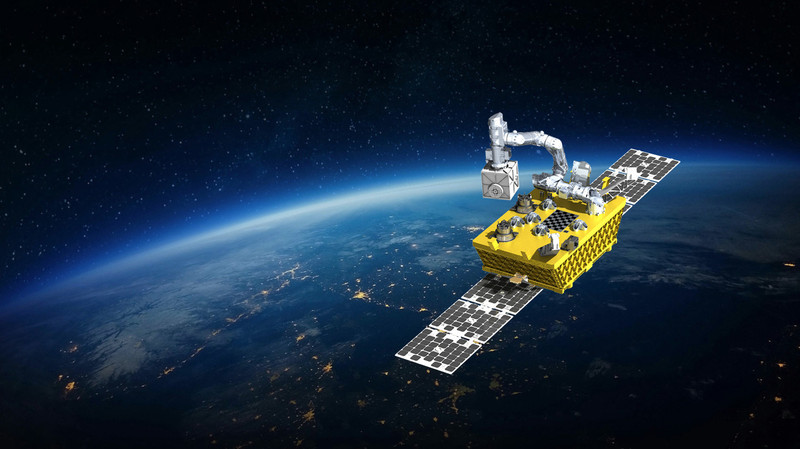
NASA Space Robotics Challenge
NASA invites U.S. researchers to submit proposals for experiments using a robotic arm that will be sent to low Earth orbit as part of the Fly Foundational Robots mission.
Latest news
View all
Stuntman Hollywood: Returns After 19 Years to PS5, Xbox Series, and PC
The iconic action and vehicular stunt franchise makes its comeback courtesy of Saber Interactive, promising a dose of nostalgia and adrenaline for the new generation.

Windows Drops NTLM: Microsoft Boosts Security with Kerberos
Microsoft is taking a crucial step to bolster security in Windows 11, announcing the deprecation of NTLM, its oldest authentication protocol, in favor of Kerberos.

Google Launches Gemma 4 12B: Local AI for Your Laptop with 16GB RAM
Google's new artificial intelligence model aims to democratize access to generative AI, allowing it to run on average consumer computers.
Comments (0)
No comments yet. Be the first!
Leave a comment