
Behavioral Flexibility: A New Key to Animal Adaptation in the Face of Climate Change
An innovative model developed by biologist Carlos Botero at the University of Texas at Austin reveals how animals' capacity to adjust their behavior is crucial for their evolution in the face of climate change, challenging previous paradigms and offering new tools for biodiversity conservation.

Global climate change represents one of the most pressing challenges for the planet's biodiversity, forcing species to adapt to constantly transforming environments. Traditionally, adaptation has been primarily associated with physical or genetic changes over extended periods. However, groundbreaking research led by biologist Carlos Botero from the University of Texas at Austin, and published in the prestigious journal Nature Communications, introduces a new paradigm: behavioral flexibility. This scientific advancement not only redefines our understanding of animal adaptation but also offers a crucial tool to anticipate how species will respond to environmental pressures, opening new avenues for wildlife protection in a warming world.
An Innovative Model for Understanding Adaptation
At the core of this research is a sophisticated mathematical model developed by Botero, which simulates the evolution of populations comprising thousands of individuals of the same species over hundreds of generations. Unlike previous approaches, this model uses behavioral flexibility —defined as animals' ability to adjust their actions and routines in response to environmental changes, rather than through physical modifications— as the primary variable. This approach allows for the evaluation of the speed and manner in which species can acquire adaptations in hostile environments. The findings are striking and challenge entrenched assumptions: Botero's model reveals that behavioral flexibility can both slow down and accelerate the evolution of a species' physical traits. Furthermore, it breaks with the notion that slower evolution necessarily implies greater vulnerability to climate change, suggesting a much greater complexity in survival mechanisms.
Behavioral Strategies in Action Against Climate Change
Nature already provides us with multiple examples of this behavioral flexibility in direct response to climate change, which Botero's study helps to contextualize. In the mountains of California, species like marmots and ground squirrels have altered their daily routines, seeking refuge and spending more time in areas with moist vegetation and steep slopes to mitigate overheating caused by rising temperatures. Polar bears, for their part, face the drastic reduction of sea ice, their primary hunting habitat, and have increased their time on land, incorporating new food sources such as birds and reindeer into their diet. Another illustrative case is that of lake trout in Ontario, which, in response to rising surface water temperatures, migrate to deeper, cooler waters, also adjusting their diet to consume smaller prey. These examples demonstrate the wide range of behavioral responses, even within the same species, which has historically made it difficult for scientists to identify general patterns to anticipate the physical evolution of animals in global change scenarios.
The Double-Edged Sword of Flexibility in Animal Evolution
One of the most significant conclusions from Botero's model is the inverse relationship that often exists between high behavioral flexibility and the rate of physical trait modification. Animals with a great capacity to adjust their behavior often experience a slower pace in the evolution of their physical characteristics under environmental pressure. This is because behavioral adaptations act as a buffer, attenuating the negative impact of the environment and, therefore, reducing the immediate need for anatomical or physiological changes. As Carlos Botero himself explained in statements reported by Nature Communications: "The body evolves slowly in flexible lineages not because it is harder, but because it is not actually needed." However, flexibility can also accelerate evolution in certain contexts, perhaps by allowing species to persist in new niches where novel selective pressures drive rapid changes, or by opening pathways for the emergence of physical traits that were previously unviable. Understanding this delicate balance is fundamental to predicting species resilience.
Implications for Biodiversity Conservation
The work of Carlos Botero and his team represents a qualitative leap in our understanding of animal adaptation. By providing a tool to anticipate how behavioral flexibility influences the evolutionary trajectory of species, this model offers valuable insights for biodiversity conservation. It allows scientists and conservationists to identify which species might be more resilient due to their behavioral adaptive capacity and which might be at greater risk if their flexibility is limited or if environmental pressures exceed their response capacity. At a time when climate change is advancing at an unprecedented pace, integrating behavioral flexibility into conservation strategies is essential to developing more effective interventions and protecting the richness of life on our planet.
Article topics
Related articles

NASA Reveals New Path for Earth's Essential Life Elements
A recent study, published in Science Advances, uncovers how early Earth may have received phosphorus and nitrogen, highlighting Jupiter's critical role.
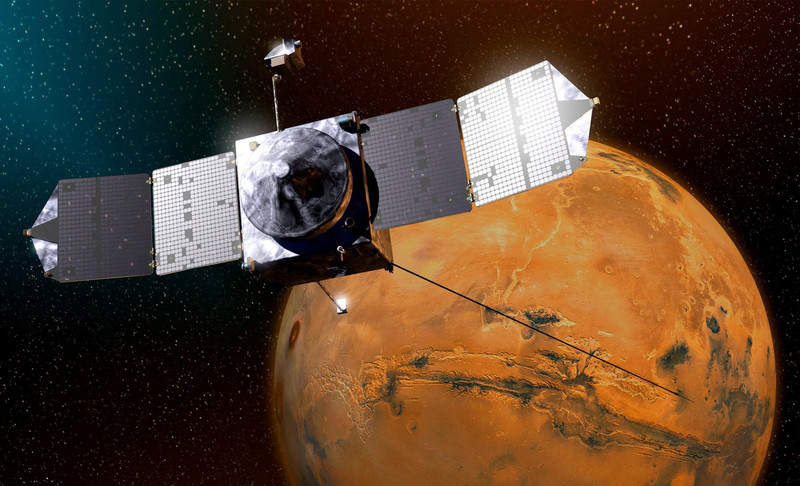
NASA's Maven Mars Orbiter Declared Out of Service After Six Months of Silence
Following an anomaly that disrupted its orbit and depleted its batteries, the Maven spacecraft, vital for understanding Mars' atmosphere, has ended its active mission. Its scientific data remains an invaluable legacy.

NASA Space Robotics Challenge
NASA invites U.S. researchers to submit proposals for experiments using a robotic arm that will be sent to low Earth orbit as part of the Fly Foundational Robots mission.
Latest news
View all
Stuntman Hollywood: Returns After 19 Years to PS5, Xbox Series, and PC
The iconic action and vehicular stunt franchise makes its comeback courtesy of Saber Interactive, promising a dose of nostalgia and adrenaline for the new generation.

Windows Drops NTLM: Microsoft Boosts Security with Kerberos
Microsoft is taking a crucial step to bolster security in Windows 11, announcing the deprecation of NTLM, its oldest authentication protocol, in favor of Kerberos.

Google Launches Gemma 4 12B: Local AI for Your Laptop with 16GB RAM
Google's new artificial intelligence model aims to democratize access to generative AI, allowing it to run on average consumer computers.
Comments (0)
No comments yet. Be the first!
Leave a comment