
Apple explores LLMs for spatial understanding and sign language annotation
Apple keeps advancing its AI research in spatial reasoning and sign language, despite rumors about the Vision Pro's future and setbacks.

Apple remains committed to its spatial computing projects, despite recent rumors claiming the Vision Pro was a failure. In April 2026, reports suggested the product's demise, but those claims are now being questioned. The company continues to publish research exploring new AI applications in this field.
One notable study introduces a benchmark called SFI-Bench, designed to evaluate multimodal large language models (MLLMs). This system tests whether models understand spatial layouts, object functions, and their contextual use, combining visual reasoning with language comprehension.
It assesses if AI models grasp what objects are, where they are, how they are used, and how to troubleshoot them.
Apple’s researchers compared various models, with Google Gemini 3.1 Pro achieving top results in spatial reasoning, followed by OpenAI’s GPT-5.4-High. Despite progress, all models still struggle with logical reasoning and spatial memory, especially in tasks involving counting and object relationships.
Another project focuses on using AI to annotate sign language videos automatically. This pseudo-annotation pipeline aims to reduce manual effort and costs, showing promising results in finger spelling and sign recognition, with potential future integration into Apple devices like AirPods for translation features.
Further, Apple developed methods to reconstruct detailed 3D head models from multiple images, enabling realistic avatars and AR applications. These innovations could enhance future Apple products by providing more immersive and personalized experiences.
Overall, Apple’s ongoing research indicates a strong interest in spatial AI, sign language recognition, and 3D modeling, with concrete developments that could influence upcoming hardware and software updates.
Article topics
Related articles

Windows Drops NTLM: Microsoft Boosts Security with Kerberos
Microsoft is taking a crucial step to bolster security in Windows 11, announcing the deprecation of NTLM, its oldest authentication protocol, in favor of Kerberos.
Google Launches Gemma 4 12B: Local AI for Your Laptop with 16GB RAM
Google's new artificial intelligence model aims to democratize access to generative AI, allowing it to run on average consumer computers.

Nvidia Challenges Intel and AMD with RTX Spark Superchip for PCs
Nvidia introduced RTX Spark, a processor promising to bring advanced artificial intelligence directly to your PC, without cloud dependence, and boost gaming to unprecedented levels on conventional machines.
Latest news
View all
Stuntman Hollywood: Returns After 19 Years to PS5, Xbox Series, and PC
The iconic action and vehicular stunt franchise makes its comeback courtesy of Saber Interactive, promising a dose of nostalgia and adrenaline for the new generation.
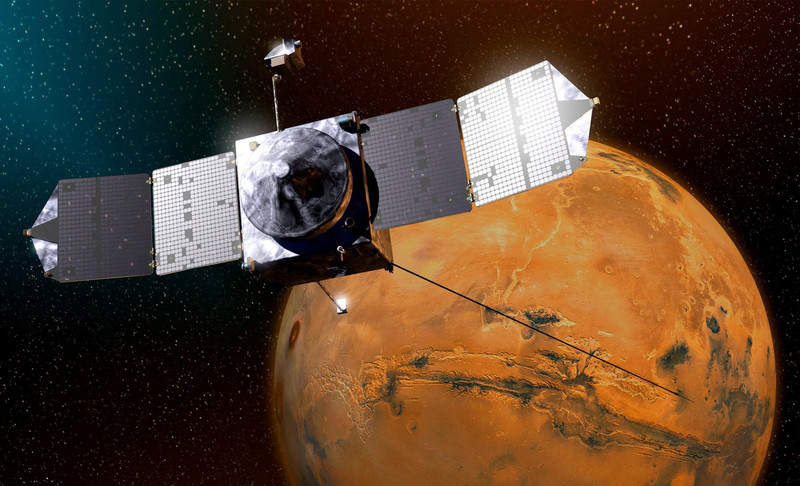
NASA's Maven Mars Orbiter Declared Out of Service After Six Months of Silence
Following an anomaly that disrupted its orbit and depleted its batteries, the Maven spacecraft, vital for understanding Mars' atmosphere, has ended its active mission. Its scientific data remains an invaluable legacy.

NASA Reveals New Path for Earth's Essential Life Elements
A recent study, published in Science Advances, uncovers how early Earth may have received phosphorus and nitrogen, highlighting Jupiter's critical role.
Comments (0)
No comments yet. Be the first!
Leave a comment