
Anthropic Enters the Silicon Race: Designing Its Own AI Chips for Autonomy
Anthropic, the company behind the Claude AI, is reportedly exploring the design of its own artificial intelligence chips to reduce reliance on external hardware providers and optimize its rapidly growing compute demands. This strategic move aims to secure greater control over costs and performance in a fiercely competitive AI market.

Anthropic's Strategic Bet on Silicon Autonomy
Anthropic, a prominent player in the development of large language models (LLMs) with its Claude AI, is reportedly evaluating a strategic move that could redefine its future and the broader artificial intelligence landscape: designing its own AI chips. This initiative, as leaked by Reuters, marks a significant turning point, as semiconductor development has traditionally been the domain of tech giants with considerably larger infrastructure and financial muscle. The primary motivation is clear: to reduce dependence on external hardware providers such as NVIDIA, Google, Amazon, AMD, and Intel, at a time when compute capacity has become the most critical bottleneck in the industry.
Driving Growth and the Imperative for Control
Anthropic's decision is not made in a vacuum but is deeply rooted in its meteoric growth and current market pressures. Demand for its Claude model has surged, pushing its projected annual revenue run rate to exceed $30 billion, a remarkable leap from the $9 billion anticipated by the end of 2025. When a company experiences growth of this magnitude, reliance on third-party supply, pricing, and timelines quickly transforms from a mere inconvenience into a fundamental strategic problem, especially with a potential IPO on the horizon. Designing proprietary chips, while not guaranteeing immediate results, opens the door to unprecedented control over costs, the supply chain, the technological roadmap, and, crucially, optimized performance and efficiency for the specific tasks of its AI models.
A Dynamic and Competitive AI Hardware Market
This move by Anthropic is set against an AI hardware landscape that is more dynamic than ever. Currently, the company already utilizes a combination of computing solutions, including AWS Trainium, Google TPU, and the ubiquitous NVIDIA GPUs, underscoring the diversity of its existing infrastructure and the complexity of its dependencies. However, the global AI chip market is experiencing an intense arms race. Tech giants like Google, with its alliances with Broadcom, Amazon, with its growing line of proprietary chips like Graviton and Trainium, AMD, with its advancements in AI accelerators, and Intel, strengthening its CPU and GPU offerings for this segment, are all vying for a larger share of the silicon pie. Even specialized players like Cerebras are gaining traction as alternatives. Anthropic's foray into proprietary chip design is not an isolated act but a strategic response to this fierce competition and the imperative for differentiation and self-sufficiency.
Challenges and the Scale of Investment
It is crucial to understand that this Anthropic initiative is in a very early exploratory phase. It is not an imminent leap into production, which would be a chimera for a project of this scale in its infancy, but rather a firm intention and a feasibility assessment. The company has not yet made a closed decision, does not have a finalized design, nor has it formed a dedicated team for this task. However, the magnitude of the potential investment underscores the seriousness of the proposal: Reuters estimates that designing an advanced AI chip could cost around $500 million, a figure that covers everything from specialized talent to validation and prototyping. This investment, coupled with Anthropic's recent linkage to a future 3.5-gigawatt capacity based on Google chips starting in 2027, as part of a broader agreement, illustrates the complexity of its infrastructure strategy, seeking both long-term independence and short-to-medium-term supply security.
Looking Ahead: Implications for Anthropic and AI
Ultimately, Anthropic's potential foray into designing its own AI chips represents a bold statement of intent and a strategic bet on autonomy and optimization. In a sector where access to compute capacity is the new gold, controlling silicon from its conception could grant Anthropic a significant competitive advantage, allowing it to innovate more rapidly, scale more efficiently, and ultimately solidify its position as a leader in artificial intelligence development. This move, while ambitious and costly, reflects the maturity and intense competition that defines the current era of AI.
Related articles
Google Launches Gemma 4 12B: Local AI for Your Laptop with 16GB RAM
Google's new artificial intelligence model aims to democratize access to generative AI, allowing it to run on average consumer computers.
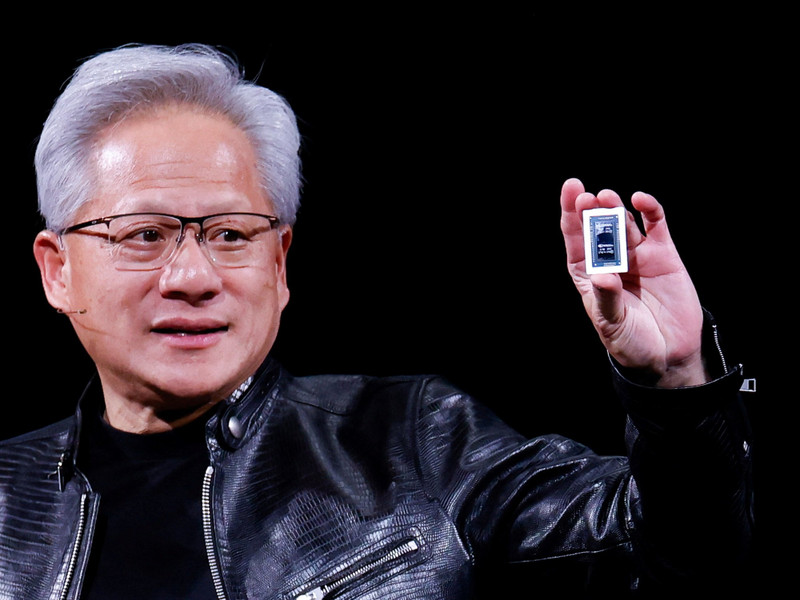
Nvidia Challenges Intel and AMD with RTX Spark Superchip for PCs
Nvidia introduced RTX Spark, a processor promising to bring advanced artificial intelligence directly to your PC, without cloud dependence, and boost gaming to unprecedented levels on conventional machines.

Anthropic's Claude Opus 4.8 boosts "honesty" and reduces code flaws
Anthropic's new AI model, Claude Opus 4.8, launches this Thursday with a focus on transparency and error reduction, giving users more control over computational effort.
Latest news
View all
Stuntman Hollywood: Returns After 19 Years to PS5, Xbox Series, and PC
The iconic action and vehicular stunt franchise makes its comeback courtesy of Saber Interactive, promising a dose of nostalgia and adrenaline for the new generation.
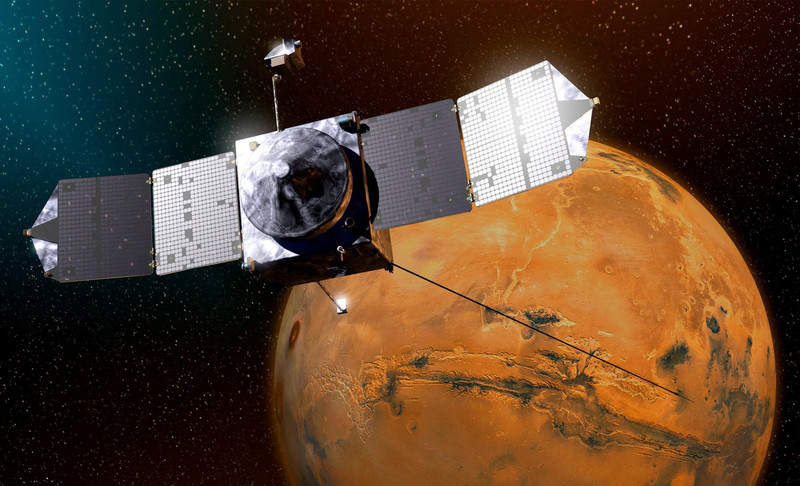
NASA's Maven Mars Orbiter Declared Out of Service After Six Months of Silence
Following an anomaly that disrupted its orbit and depleted its batteries, the Maven spacecraft, vital for understanding Mars' atmosphere, has ended its active mission. Its scientific data remains an invaluable legacy.

Windows Drops NTLM: Microsoft Boosts Security with Kerberos
Microsoft is taking a crucial step to bolster security in Windows 11, announcing the deprecation of NTLM, its oldest authentication protocol, in favor of Kerberos.
Comments (0)
No comments yet. Be the first!
Leave a comment