
AI Perception: Are We Judging Different Products by the Same Standard?
Public discourse on artificial intelligence often conflates two distinct product categories: consumer-facing chatbots and enterprise coding agents, leading to misguided perceptions of their capabilities and limitations.

Artificial intelligence (AI) has become an omnipresent topic, sparking passionate debates about its transformative potential and inherent risks. However, amidst this fervor, a fundamental confusion persists: much of the public and media evaluate AI based on experiences with vastly different products, often without distinguishing between them. This lack of differentiation between consumer chatbots and enterprise coding agents distorts the collective understanding of what AI can truly do, and more importantly, where its real value and challenges lie.
Consumer Chatbots: The Visible Face of AI
For most people, interaction with AI begins and ends with consumer chatbots. Tools like OpenAI's ChatGPT, Google's Gemini, or Microsoft's Copilot have become synonymous with generative artificial intelligence. These products are designed to be accessible, versatile, and capable of handling a wide range of tasks, from answering general questions and drafting emails to generating creative ideas or even writing basic code snippets. Their success lies in their ease of use and their ability to simulate human conversation, making them ideal for the average user seeking quick assistance or entertainment.
However, the generalist nature of these chatbots is also their Achilles' heel. They can often "hallucinate" or generate incorrect information with great confidence, lack deep, specific knowledge of particular domains, and their responses can be inconsistent. These limitations, while expected in general-purpose tools, are what often fuel public skepticism and criticism about AI's reliability. A user's experience with a chatbot making an error in a historical fact or a cooking recipe is erroneously extrapolated to the entire spectrum of AI technology.
Enterprise Coding Agents: The Hidden Engine of Productivity
In contrast, there is a much more specialized and powerful universe of AI tools operating behind the scenes: enterprise coding agents and software development assistants. Products like GitHub Copilot, or internal solutions developed by large corporations, are not designed for the general public. Their purpose is to drastically increase the productivity of software developers by automating repetitive tasks, suggesting code snippets, refactoring existing codebases, detecting bugs or security vulnerabilities, and accelerating the development cycle.
These enterprise agents benefit from much more specific training, often on vast repositories of proprietary code and technical data relevant to a particular industry or company. They integrate deeply into Integrated Development Environments (IDEs) and existing workflows, offering precision and reliability in a context where errors can have significant consequences. Their value is not measured by their ability to maintain a fluid conversation, but by tangible metrics such as reduced development time, improved code quality, and decreased operational costs. Although less visible to the general public, it is these tools that are driving a true revolution in efficiency and technological innovation globally.
Divergent Markets, Distinct Success Metrics
The distinction between these two types of AI products is crucial because they operate in fundamentally different markets, with their own expectations and success criteria. For consumer chatbots, success is measured by mass adoption, ease of use, the breadth of their capabilities, and their ability to generate "engagement" or wonder in the user. Companies that dominate this space are those that can offer the most intuitive and versatile experience, often leveraging massive and expensive-to-train language models.
On the other hand, in the enterprise realm, the success of a coding agent is defined by its direct impact on productivity and profitability. Accuracy, security, seamless integration with existing systems, and the ability to generate a clear return on investment (ROI) are paramount. Here, the winning companies are those that can offer highly specialized, customizable, and reliable solutions that cater to the specific needs of an industry or a development team. The competition is not for the attention of the average user, but for the trust and efficiency of technical professionals.
The Importance of Informed Perception
The confusion between these two worlds of AI is not trivial. It leads to unrealistic expectations from the public about AI's capabilities in general, or, conversely, to unfounded skepticism based on the limitations of a specific type of product. Informed perception is vital for fostering constructive debate about AI regulation, its ethical impact, necessary investments, and the future direction of research and development. Understanding that AI is not a monolith, but a diverse ecosystem of tools with varied purposes and performances, is the first step to harnessing its true potential and mitigating its risks effectively.
Related articles
Google Launches Gemma 4 12B: Local AI for Your Laptop with 16GB RAM
Google's new artificial intelligence model aims to democratize access to generative AI, allowing it to run on average consumer computers.

Nvidia Challenges Intel and AMD with RTX Spark Superchip for PCs
Nvidia introduced RTX Spark, a processor promising to bring advanced artificial intelligence directly to your PC, without cloud dependence, and boost gaming to unprecedented levels on conventional machines.

Anthropic's Claude Opus 4.8 boosts "honesty" and reduces code flaws
Anthropic's new AI model, Claude Opus 4.8, launches this Thursday with a focus on transparency and error reduction, giving users more control over computational effort.
Latest news
View all
Stuntman Hollywood: Returns After 19 Years to PS5, Xbox Series, and PC
The iconic action and vehicular stunt franchise makes its comeback courtesy of Saber Interactive, promising a dose of nostalgia and adrenaline for the new generation.
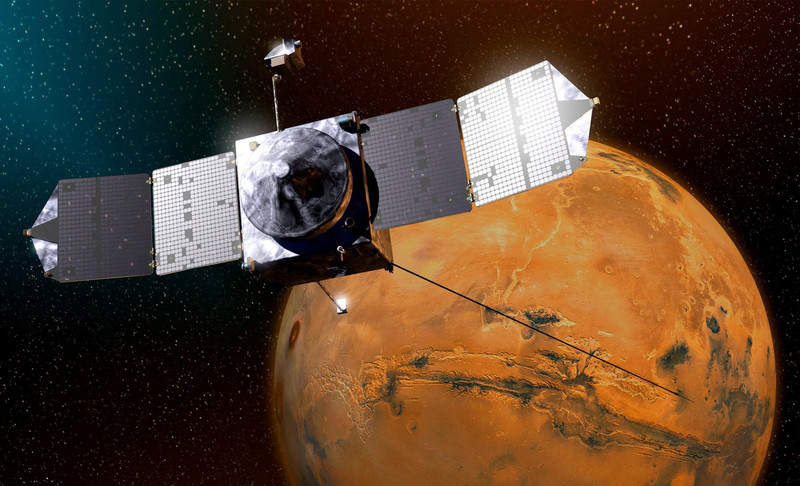
NASA's Maven Mars Orbiter Declared Out of Service After Six Months of Silence
Following an anomaly that disrupted its orbit and depleted its batteries, the Maven spacecraft, vital for understanding Mars' atmosphere, has ended its active mission. Its scientific data remains an invaluable legacy.

Windows Drops NTLM: Microsoft Boosts Security with Kerberos
Microsoft is taking a crucial step to bolster security in Windows 11, announcing the deprecation of NTLM, its oldest authentication protocol, in favor of Kerberos.
Comments (0)
No comments yet. Be the first!
Leave a comment