
Adaptive Intelligence: AI Robots Leap to Unseen Tasks with New Model
U.S. startup Physical Intelligence introduced π0.7, an AI model enabling robots to perform tasks without prior training. This breakthrough moves us closer to general-purpose robotic brains.
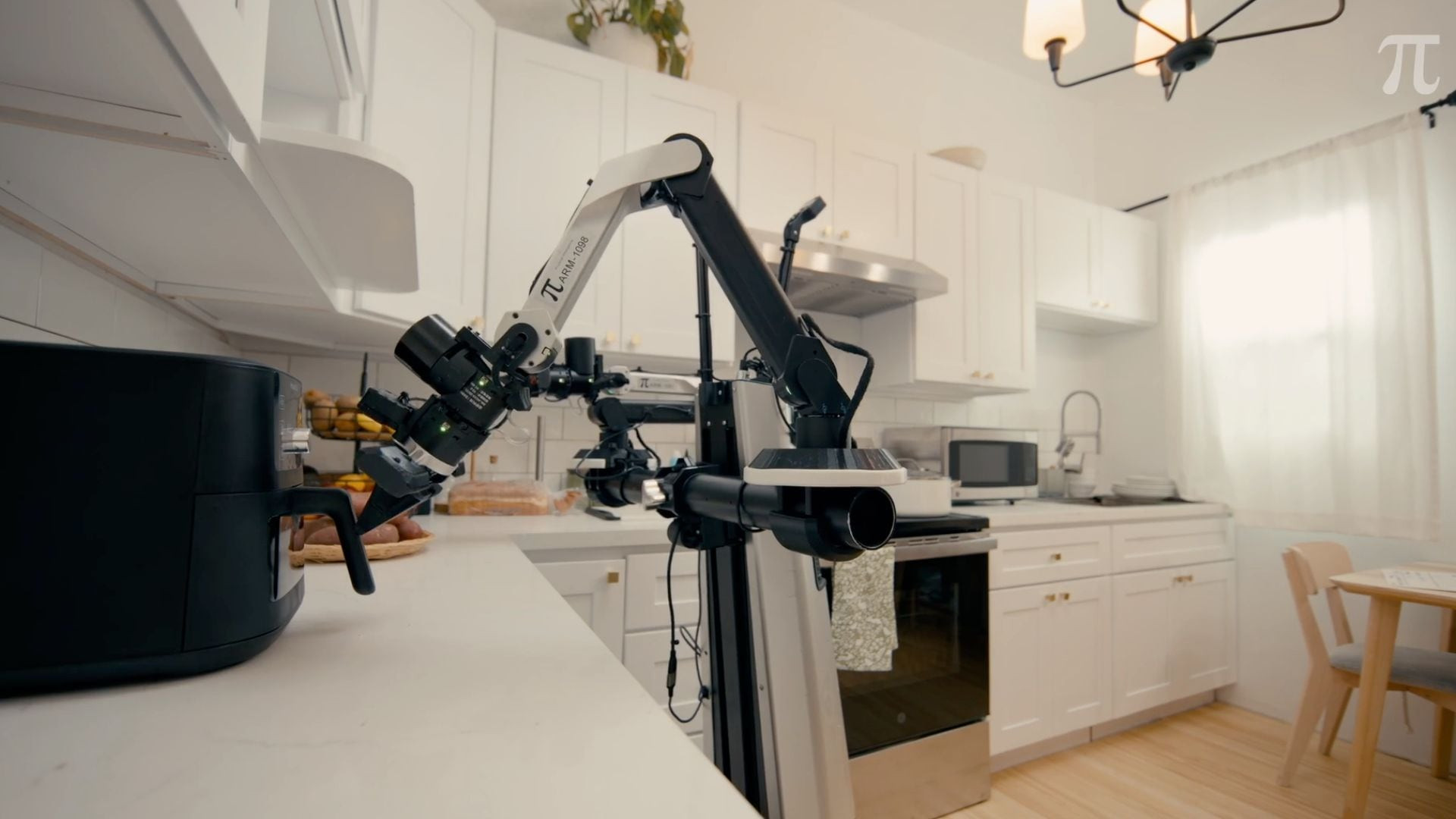
The field of robotics powered by artificial intelligence has made a significant leap forward. U.S. startup Physical Intelligence recently unveiled π0.7, an AI model capable of guiding robots to perform tasks they were never specifically trained for. This breakthrough marks a crucial step towards general-purpose robotic brains, enabling machines to adapt to simple instructions and solve novel problems in real time. Adaptive intelligence is emerging as the next frontier!
π0.7 represents a remarkable evolution from traditional systems. These older systems required specific training for each task, using independent datasets and models. The new system, by contrast, handles unknown tasks by combining and recombining skills learned in different contexts. Researchers call this "compositional generalization," a key capability for flexibility.
Experiments showcased the power of π0.7. Robots successfully manipulated previously unseen appliances. They also folded clothes without prior access to specific data about that activity. These results suggest a fundamental ability: transferring knowledge across different domains. This overcomes the rigidity of previous approaches in robotics.
This breakthrough marks a crucial step towards general-purpose robotic brains, enabling machines to adapt to simple instructions and solve novel problems in real time.
The primary advancement lies in π0.7's ability to apply acquired knowledge in entirely new circumstances. It requires no additional adjustments or extensive retraining. Unlike prior systems, which struggled to combine vision, language, and action, this model generalizes across different types of robots, environments, and tasks.
This transition aims at creating general-purpose AI systems. They will be flexible and scalable, adapting their performance to environmental demands and received instructions. The model allows robots not only to solve concrete problems. It also enables them to face dynamic scenarios where they must improvise solutions from novel combinations of skills.
π0.7's adaptive capability stems from an innovative training strategy. It integrates multiple data sources for robust learning:
- Diverse robotic platforms.
- Human demonstrations.
- Autonomously generated episodes.
Instead of being limited to repetitive data, the model incorporates multimodal prompts. These detail both the objective and the method to achieve it. They include text instructions, visual sub-goals (like object arrangement), and task parameters. This combination of context and flexibility allows the system to interpret and execute complex tasks. It's a giant leap for robotic autonomy!
Article topics
Related articles
Google Launches Gemma 4 12B: Local AI for Your Laptop with 16GB RAM
Google's new artificial intelligence model aims to democratize access to generative AI, allowing it to run on average consumer computers.
Nvidia Challenges Intel and AMD with RTX Spark Superchip for PCs
Nvidia introduced RTX Spark, a processor promising to bring advanced artificial intelligence directly to your PC, without cloud dependence, and boost gaming to unprecedented levels on conventional machines.

Anthropic's Claude Opus 4.8 boosts "honesty" and reduces code flaws
Anthropic's new AI model, Claude Opus 4.8, launches this Thursday with a focus on transparency and error reduction, giving users more control over computational effort.
Latest news
View all
Stuntman Hollywood: Returns After 19 Years to PS5, Xbox Series, and PC
The iconic action and vehicular stunt franchise makes its comeback courtesy of Saber Interactive, promising a dose of nostalgia and adrenaline for the new generation.
NASA's Maven Mars Orbiter Declared Out of Service After Six Months of Silence
Following an anomaly that disrupted its orbit and depleted its batteries, the Maven spacecraft, vital for understanding Mars' atmosphere, has ended its active mission. Its scientific data remains an invaluable legacy.

Windows Drops NTLM: Microsoft Boosts Security with Kerberos
Microsoft is taking a crucial step to bolster security in Windows 11, announcing the deprecation of NTLM, its oldest authentication protocol, in favor of Kerberos.
Comments (0)
No comments yet. Be the first!
Leave a comment