
Why Humans Have Fingerprints
Fingerprints didn't evolve for identification. Their main role is enhancing touch and grip on different surfaces.

Fingerprints didn't evolve primarily for human identification. Their main purpose is rooted in tactile and mechanical interaction with the environment.
These skin ridges on our fingertips enhance sensitivity to fine textures. They act as vibration amplifiers during touch, helping detect subtle surface details.
A study published in "Cell" found that fingerprints increase sensitivity to friction. This improves control when handling objects, especially on wet or uneven surfaces.
The added friction doesn't come from more contact. Instead, the ridges channel away water and reduce slipping, much like tire treads on a rainy road.
Fingerprints improve tactile perception and object manipulation, especially in wet conditions.
Forensic identification is a modern use, but secondary. Our ancestors didn't need ID cards, but they did need to hunt, climb, and craft tools with precision.
The unique pattern in each person is a byproduct of its practical function. Genetic variation and embryonic development produce distinct combinations, though that uniqueness isn't the evolutionary goal.
Article topics
Related articles

NASA Reveals New Path for Earth's Essential Life Elements
A recent study, published in Science Advances, uncovers how early Earth may have received phosphorus and nitrogen, highlighting Jupiter's critical role.
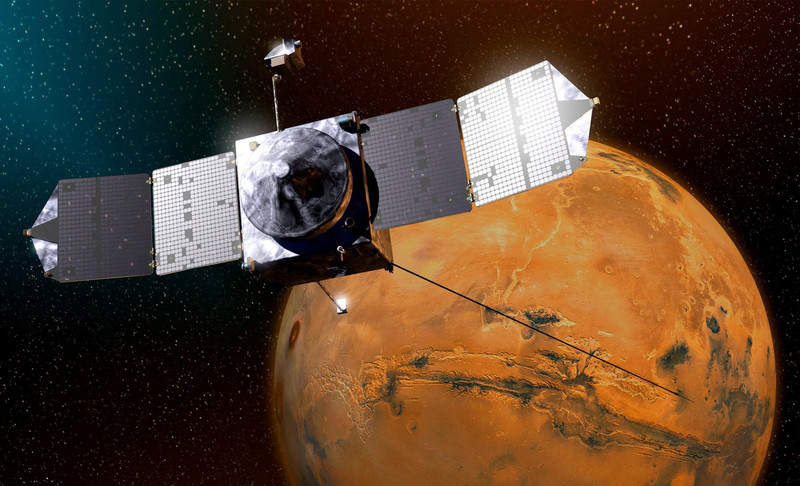
NASA's Maven Mars Orbiter Declared Out of Service After Six Months of Silence
Following an anomaly that disrupted its orbit and depleted its batteries, the Maven spacecraft, vital for understanding Mars' atmosphere, has ended its active mission. Its scientific data remains an invaluable legacy.
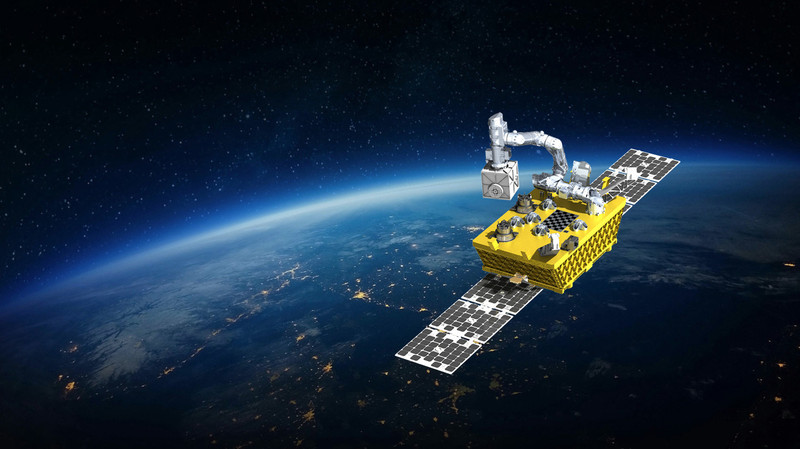
NASA Space Robotics Challenge
NASA invites U.S. researchers to submit proposals for experiments using a robotic arm that will be sent to low Earth orbit as part of the Fly Foundational Robots mission.
Latest news
View all
Stuntman Hollywood: Returns After 19 Years to PS5, Xbox Series, and PC
The iconic action and vehicular stunt franchise makes its comeback courtesy of Saber Interactive, promising a dose of nostalgia and adrenaline for the new generation.

Windows Drops NTLM: Microsoft Boosts Security with Kerberos
Microsoft is taking a crucial step to bolster security in Windows 11, announcing the deprecation of NTLM, its oldest authentication protocol, in favor of Kerberos.
Google Launches Gemma 4 12B: Local AI for Your Laptop with 16GB RAM
Google's new artificial intelligence model aims to democratize access to generative AI, allowing it to run on average consumer computers.
Comments (0)
No comments yet. Be the first!
Leave a comment