
Uranus and Neptune: Rock and Gas Giants, Not Just Ice?
New research challenges the traditional classification of Uranus and Neptune, suggesting rock might be a dominant component in their outer layers and redefining our understanding of these distant worlds.

Attention, cosmic explorers! For decades, we've known Uranus and Neptune as the enigmatic 'ice giants' of our solar system. Their distant orbits, composition rich in hydrogen and helium, and the methane that gives them their characteristic blue hue have solidified this image. However, a fascinating new analysis is poised to change everything, suggesting that rock, not just ice, might be the true protagonist in the outer layers of these planets.
The question that sparked this research was simple yet profound: why do objects in the outer solar system, like Pluto and the Kuiper Belt comets, exhibit a higher proportion of rock than previously thought? This observation led scientists to question the established models for Uranus and Neptune, proposing a bold hypothesis: if the icy bodies at the solar system's edges are indeed rich in refractory material, could the same principles apply to our distant giants?
Leveraging the tools of modern astrophysics, the team behind this study was able to comprehensively model the internal and atmospheric structure of both planets. By simulating their mantles, cores, and outer envelopes under various conditions of temperature, pressure, and chemical dynamics, the results were surprising and conclusive. Under certain circumstances, the atmospheres of Uranus and Neptune generate silicate clouds that condense to form large-scale rocky material.
“We discovered that both Uranus and Neptune have their outer layers composed primarily of rocks (and hydrogen and helium gas),” stated Miguel, and that result “contradicts the common belief that they are ice giant planets.”
The most impactful finding is that the proportion of rock in the envelopes of these planets is not only considerable but comparable to that of bodies like Pluto and Kuiper Belt objects. The study estimates that the rocky mass fraction in the outer layers reaches approximately 60% of the heavy element component. This figure directly challenges the previous paradigm, which assumed a dominance of ice over rock in the composition of Uranus and Neptune.
The research didn't stop at averages; scientists applied Bayesian models to quantify the distribution of ice and rock, revealing subtle yet significant differences. Neptune appears to have mantles with a median rock fraction of 55%, suggesting a dominant rocky presence even in its deeper regions. Uranus, on the other hand, exhibits ice-richer mantles, with a rock fraction of 41%, indicating a more stratified internal structure.
These compositional disparities are key to understanding the cosmic history of these worlds. Experts contend that these differences support the hypothesis that, despite their similar masses and radii, Uranus and Neptune experienced divergent formation and evolution trajectories. This could be due to different accretion histories or distinct phase-separation regimes after formation.
The study also highlights current limitations in planetary data interpretation. The equation of state for water, a crucial parameter for estimating material distribution within these planets, introduces systematic uncertainties. Therefore, the authors emphasize the need for future space missions that can provide in situ measurements to resolve lingering doubts.
If Uranus and Neptune are confirmed to be rock-rich rather than ice-dominated, the scientific community might even consider a reclassification. The proposal to call them 'minor giants' or something similar is open for debate. Beyond nomenclature, determining the exact proportions of ice and rock is essential for understanding their formation and the evolutionary history of the Solar System, suggesting the need to consider mechanisms of refractory material enrichment and internal differentiation that may have operated differently on each planet.
Ultimately, Uranus and Neptune are transitioning from mere ice giants to natural laboratories exploring the boundaries of planetary formation. The internal diversity of these planets not only redefines our knowledge frontier but also prompts us to reconsider the role of intermediate worlds in the architecture of planetary systems, both within and beyond our cosmic neighborhood. The future of space exploration promises to unveil even more secrets about these fascinating worlds!
Article topics
Related articles
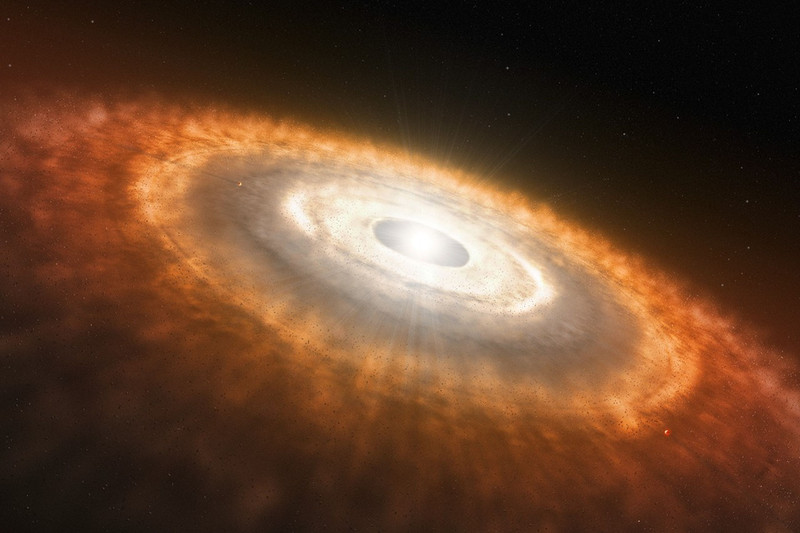
NASA Reveals New Path for Earth's Essential Life Elements
A recent study, published in Science Advances, uncovers how early Earth may have received phosphorus and nitrogen, highlighting Jupiter's critical role.
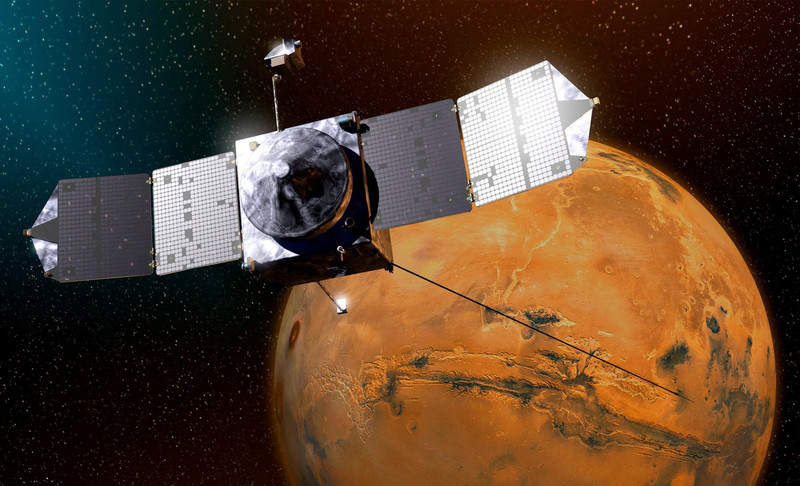
NASA's Maven Mars Orbiter Declared Out of Service After Six Months of Silence
Following an anomaly that disrupted its orbit and depleted its batteries, the Maven spacecraft, vital for understanding Mars' atmosphere, has ended its active mission. Its scientific data remains an invaluable legacy.
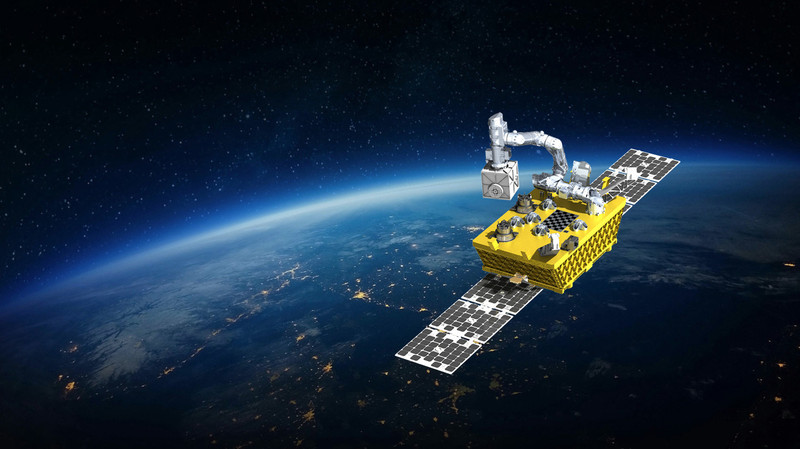
NASA Space Robotics Challenge
NASA invites U.S. researchers to submit proposals for experiments using a robotic arm that will be sent to low Earth orbit as part of the Fly Foundational Robots mission.
Latest news
View all
Stuntman Hollywood: Returns After 19 Years to PS5, Xbox Series, and PC
The iconic action and vehicular stunt franchise makes its comeback courtesy of Saber Interactive, promising a dose of nostalgia and adrenaline for the new generation.

Windows Drops NTLM: Microsoft Boosts Security with Kerberos
Microsoft is taking a crucial step to bolster security in Windows 11, announcing the deprecation of NTLM, its oldest authentication protocol, in favor of Kerberos.

Google Launches Gemma 4 12B: Local AI for Your Laptop with 16GB RAM
Google's new artificial intelligence model aims to democratize access to generative AI, allowing it to run on average consumer computers.
Comments (0)
No comments yet. Be the first!
Leave a comment