
The Transformative Journey: How the 'Overview Effect' Will Change Artemis II Astronauts Upon Their Return
The Artemis II mission, set to return humanity to lunar orbit, will not only mark a milestone in space exploration but also profoundly transform its astronauts. By observing Earth from an unprecedented distance, they will experience the 'Overview Effect,' a psychological shift that redefines their perception of the world and their place within it.
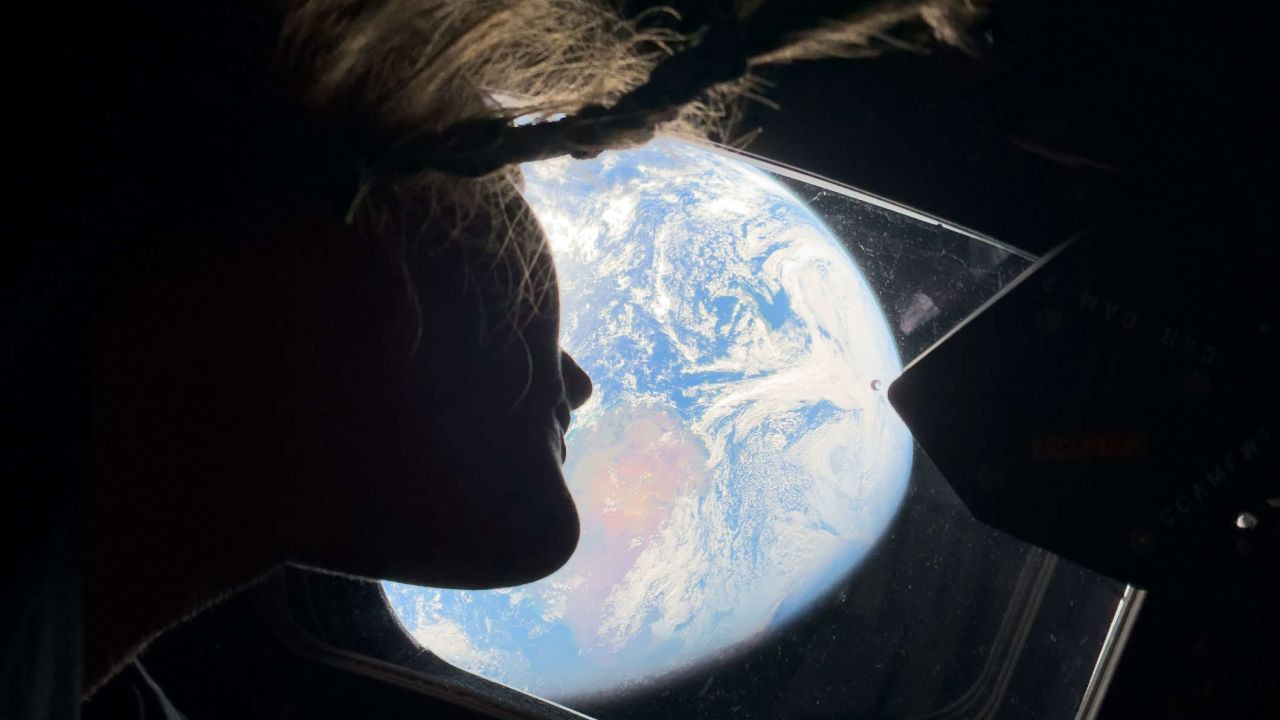
Anticipation surrounding the Artemis II mission is palpable. This ambitious NASA program not only represents humanity's return to lunar orbit after decades but also promises to be a deeply transformative experience for its four crew members: Christina Koch, Victor Glover, Reid Wiseman, and Jeremy Hansen. When these brave explorers return to Earth, they will not only have completed a historic feat, but their perspective on life, humanity, and our planet will have irrevocably changed. The journey home will mark the conclusion of a mission that, beyond its scientific and technological objectives, will leave an indelible mark on the psyche of those who live it.
The 'Small Blue Marble' from a New Vantage Point
For most of the Artemis II astronauts, the sight of Earth from space will not be entirely new. Christina Koch, Victor Glover, and Reid Wiseman have previously traveled to low Earth orbit, having gazed upon our planet from the International Space Station. However, the Artemis II mission will take them much further, into lunar orbit, offering them a view of Earth as a "small blue marble" in all its splendor, from a distance few humans have ever experienced. For Jeremy Hansen, the Canadian astronaut, this will be his first time in space, and his initiation will be with one of the most breathtaking and distant views humanity has achieved. This unique perspective, where geographical and political features vanish, reveals Earth as a vibrant, fragile oasis suspended in the cosmic immensity.
The 'Overview Effect': A Profound Shift in Life's Perspective
This visual and emotional experience is known as the 'Overview Effect,' a concept first coined in 1987 by space philosopher Frank White. It refers to the profound cognitive shift that many astronauts report experiencing when viewing Earth from space. By observing our planet as a unified whole, without artificial borders separating nations or cultures, a re-evaluation of priorities occurs. Terrestrial problems, such as political conflicts or social divisions, often become relativized, while the importance of cooperation, sustainability, and the preservation of our fragile ecosystem are magnified. It is an epiphany that transcends mere observation, transforming into a visceral understanding of the interconnectedness of all life and the vulnerability of our home.
A Shared Atmosphere: Christina Koch's Insight
One of the Artemis II crew members, Christina Koch, who holds the record for the longest single spaceflight by a woman, has spoken extensively about this effect. Her prior experience grants her unique authority to describe the depth of this transformation. Koch has noted that when observing Earth from outside, one realizes that "every single person you know is held within that green line (the atmosphere) and everything else outside of it is completely inhospitable. You don't see borders, you don't see religious lines, you don't see political boundaries. All you see is Earth and you see that we are much more alike than we are different." This powerful reflection encapsulates the essence of the Overview Effect: the dissolution of perceived barriers and the emergence of a profound awareness of humanity's shared unity and fragility.
Beyond a Diagnosis: A Deep Psychological Transformation
It is crucial to understand that the Overview Effect, while having a psychological origin and being a subject of study by psychologists and philosophers, is not considered a mental disorder or a medical condition. It is not included in the DSM-V (Diagnostic and Statistical Manual of Mental Disorders), as it is not a pathology but rather a transformative experience. It represents a profound shift in perspective and is often a source of great relaxation and a renewed sense of purpose. Astronauts who experience it often return with heightened empathy, a sharper environmental awareness, and a desire to contribute to solving global problems, viewing humanity as a single entity sharing a common destiny in the universe.
Cognitive and Neurological Repercussions
While the Overview Effect is not a medical condition, profoundly meaningful experiences can have a tangible impact on the brain. Neuroscience studies suggest that transcendental experiences, such as observing Earth from space, can influence brain plasticity, strengthening or creating new neural connections. This may manifest in increased activation of brain regions associated with empathy, social cognition, and spatial awareness. The re-evaluation of values and priorities, the reduction of stress over trivial problems, and the increased concern for global issues are reflections of how the brain processes this information in a way that alters the individual's hierarchy of what they consider important. Astronauts, upon returning, often describe a sense of peace and a deeper understanding of life's interconnectedness, suggesting a lasting cognitive and emotional reorganization.
Article topics
Related articles

NASA Reveals New Path for Earth's Essential Life Elements
A recent study, published in Science Advances, uncovers how early Earth may have received phosphorus and nitrogen, highlighting Jupiter's critical role.
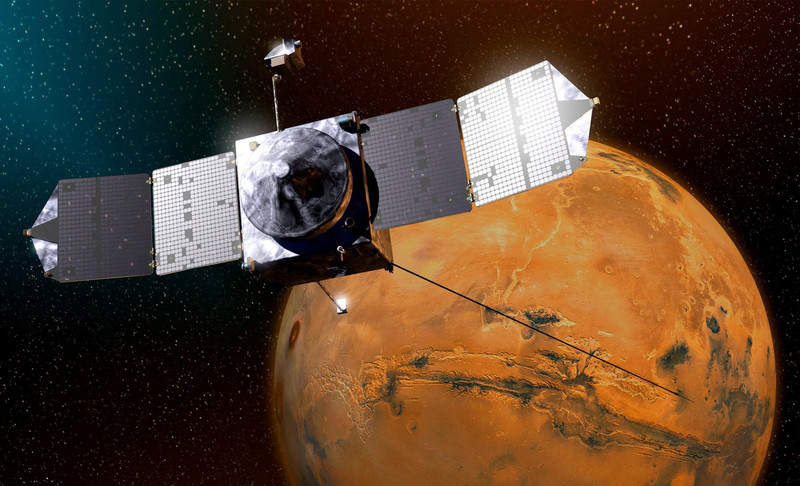
NASA's Maven Mars Orbiter Declared Out of Service After Six Months of Silence
Following an anomaly that disrupted its orbit and depleted its batteries, the Maven spacecraft, vital for understanding Mars' atmosphere, has ended its active mission. Its scientific data remains an invaluable legacy.
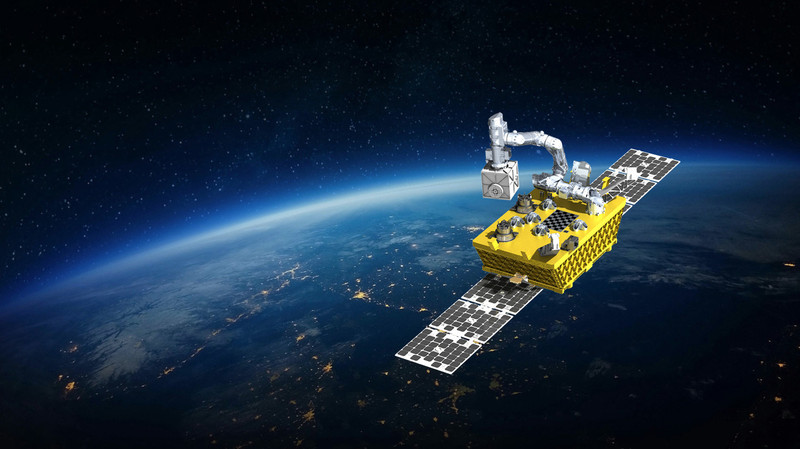
NASA Space Robotics Challenge
NASA invites U.S. researchers to submit proposals for experiments using a robotic arm that will be sent to low Earth orbit as part of the Fly Foundational Robots mission.
Latest news
View all
Stuntman Hollywood: Returns After 19 Years to PS5, Xbox Series, and PC
The iconic action and vehicular stunt franchise makes its comeback courtesy of Saber Interactive, promising a dose of nostalgia and adrenaline for the new generation.

Windows Drops NTLM: Microsoft Boosts Security with Kerberos
Microsoft is taking a crucial step to bolster security in Windows 11, announcing the deprecation of NTLM, its oldest authentication protocol, in favor of Kerberos.
Google Launches Gemma 4 12B: Local AI for Your Laptop with 16GB RAM
Google's new artificial intelligence model aims to democratize access to generative AI, allowing it to run on average consumer computers.
Comments (0)
No comments yet. Be the first!
Leave a comment