
The Silent Revolution: Linux Doubles Its Gaming Presence, Surpassing 5% on Steam
Steam's March 2026 Hardware Survey reveals a historic milestone: Linux has more than doubled its market share in PC gaming, reaching an impressive 5.33%. This meteoric rise is attributed to the maturity of technologies like Proton and the growing influence of the Steam Deck, marking a significant shift in the operating system landscape for gamers.
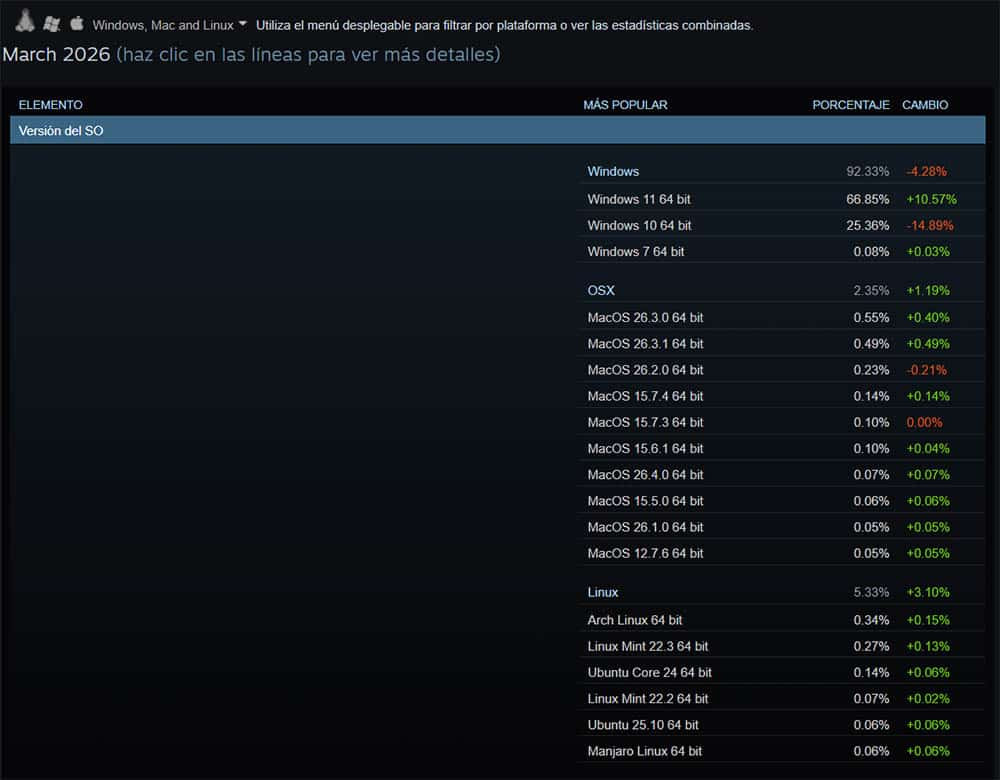
The world of PC gaming is a dynamic ecosystem, constantly shaped by hardware and software innovations. However, few changes have been as drastic and significant as what we are witnessing with Linux. The latest Steam Hardware Survey for March 2026 has yielded results that not only surprise but redefine expectations about Linux's viability as a gaming platform. For the first time, the open-source operating system has broken the 5% barrier, reaching a remarkable 5.33% usage among Steam gamers, more than double the previous month.
The Rise of Linux: From Niche to Serious Contender
For years, Linux was considered hostile territory for video game enthusiasts. Limited compatibility and the need for complex workarounds relegated this operating system to a very specific niche of users. The vast majority of AAA titles were designed exclusively for Windows, leaving Linux users with a reduced catalog and often suboptimal performance. However, this narrative began to change radically with the intervention of Valve, the company behind Steam. The introduction of SteamOS, a Linux-based operating system, and, crucially, Proton, a compatibility layer that allows Windows games to run on Linux with almost imperceptible performance loss, was a turning point. This technology democratized access to thousands of games, opening the doors to a new era for Linux gaming.
Breaking Down the March 2026 Data
Steam's hardware surveys are an invaluable tool for understanding gaming market trends. With a database exceeding 100 million registered computers, these surveys offer a detailed snapshot of the hardware and software used by gamers globally. The March 2026 data is particularly revealing. Linux not only rose but experienced a massive +3.10% increase in a single month, catapulting it to a 5.33% share. In contrast, Windows, while still the dominant system at 92.33%, saw an overall drop of -4.28%. This decline is primarily due to a 14.89% decrease in Windows 10, while Windows 11 showed a 10.57% growth, indicating an internal migration within Microsoft's ecosystem.
Key Linux Distributions Driving Growth
Linux's growth is not monolithic; several distributions are contributing to this surge. Arch Linux tops the list of popular distributions among gamers, registering 0.34% usage with a +0.15% increase in the last month. Closely following are Linux Mint 22 3 at 0.27% and Ubuntu Core 24 at 0.14%. It's important to note that, although not explicitly mentioned, SteamOS, the operating system for the Steam Deck, which is based on Arch Linux, likely represents a significant portion of this percentage or is grouped within the Arch category. Additionally, other distributions like Bazzite and CachyOS are gaining popularity among gamers for their focus on performance and gaming optimization.
The 'China Effect' and Market Normalization
It's crucial to contextualize these changes within the seasonal fluctuations that often affect Steam statistics. Generally, monthly changes are not so drastic, but there is a notable exception: the period around the Chinese New Year. During these holidays, the massive influx of players from the Asian region can temporarily skew global statistics, as observed in February. In that month, Chinese became the most common language on Steam, and certain hardware components, such as the RTX 5070, showed unusual dominance. However, the March 2026 data indicates a normalization. Chinese has dropped by -31.85% and now accounts for 22.75%, allowing English to regain its dominant position. This return to normalcy in hardware and language trends underscores the robustness of Linux's growth, which remains strong even without the influence of these seasonal anomalies.
A Promising Future for Linux Gaming
The 5.33% milestone in the Steam hardware survey is not just a number; it's a testament to the tireless work of the open-source community and companies like Valve. It represents a paradigm shift that validates Linux as a viable and, increasingly, attractive gaming platform. As Proton continues to improve and more developers consider Linux compatibility from the outset, we can expect this upward trend to continue. The future of PC gaming is becoming increasingly diverse, and Linux is proving to be a key player in this evolution, offering users more choices and a robust, high-performance gaming experience.
Article topics
Related articles

Stuntman Hollywood: Returns After 19 Years to PS5, Xbox Series, and PC
The iconic action and vehicular stunt franchise makes its comeback courtesy of Saber Interactive, promising a dose of nostalgia and adrenaline for the new generation.

Tomb Raider: Legacy of Atlantis Arrives February 2027 with Pre-Order Bonuses
Crystal Dynamics and Amazon Games announce the release date for the reimagining of the 1996 classic, along with details on editions and exclusive pre-order content.

Marvel's Wolverine: Brutal gameplay and September 15th release for PS5
Sony and Insomniac Games unveiled an exciting new look at "Marvel's Wolverine" during the recent State of Play, confirming its exclusive arrival on PlayStation 5 this September 15th.
Latest news
View all
NASA's Maven Mars Orbiter Declared Out of Service After Six Months of Silence
Following an anomaly that disrupted its orbit and depleted its batteries, the Maven spacecraft, vital for understanding Mars' atmosphere, has ended its active mission. Its scientific data remains an invaluable legacy.

Windows Drops NTLM: Microsoft Boosts Security with Kerberos
Microsoft is taking a crucial step to bolster security in Windows 11, announcing the deprecation of NTLM, its oldest authentication protocol, in favor of Kerberos.

NASA Reveals New Path for Earth's Essential Life Elements
A recent study, published in Science Advances, uncovers how early Earth may have received phosphorus and nitrogen, highlighting Jupiter's critical role.
Comments (0)
No comments yet. Be the first!
Leave a comment