
Taiwan's Chipmakers on High Alert: Critical Helium Shortage and 11-Day LNG Supply Threaten Global Production
Taiwan's vital semiconductor industry faces an unprecedented crisis, with its helium reserves depleted and only an 11-day supply of liquefied natural gas (LNG) remaining, posing a severe risk to global chip production and the island's economic stability.
A Resource Crisis Paralyzing the Industry
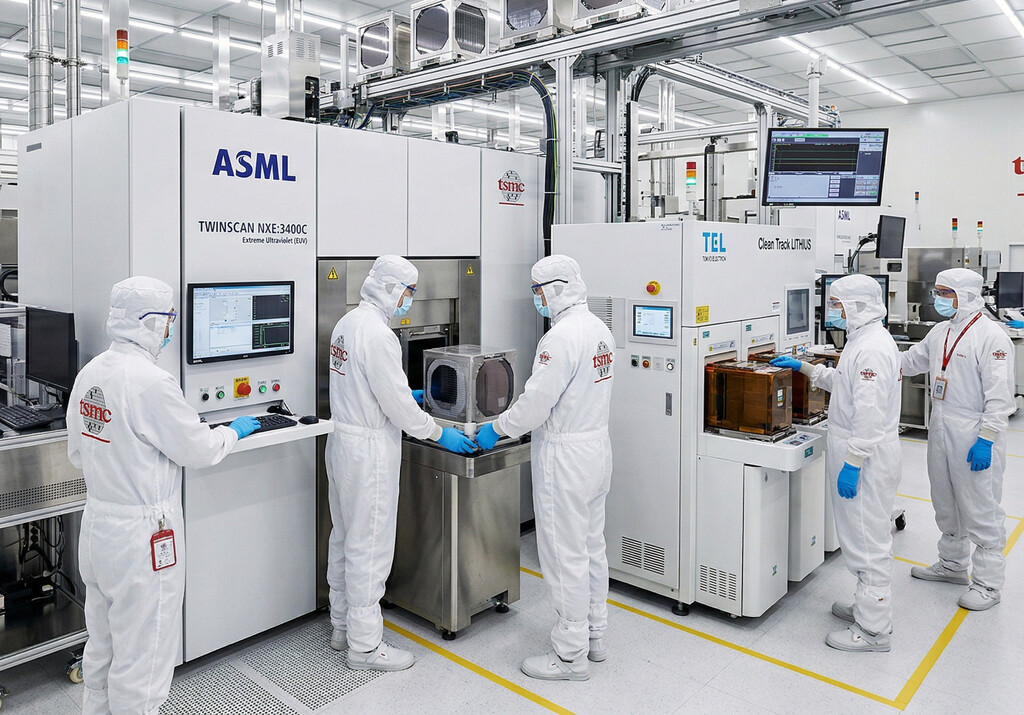
Taiwan's semiconductor industry, a cornerstone of the global economy and technological landscape, is currently facing a critical alert. The island has completely run out of helium and, under the most optimistic projections, possesses only an 11-day supply of liquefied natural gas (LNG). This severe shortage has triggered alarms among Taiwanese chip manufacturers, prompting the Taiwan Semiconductor Industry Association (TSIA) to issue an urgent plea to the government. The TSIA has urged authorities to establish a strategic reserve of these two essential resources, ensuring their long-term availability to safeguard the continuity of an industry vital to both Taiwan and the rest of the world.
Geopolitical Impact on the Supply Chain
The root cause of this serious problem lies in the complex current geopolitical climate, marked by the conflict involving the United States, Israel, and Iran. Although a two-week ceasefire agreement has been reached, the situation has led to a significant blockade in the Strait of Hormuz, a crucial maritime route for the transport of energy resources and raw materials. This blockade has drastically disrupted the supply of helium and liquefied natural gas upon which numerous Asian countries depend. For Taiwan, whose integrated circuit industry is profoundly reliant on these two resources, the interruption represents an existential threat, exposing the inherent fragility of its supply chains to external geopolitical events.
The Indispensable Role of LNG and Helium in Chip Manufacturing
Taiwan's dependence on LNG and helium is far from trivial. Over 40% of the island's power plants utilize liquefied natural gas for electricity generation. Chip fabrication plants, with their extremely sensitive and high-precision production processes, require not only a constant but also a remarkably stable and fluctuation-free electricity supply to prevent the loss of entire batches of semiconductors. Helium, on the other hand, is an indispensable inert gas used in several critical stages of integrated circuit manufacturing, ranging from creating controlled atmospheres to cooling advanced lithography equipment. The absence of a strategic helium reserve in Taiwan, in stark contrast to countries like the United States and Japan which have already established security inventories, underscores the island's vulnerability and the urgency of TSIA's demand.
Taiwan: A Global Geostrategic Pillar
The semiconductor industry is more than just an economic engine for Taiwan; it is a geostrategic pillar of immense global relevance. It accounts for between 13% and 15% of the country's Gross Domestic Product (GDP) and drives its exports, contributing nearly 40% of the total value. Beyond the figures, Taiwan's capability to produce cutting-edge chips, particularly through giants like TSMC and UMC, grants it unprecedented global influence. This dominant position in manufacturing the components that power everything from smartphones to artificial intelligence systems and defense technologies makes the stability of its supply chain a global concern. Therefore, ensuring these companies have uninterrupted access to necessary resources is crucial for the world economy and technological security.
Strategies for Resilience and Future Energy
In light of this scenario, the TSIA has emphasized the imperative need for Taiwan to diversify its energy sources and strengthen the resilience of its critical material supply. "We propose to the Government the need to continue diversifying our energy sources and the supply of critical materials to prepare for the uncertainty of the current situation," the Association stated. Furthermore, the TSIA has expressed support for the government's controversial decision to consider reopening nuclear power plants, provided that legal requirements are strictly met and safety is guaranteed. This measure, while debated, reflects a desperate search for solutions to secure a more stable energy supply and reduce Taiwan's profound dependence on volatile external resources—a fundamental problem its economy cannot afford to ignore.
Related articles
Windows Drops NTLM: Microsoft Boosts Security with Kerberos
Microsoft is taking a crucial step to bolster security in Windows 11, announcing the deprecation of NTLM, its oldest authentication protocol, in favor of Kerberos.

Chrome Bolsters Security with DBSC Against Cookie Theft
Google Chrome has rolled out a new DBSC feature, linking sessions to your hardware to protect accounts from credential theft attacks.

Roku's home screen gets an AI-powered refresh for 2026
Roku is rolling out a significant update to its main interface, promising a more personalized experience with integrated advertising.
Latest news
View all
Stuntman Hollywood: Returns After 19 Years to PS5, Xbox Series, and PC
The iconic action and vehicular stunt franchise makes its comeback courtesy of Saber Interactive, promising a dose of nostalgia and adrenaline for the new generation.
NASA's Maven Mars Orbiter Declared Out of Service After Six Months of Silence
Following an anomaly that disrupted its orbit and depleted its batteries, the Maven spacecraft, vital for understanding Mars' atmosphere, has ended its active mission. Its scientific data remains an invaluable legacy.

NASA Reveals New Path for Earth's Essential Life Elements
A recent study, published in Science Advances, uncovers how early Earth may have received phosphorus and nitrogen, highlighting Jupiter's critical role.
Comments (0)
No comments yet. Be the first!
Leave a comment