
SpaceX Files S-1 Prospectus for Potential Record-Breaking Nasdaq IPO
Elon Musk's company, merging rockets, satellite internet, and AI, has revealed its financials and ambitious future plans, including a massive potential market in artificial intelligence.

SpaceX officially filed its S-1 prospectus with the SEC on May 20, 2026, initiating what could become the largest initial public offering (IPO) in history. The company plans to list on the Nasdaq stock exchange under the ticker SPCX, finally offering a detailed look at its financials and future plans encompassing rockets, space internet, and artificial intelligence.
In 2025, SpaceX reported a substantial $18.67 billion in revenue, primarily driven by its Starlink satellite internet service, which alone generated over $11 billion, as reported by The Wall Street Journal. Despite these impressive figures, the company incurred losses exceeding $4.9 billion last year.
SpaceX's capital expenditures dramatically increased to $20.7 billion in 2025, a significant jump from $11.2 billion in 2024, according to The New York Times. Furthermore, xAI, Musk’s AI firm that recently merged with SpaceX, also posted billions in losses last year, even as its revenue grew by 22 percent, TechCrunch reported.
For months, rumors circulated about SpaceX preparing for a historic market debut, with whispers of a $1.75 trillion valuation and a record-shattering $75 billion raise, as reported by CNBC. Now that the paperwork is public, we have our first concrete look at the financials behind the company that normalized reusable rockets, built a space internet monopoly, and absorbed xAI along with remnants of Twitter into its orbit.
Several of our anticipated market opportunities, including certain AI, orbital, lunar, and interplanetary transportation and industrial activities, are still emerging and evolving or do not currently exist, and such markets may not develop as we expect, or at all.
As is standard for such documents, the S-1 filing contains a comprehensive list of risk factors, highlighting the inherent uncertainties in its future market opportunities. The filing also explicitly states that its “substantial level of indebtedness could materially adversely affect our financial condition.”
Elon Musk is set to retain significant control over the company through his supervoting shares, which will give him 85 percent control, according to the WSJ. The SEC filing lists several key members of SpaceX’s board of directors, including Musk himself, President Gwynne Shotwell, and CFO Bret Johnson, alongside Google executive Donald Harrison, Tesla board member Ira Ehrenpreis, and investors Randy Glein, Antonio Gracias, Steve Jurvetson, and Luke Nosek.
SpaceX outlines an incredibly ambitious mission to investors: “Our mission is to build the systems and technologies necessary to make life multiplanetary, to understand the true nature of the universe, and to extend the light of consciousness to the stars.” To achieve this, the company describes itself as having formed “the most ambitious, vertically integrated innovation engine on (and off) Earth” with unmatched capabilities in space-based communications, AI for scientific discovery, and ultimately, establishing bases on the Moon and cities on other planets.
SpaceX currently leads the industry in commercial space launches, with its massive Starship V3 rocket scheduled for flight this Thursday following a delay. The document repeatedly emphasizes “orbital AI compute” — placing servers in space — as a massive revenue opportunity that the company is uniquely positioned to deliver. In January, SpaceX sought permission from the Federal Communications Commission (FCC) to launch one million data center satellites into space to support a growing AI buildout.
The filing informs investors that SpaceX believes it has “identified the largest actionable total addressable market (TAM) in human history,” potentially worth a staggering $28.5 trillion. This immense market is broken down into $370 billion from space, $1.6 trillion in connectivity (via Starlink Broadband and Starlink Mobile), and a colossal $26.5 trillion in AI, which includes AI infrastructure, subscriptions, advertising, and $22.7 trillion in enterprise applications. This bold projection underscores SpaceX's integrated vision for both space exploration and the future of artificial intelligence.
Related articles

NASA Reveals New Path for Earth's Essential Life Elements
A recent study, published in Science Advances, uncovers how early Earth may have received phosphorus and nitrogen, highlighting Jupiter's critical role.
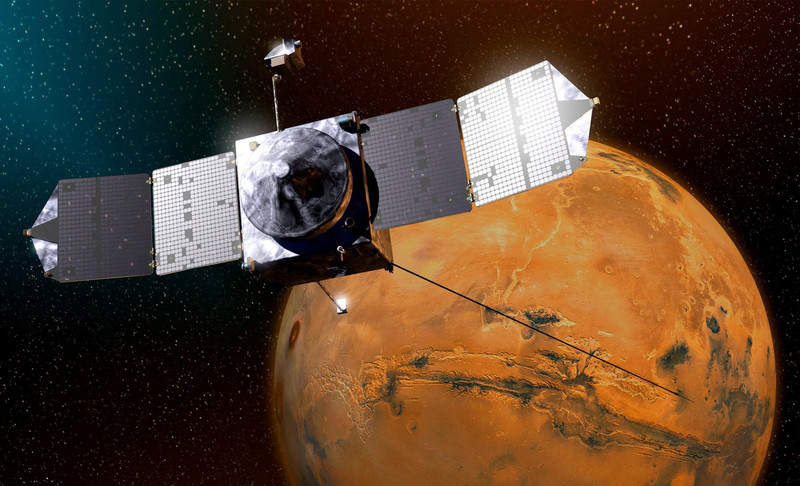
NASA's Maven Mars Orbiter Declared Out of Service After Six Months of Silence
Following an anomaly that disrupted its orbit and depleted its batteries, the Maven spacecraft, vital for understanding Mars' atmosphere, has ended its active mission. Its scientific data remains an invaluable legacy.
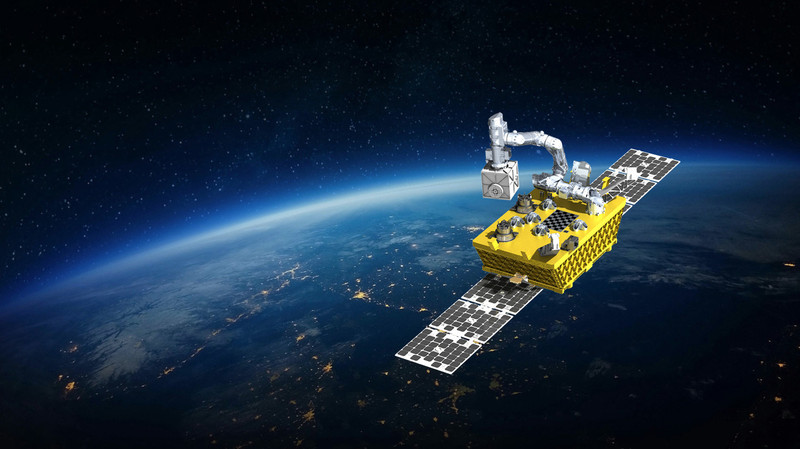
NASA Space Robotics Challenge
NASA invites U.S. researchers to submit proposals for experiments using a robotic arm that will be sent to low Earth orbit as part of the Fly Foundational Robots mission.
Latest news
View all
Stuntman Hollywood: Returns After 19 Years to PS5, Xbox Series, and PC
The iconic action and vehicular stunt franchise makes its comeback courtesy of Saber Interactive, promising a dose of nostalgia and adrenaline for the new generation.

Windows Drops NTLM: Microsoft Boosts Security with Kerberos
Microsoft is taking a crucial step to bolster security in Windows 11, announcing the deprecation of NTLM, its oldest authentication protocol, in favor of Kerberos.
Google Launches Gemma 4 12B: Local AI for Your Laptop with 16GB RAM
Google's new artificial intelligence model aims to democratize access to generative AI, allowing it to run on average consumer computers.
Comments (0)
No comments yet. Be the first!
Leave a comment