
Seeds detect rain sounds and speed up germination, study finds
Research from MIT shows that seeds can perceive vibrations caused by rain, influencing their growth and survival strategies.

A team of scientists at the Massachusetts Institute of Technology (MIT) discovered that plant seeds can detect the sound produced by rain and respond by speeding up their germination process. This finding, published in Scientific Reports, challenges the traditional view that only mature plants react to environmental stimuli.
The study focused on rice seeds submerged in shallow water. Researchers demonstrated that vibrations from raindrops increased germination speed by 30% to 40% compared to seeds without sound stimulation. Over 8,000 tests were conducted, simulating different rain intensities by adjusting droplet size and height.
A key part of the research was understanding the cellular mechanism behind this perception. The scientists identified tiny organelles called statoliths inside the cells, which act as sensors of environmental cues. When a raindrop hits water or soil, it creates sound waves that activate these statoliths, triggering internal processes that promote germination.
Makris, a professor at MIT and co-author, explained that the energy from rain sound is enough to stimulate seed growth. They also calculated that the acoustic pressure experienced by a seed near the surface can be comparable to that near a jet engine, thanks to water’s efficient transmission of pressure waves.
To verify their findings, the team measured vibrations in controlled environments and compared them with natural settings like puddles and wetlands. The results showed that seeds closer to the surface detect vibrations more effectively, allowing them to respond better to rainfall conditions and optimize germination.
Seeds can detect sound vibrations and accelerate their growth in response to rain.
This discovery opens new avenues for understanding plant sensitivity and how they interact with their environment, suggesting that sound perception plays a crucial role in plant survival and adaptation.
Article topics
Related articles

NASA Reveals New Path for Earth's Essential Life Elements
A recent study, published in Science Advances, uncovers how early Earth may have received phosphorus and nitrogen, highlighting Jupiter's critical role.
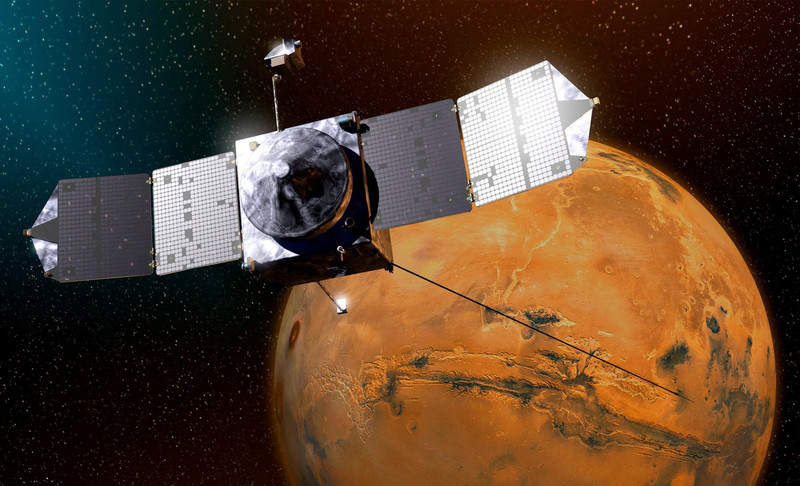
NASA's Maven Mars Orbiter Declared Out of Service After Six Months of Silence
Following an anomaly that disrupted its orbit and depleted its batteries, the Maven spacecraft, vital for understanding Mars' atmosphere, has ended its active mission. Its scientific data remains an invaluable legacy.
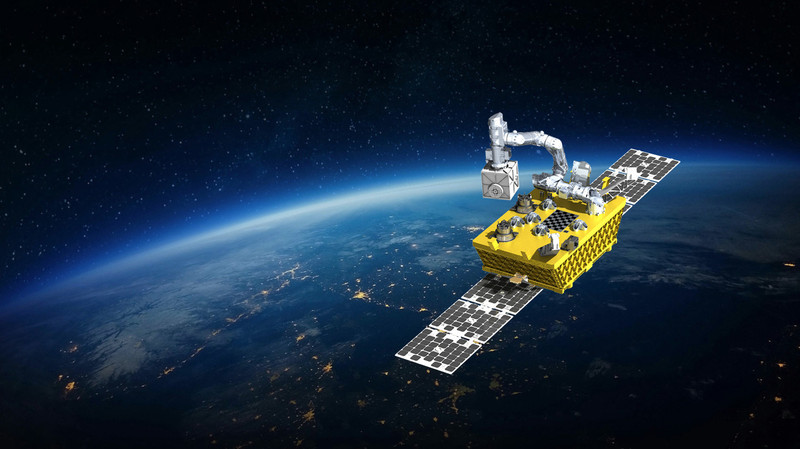
NASA Space Robotics Challenge
NASA invites U.S. researchers to submit proposals for experiments using a robotic arm that will be sent to low Earth orbit as part of the Fly Foundational Robots mission.
Latest news
View all
Stuntman Hollywood: Returns After 19 Years to PS5, Xbox Series, and PC
The iconic action and vehicular stunt franchise makes its comeback courtesy of Saber Interactive, promising a dose of nostalgia and adrenaline for the new generation.

Windows Drops NTLM: Microsoft Boosts Security with Kerberos
Microsoft is taking a crucial step to bolster security in Windows 11, announcing the deprecation of NTLM, its oldest authentication protocol, in favor of Kerberos.

Google Launches Gemma 4 12B: Local AI for Your Laptop with 16GB RAM
Google's new artificial intelligence model aims to democratize access to generative AI, allowing it to run on average consumer computers.
Comments (0)
No comments yet. Be the first!
Leave a comment