
Scientists propose a gateway to the fifth dimension in the universe
A team of physicists from Spain and Germany suggests that fermions could cross into a deformed extra dimension, explaining dark matter.

Recently, a group of theoretical physicists from Spain and Germany introduced a model that could open a door to a hidden fifth dimension in the universe. This breakthrough aims to explain the mystery of dark matter, which makes up about 27% of the universe's total content.
The study proposes that certain fermions, fundamental particles that make up ordinary matter, could act as a bridge to a deformed additional dimension. This idea, first proposed in 1999, was revisited in 2020 and is now analyzed more coherently to address the dark matter problem.
Fermions, such as electrons and quarks, might communicate with this extra dimension through mathematical portals, according to the theory. This could allow remnants of fermionic dark matter to form in that dimension, which does not fit within the standard model of particle physics.
Scientists analyzed how certain masses of fermions could “communicate” with a fifth dimension through mathematical portals.
The concept stems from a classic problem: most of the matter in the universe is invisible and does not emit detectable light. The “deformed dimension” proposal aims to provide an explanation for this absence, which current theories cannot fully explain.
The work, published in 2020 in the European Physical Journal C, revisits this idea and applies it to tackle the dark matter issue. The hypothesis suggests fermions could traverse mathematical portals and generate remnants in that additional dimension.
This advancement opens new possibilities for understanding the universe’s structure and the role of dark matter. Although still theoretical, these results offer an innovative perspective that could change how physicists approach these mysteries.
The study is ongoing, and in the coming years, experiments may confirm or refute this hypothesis, bringing us closer to understanding the true nature of the cosmos.

Related articles
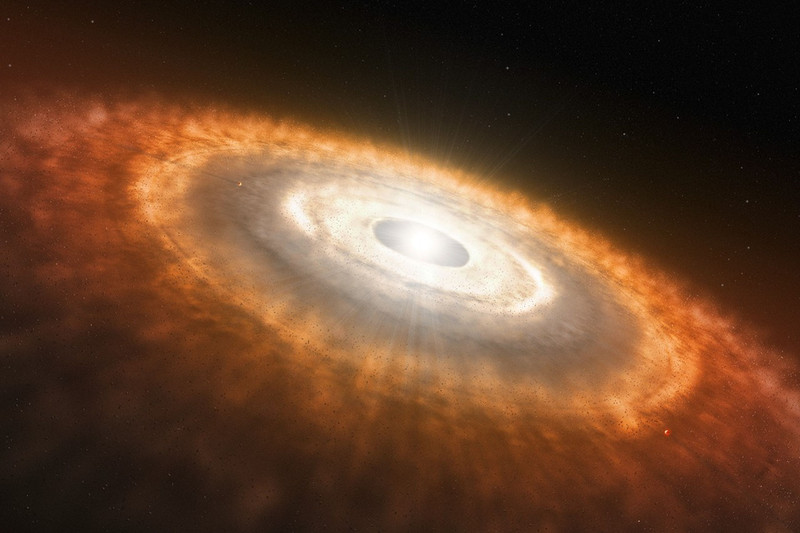
NASA Reveals New Path for Earth's Essential Life Elements
A recent study, published in Science Advances, uncovers how early Earth may have received phosphorus and nitrogen, highlighting Jupiter's critical role.
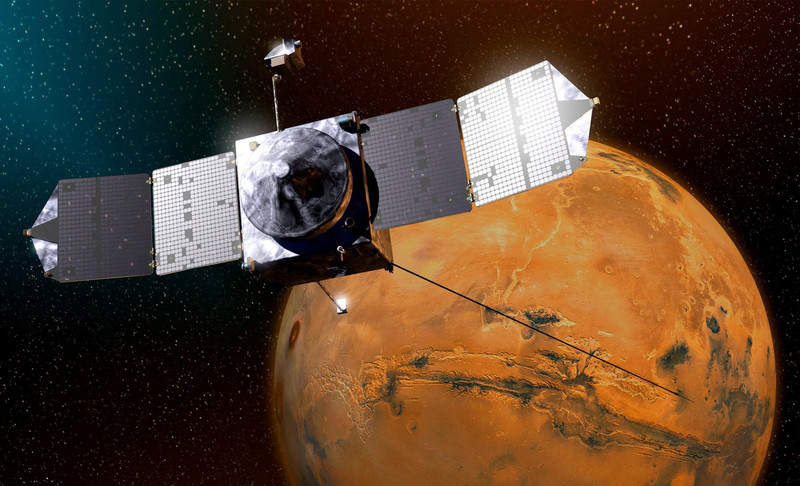
NASA's Maven Mars Orbiter Declared Out of Service After Six Months of Silence
Following an anomaly that disrupted its orbit and depleted its batteries, the Maven spacecraft, vital for understanding Mars' atmosphere, has ended its active mission. Its scientific data remains an invaluable legacy.

NASA Space Robotics Challenge
NASA invites U.S. researchers to submit proposals for experiments using a robotic arm that will be sent to low Earth orbit as part of the Fly Foundational Robots mission.
Latest news
View all
Stuntman Hollywood: Returns After 19 Years to PS5, Xbox Series, and PC
The iconic action and vehicular stunt franchise makes its comeback courtesy of Saber Interactive, promising a dose of nostalgia and adrenaline for the new generation.

Windows Drops NTLM: Microsoft Boosts Security with Kerberos
Microsoft is taking a crucial step to bolster security in Windows 11, announcing the deprecation of NTLM, its oldest authentication protocol, in favor of Kerberos.
Google Launches Gemma 4 12B: Local AI for Your Laptop with 16GB RAM
Google's new artificial intelligence model aims to democratize access to generative AI, allowing it to run on average consumer computers.
Comments (0)
No comments yet. Be the first!
Leave a comment