
Scientists detect a strange chirp from deep space in a supernova
An international team discovered an unprecedented signal in a supernova a billion light-years away, challenging current physics theories.

A team led by Joseph Farah from the University of California at Santa Barbara uncovered a surprising signal in a supernova located a billion light-years from Earth. The discovery was published in _Nature_ in March 2026.
This supernova, about 30 times brighter than typical explosions, produced a brightness fluctuation called a “chirp.” This signal, which gradually increases in frequency, had never been observed in such stellar events before.
“No supernova had emitted a chirp before, so something strange is happening,” Farah said.
The study combines astronomical observations with computational simulations using MOSFiT software. It suggests that the explosion was driven by a magnetar, a dense neutron star with extremely strong magnetic fields capable of producing unique phenomena.
The “chirp” signal is explained by a relativistic effect known as Lense-Thirring, where spacetime around the magnetar is “dragged” by its rotation. This causes the surrounding disk to wobble, creating the observed light fluctuation.
This finding opens new avenues for understanding extreme cosmic events. However, some experts believe more similar events need to be observed to confirm that a magnetar is the definitive cause of the phenomenon.
The future of this research points to the Vera C. Rubin Observatory in Chile, which is expected to discover more superluminous supernovae and shed light on these cosmic mysteries.
This discovery marks a significant step in modern astronomy and could reshape our understanding of stellar explosions and compact objects in space.
Article topics
Related articles
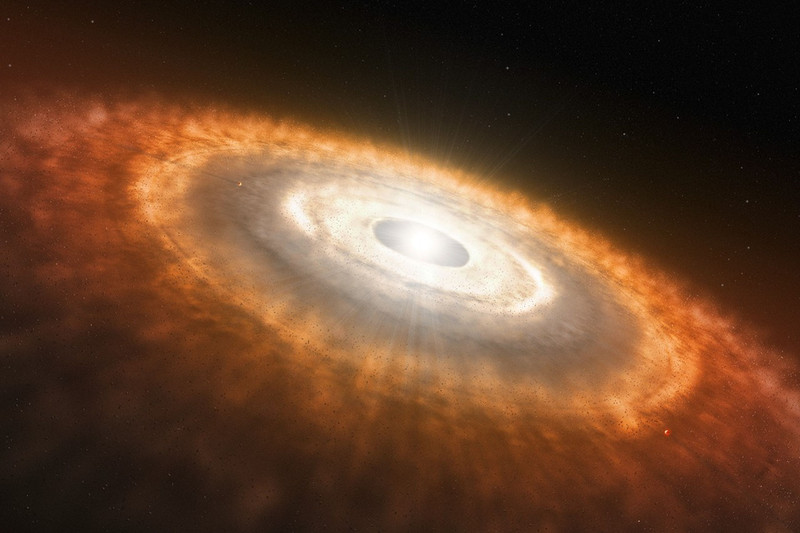
NASA Reveals New Path for Earth's Essential Life Elements
A recent study, published in Science Advances, uncovers how early Earth may have received phosphorus and nitrogen, highlighting Jupiter's critical role.
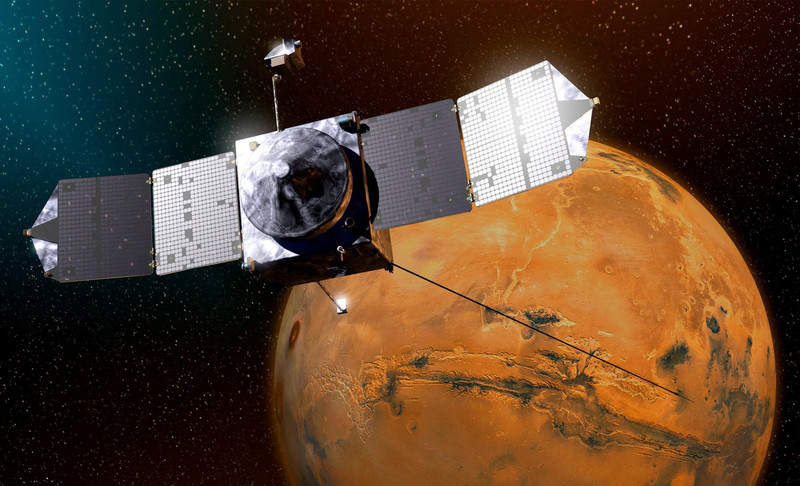
NASA's Maven Mars Orbiter Declared Out of Service After Six Months of Silence
Following an anomaly that disrupted its orbit and depleted its batteries, the Maven spacecraft, vital for understanding Mars' atmosphere, has ended its active mission. Its scientific data remains an invaluable legacy.
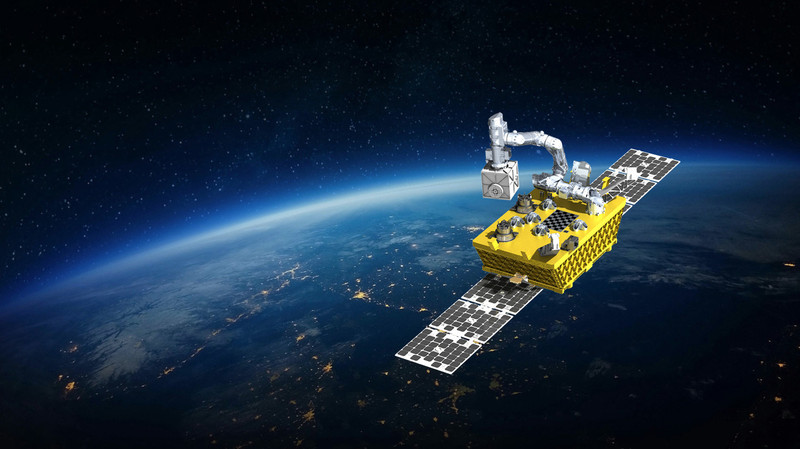
NASA Space Robotics Challenge
NASA invites U.S. researchers to submit proposals for experiments using a robotic arm that will be sent to low Earth orbit as part of the Fly Foundational Robots mission.
Latest news
View all
Stuntman Hollywood: Returns After 19 Years to PS5, Xbox Series, and PC
The iconic action and vehicular stunt franchise makes its comeback courtesy of Saber Interactive, promising a dose of nostalgia and adrenaline for the new generation.

Windows Drops NTLM: Microsoft Boosts Security with Kerberos
Microsoft is taking a crucial step to bolster security in Windows 11, announcing the deprecation of NTLM, its oldest authentication protocol, in favor of Kerberos.

Google Launches Gemma 4 12B: Local AI for Your Laptop with 16GB RAM
Google's new artificial intelligence model aims to democratize access to generative AI, allowing it to run on average consumer computers.
Comments (0)
No comments yet. Be the first!
Leave a comment