
Reducing Methane Alone Could Complicate Ozone Layer Recovery
A new study warns that isolated reductions in methane, a potent greenhouse gas, could jeopardize progress made in protecting the atmosphere.

Reducing methane, the second most important greenhouse gas derived from human activity after carbon dioxide, is crucial for slowing climate change. However, a recent study led by Dr. Weber and his team, cited by the University of Reading, warns that this measure should not be implemented in isolation to avoid compromising the recovery of the ozone layer.
According to Dr. Weber, decreasing methane emissions offers significant benefits, not only for rapidly combating climate change but also for improving air quality. This gas is a priority target in global environmental policies due to its direct impact and the speed with which its reduction can generate positive changes.
Scientists insist on the need for a comprehensive strategy. The research highlights that maintaining reductions in halocarbon and nitrous oxide emissions becomes even more important if countries also decrease methane. These calculations stem from validated models and cover different scenarios, which reinforces the relevance of the findings for guiding future environmental policy decisions.
The research shows that maintaining the reduction of halocarbon and nitrous oxide emissions becomes even more important if countries also decrease methane.
The report contextualizes these results within the framework of the 1987 Montreal Protocol. This historic agreement banned the most harmful halocarbons, allowing a gradual recovery of stratospheric ozone, an environmental achievement that could now be affected by partial approaches.

The complexity of Earth's atmosphere means that the interaction between different greenhouse gases is fundamental. Halocarbons, for example, are chemical compounds containing carbon and halogens, known for their powerful ozone-depleting effect, while nitrous oxide also contributes to the depletion of this protective layer.
If methane reductions were to continue without being accompanied by other comprehensive actions, the progress achieved could be at risk. This is due to the amplifying effect that other pollutants would exert on the ozone layer, reversing decades of atmospheric protection efforts.
The lesson is clear: the fight against climate change and the protection of the ozone layer require a holistic approach. Environmental policy decisions must consider the interconnectedness of different gases and their combined impacts, rather than focusing on a single element.

International coordination and constant vigilance will be essential to prevent decades of environmental progress from being reversed. It is crucial for countries to work together to implement strategies that address all major greenhouse gases simultaneously and coordinately, thus ensuring a lasting recovery of the ozone layer and effective climate change mitigation.
Article topics
Related articles
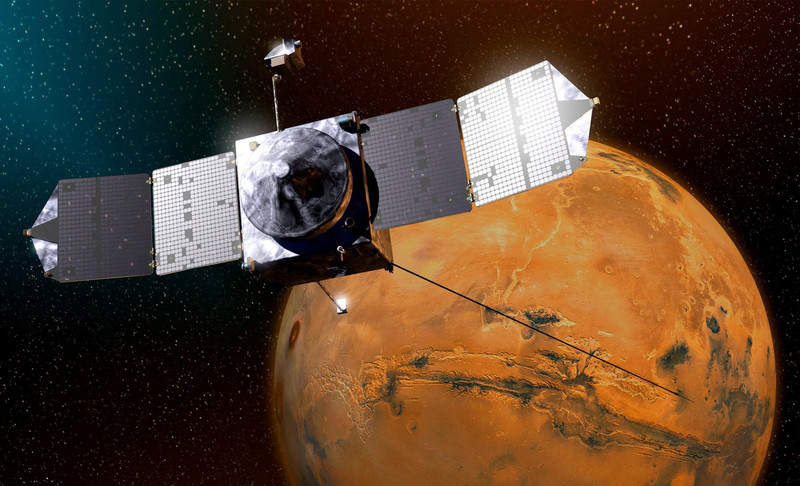
NASA's Maven Mars Orbiter Declared Out of Service After Six Months of Silence
Following an anomaly that disrupted its orbit and depleted its batteries, the Maven spacecraft, vital for understanding Mars' atmosphere, has ended its active mission. Its scientific data remains an invaluable legacy.

NASA Reveals New Path for Earth's Essential Life Elements
A recent study, published in Science Advances, uncovers how early Earth may have received phosphorus and nitrogen, highlighting Jupiter's critical role.

NASA Space Robotics Challenge
NASA invites U.S. researchers to submit proposals for experiments using a robotic arm that will be sent to low Earth orbit as part of the Fly Foundational Robots mission.
Latest news
View all
Stuntman Hollywood: Returns After 19 Years to PS5, Xbox Series, and PC
The iconic action and vehicular stunt franchise makes its comeback courtesy of Saber Interactive, promising a dose of nostalgia and adrenaline for the new generation.

Windows Drops NTLM: Microsoft Boosts Security with Kerberos
Microsoft is taking a crucial step to bolster security in Windows 11, announcing the deprecation of NTLM, its oldest authentication protocol, in favor of Kerberos.
Google Launches Gemma 4 12B: Local AI for Your Laptop with 16GB RAM
Google's new artificial intelligence model aims to democratize access to generative AI, allowing it to run on average consumer computers.
Comments (0)
No comments yet. Be the first!
Leave a comment