
Neuroscience Reveals Procrastination is a Survival Instinct
Forget the idea that procrastination is laziness or poor time management. Science shows it's a complex brain response designed to protect our emotions.

Procrastination, that common habit of delaying important tasks, is far more than a simple time management issue. Modern neuroscience now reveals it as a complex brain survival strategy. This groundbreaking discovery redefines our understanding of why we avoid essential duties. We now know it is an emotional regulation crisis, not merely laziness.
For decades, popular culture told us that procrastination was a failure of organization. It was even associated with a lack of discipline. However, scientific research offers a very different perspective. It suggests our brain seeks to protect us from uncomfortable sensations.
To understand procrastination, it is essential to look at our brain's anatomy. This organ often functions as an internal battlefield. On one side, we have the limbic system, one of the brain's most primitive parts. Its primary function is to keep us alive, away from pain, and seeking immediate pleasure.
On the other side, we find the prefrontal cortex, the evolutionarily more “modern” area. It is located right at the front of the brain. This is where rational thought, long-term planning, and logic reside. These two areas often conflict when we face challenges.
Procrastination is not an organizational failure; it is an emotional regulation crisis.
A 2021 review already indicated that these areas activate when facing tasks that generate anxiety, boredom, or insecurity. Think about studying for an exam or submitting a difficult project. The limbic system detects this situation as a “threat.” It automatically “hijacks” the prefrontal cortex. It prioritizes immediate emotional relief, like scrolling Instagram, over the long-term benefit of starting to study.
This year, a new study took a crucial step in understanding this brain system. It identified a specific neural circuit in primates that acts as a “brake” on motivation. This circuit connects two parts of the brain: the ventral striatum (VS) with the ventral pallidum (VP).
Researchers discovered that this VS-VP circuit activates when we face tasks associated with discomfort or the possibility of failure. It inhibits action, functioning as an extreme emotional protection mechanism. The study's most impactful finding was that interrupting this circuit in the lab immediately restored subjects' motivation. It was like “releasing the brake” and tackling the difficult task without hesitation.
This new line of research aligns with previous studies. Those investigations already associated procrastination with stress, fear of failure, and anxiety. So, the next time you find yourself putting something off, remember your brain isn't being lazy. It is trying to protect you, though not always in the best way. Understanding this is the first step to managing it better!
Article topics
Related articles

NASA Reveals New Path for Earth's Essential Life Elements
A recent study, published in Science Advances, uncovers how early Earth may have received phosphorus and nitrogen, highlighting Jupiter's critical role.
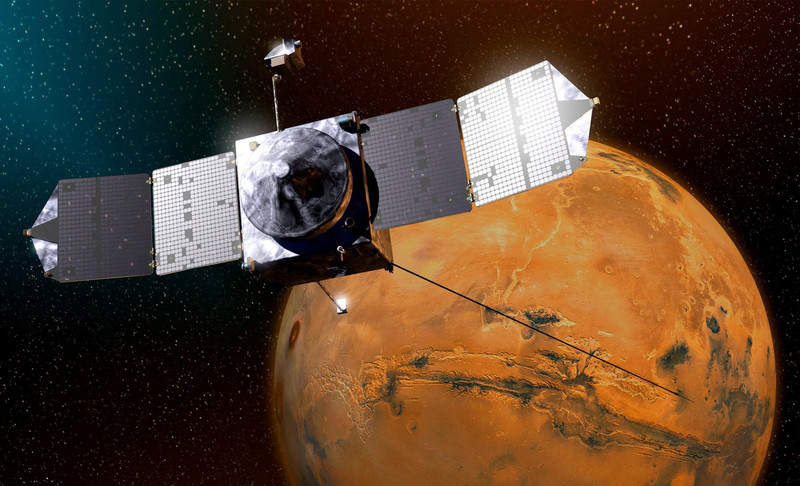
NASA's Maven Mars Orbiter Declared Out of Service After Six Months of Silence
Following an anomaly that disrupted its orbit and depleted its batteries, the Maven spacecraft, vital for understanding Mars' atmosphere, has ended its active mission. Its scientific data remains an invaluable legacy.

NASA Space Robotics Challenge
NASA invites U.S. researchers to submit proposals for experiments using a robotic arm that will be sent to low Earth orbit as part of the Fly Foundational Robots mission.
Latest news
View all
Stuntman Hollywood: Returns After 19 Years to PS5, Xbox Series, and PC
The iconic action and vehicular stunt franchise makes its comeback courtesy of Saber Interactive, promising a dose of nostalgia and adrenaline for the new generation.

Windows Drops NTLM: Microsoft Boosts Security with Kerberos
Microsoft is taking a crucial step to bolster security in Windows 11, announcing the deprecation of NTLM, its oldest authentication protocol, in favor of Kerberos.

Google Launches Gemma 4 12B: Local AI for Your Laptop with 16GB RAM
Google's new artificial intelligence model aims to democratize access to generative AI, allowing it to run on average consumer computers.
Comments (0)
No comments yet. Be the first!
Leave a comment