
Lunar Exploration Advances: NASA, SpaceX, Blue Origin Drive Moon Return!
Following Artemis II's success, NASA focuses on lunar lander development with partners! An Israeli company, Moonshot Space, introduces innovative electromagnetic launch technology!

NASA is celebrating the resounding success of the Artemis II mission, the first human flight to the Moon since 1972. This historic milestone reinvigorates human space exploration. The agency is now concentrating on developing lunar landers. This step is crucial for astronauts' anticipated return to our satellite's surface.
Artemis II demonstrated humanity's capability to reach lunar orbit once again. The mission was a triumph of engineering and international collaboration. This achievement lays the groundwork for more ambitious future expeditions.
The next major challenge involves ensuring a safe and efficient lunar landing. NASA is working intensely with its commercial contractors. Companies like SpaceX and Blue Origin are leading the design and construction of these descent systems. Their progress is vital for meeting Artemis III mission timelines.
Meanwhile, a disruptive innovation is emerging in the space landscape. Israel-based Moonshot Space announced a strategic agreement with Alaska Aerospace Corporation (AAC). They will install their first electromagnetic accelerator in Fairbanks, Alaska. This project promises to change how we launch objects into space.
Moonshot Space aims to propel payloads into space at hypersonic speeds using electricity instead of chemical fuels.
Moonshot Space, which emerged from "stealth mode" with $12 million in initial funding, is developing a high-power launch system. This accelerator will propel payloads into space at hypersonic velocities. It will utilize electrical energy instead of traditional chemical propellants.
This technology represents a significant step towards more sustainable and economical space launches. It could transform the logistics of cargo delivery to space. The scientific and technological community watches these pioneering developments with great interest.
Article topics
Related articles

NASA Reveals New Path for Earth's Essential Life Elements
A recent study, published in Science Advances, uncovers how early Earth may have received phosphorus and nitrogen, highlighting Jupiter's critical role.
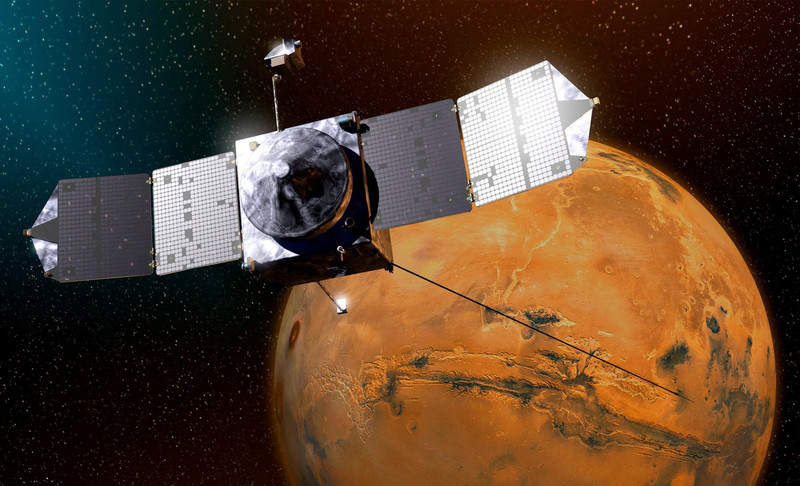
NASA's Maven Mars Orbiter Declared Out of Service After Six Months of Silence
Following an anomaly that disrupted its orbit and depleted its batteries, the Maven spacecraft, vital for understanding Mars' atmosphere, has ended its active mission. Its scientific data remains an invaluable legacy.
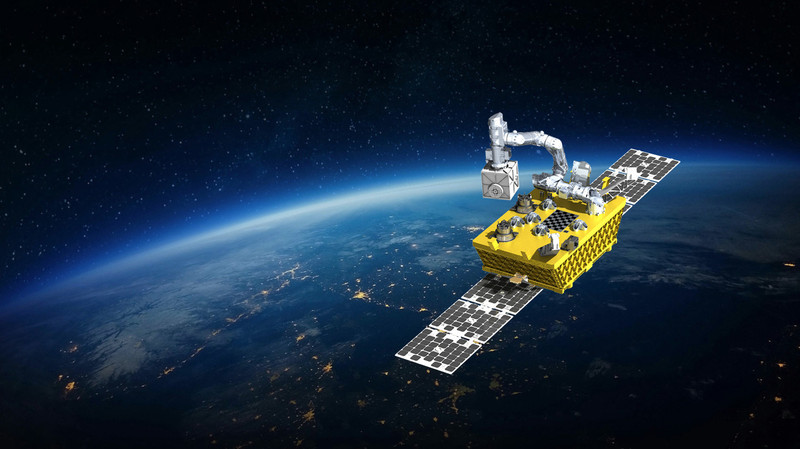
NASA Space Robotics Challenge
NASA invites U.S. researchers to submit proposals for experiments using a robotic arm that will be sent to low Earth orbit as part of the Fly Foundational Robots mission.
Latest news
View all
Stuntman Hollywood: Returns After 19 Years to PS5, Xbox Series, and PC
The iconic action and vehicular stunt franchise makes its comeback courtesy of Saber Interactive, promising a dose of nostalgia and adrenaline for the new generation.

Windows Drops NTLM: Microsoft Boosts Security with Kerberos
Microsoft is taking a crucial step to bolster security in Windows 11, announcing the deprecation of NTLM, its oldest authentication protocol, in favor of Kerberos.

Google Launches Gemma 4 12B: Local AI for Your Laptop with 16GB RAM
Google's new artificial intelligence model aims to democratize access to generative AI, allowing it to run on average consumer computers.
Comments (0)
No comments yet. Be the first!
Leave a comment