
Loki: An Ancient Chaotic Stellar System Hidden in the Milky Way
An international team identified remnants of a dwarf galaxy that collided with the Milky Way over 10 billion years ago, shedding light on its violent past.

A team of astronomers led by Federico Sestito announced the discovery of Loki, an ancient and chaotic stellar system hidden within the Milky Way. Published in Monthly Notices of the Royal Astronomical Society, this finding suggests Loki is the remnant of a massive galaxy that collided with ours during its early formation. The presence of stars with peculiar orbits and an unusually homogeneous chemical composition supports this idea.
The researchers analyzed 20 extremely old stars, characterized by low metallicity, located near the solar neighborhood. Their dynamic behavior stood out: these stars maintain orbits that nearly align with the plane of the Milky Way, with eccentricities between 0.5 and 0.9. Of these, 11 follow prograde orbits, rotating in the same direction as the galaxy, while nine move retrograde, in the opposite direction.
These results suggest that these stars may be the remnants of an ancient system that collided with our galaxy.
Scientists believe this configuration resulted from a violent collision over 10 billion years ago, which dispersed the stars into a chaotic structure. The chemical cohesion of these stars, with narrow abundance ranges, indicates they formed in a closed, coherent environment, similar to a classic dwarf galaxy before being absorbed.
To confirm this, they used high-resolution cosmological simulations called NIHAO-UHD, which show that a small impactor can disperse stars in both prograde and retrograde configurations. The name Loki, from Norse mythology, reflects the chaotic nature of this system. Models estimate Loki’s total baryonic mass at around 1.4 billion solar masses, comparable to the Magellanic Clouds.
This discovery challenges traditional views of the galactic halo's structure, but authors warn that the Milky Way's formation involved multiple accretion events. Loki’s combination of eccentric orbits and chemical homogeneity makes it distinct from other recently identified galactic relics.
The finding redefines our understanding of the Milky Way’s assembly and highlights the importance of upcoming spectroscopic surveys like WEAVE and 4MOST in the southern hemisphere. These instruments could confirm whether Loki is a unique entity or just the tip of a much more turbulent galactic past. Meanwhile, these stars remain silent witnesses to an era when our galaxy was still forming through cosmic collisions and mergers, awaiting modern technology to decode their hidden origin deep within the galactic plane.
Article topics
Related articles
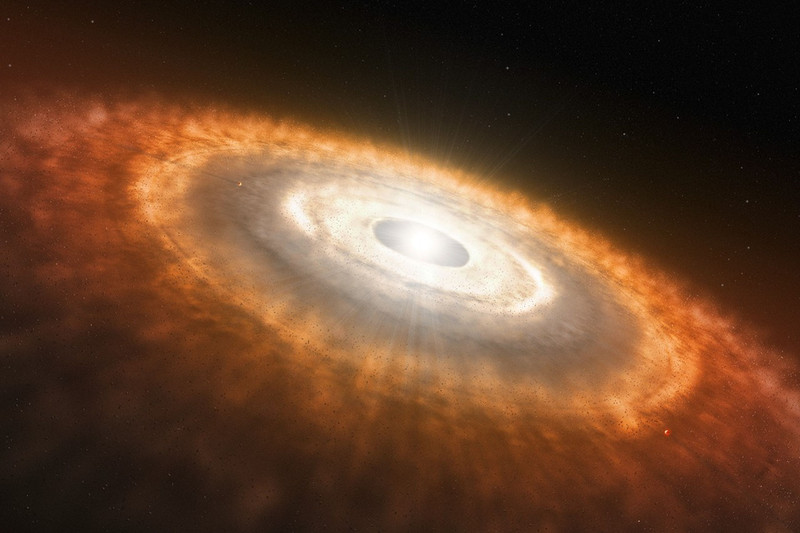
NASA Reveals New Path for Earth's Essential Life Elements
A recent study, published in Science Advances, uncovers how early Earth may have received phosphorus and nitrogen, highlighting Jupiter's critical role.
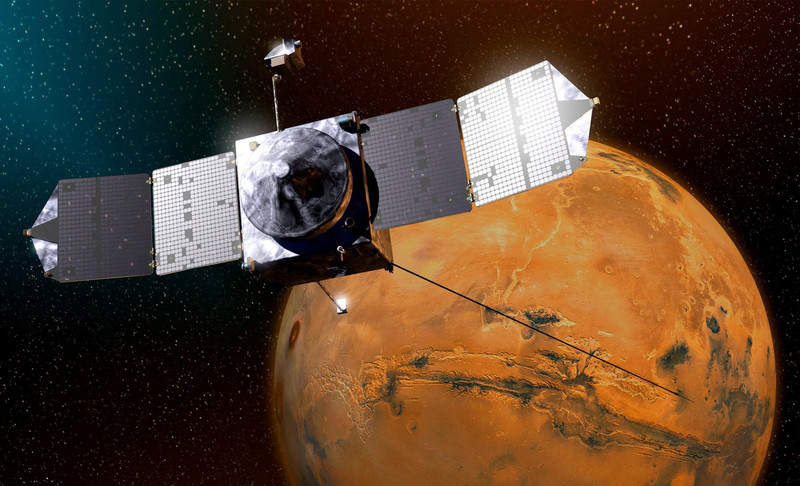
NASA's Maven Mars Orbiter Declared Out of Service After Six Months of Silence
Following an anomaly that disrupted its orbit and depleted its batteries, the Maven spacecraft, vital for understanding Mars' atmosphere, has ended its active mission. Its scientific data remains an invaluable legacy.
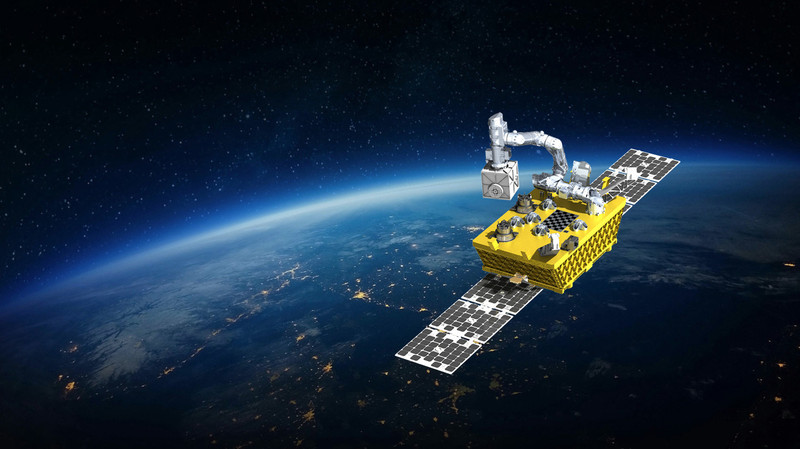
NASA Space Robotics Challenge
NASA invites U.S. researchers to submit proposals for experiments using a robotic arm that will be sent to low Earth orbit as part of the Fly Foundational Robots mission.
Latest news
View all
Stuntman Hollywood: Returns After 19 Years to PS5, Xbox Series, and PC
The iconic action and vehicular stunt franchise makes its comeback courtesy of Saber Interactive, promising a dose of nostalgia and adrenaline for the new generation.

Windows Drops NTLM: Microsoft Boosts Security with Kerberos
Microsoft is taking a crucial step to bolster security in Windows 11, announcing the deprecation of NTLM, its oldest authentication protocol, in favor of Kerberos.
Google Launches Gemma 4 12B: Local AI for Your Laptop with 16GB RAM
Google's new artificial intelligence model aims to democratize access to generative AI, allowing it to run on average consumer computers.
Comments (0)
No comments yet. Be the first!
Leave a comment