
James Webb Unravels 29 Cygni b's Origin: Planet or Failed Star?
A team of astronomers used the James Webb Space Telescope to resolve the paradox of 29 Cygni b, a massive object defying cosmic classifications.
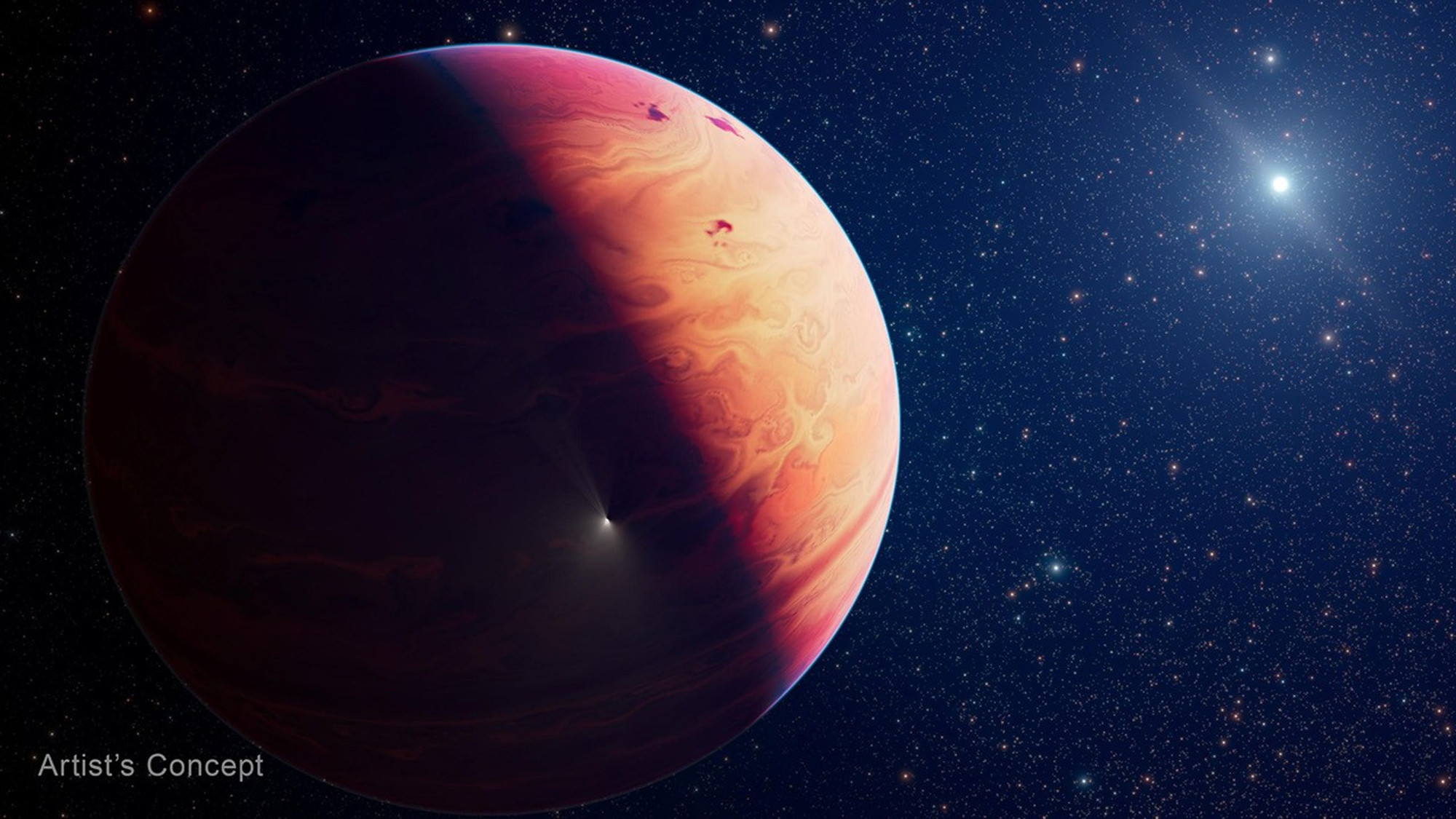
The James Webb Space Telescope (JWST) has unveiled the true nature of 29 Cygni b, a colossal celestial object that blurred the lines between planet and star. Its recent study refines our understanding of how cosmic bodies form.
With a mass fifteen times that of Jupiter, 29 Cygni b presented a cosmic paradox: was it a super-Jupiter or a brown dwarf, a failed star? Astronomers utilized the JWST's NIRCam instrument for high-resolution imaging and spectroscopic measurements.
NIRCam allows scientists to analyze the atmospheric composition of celestial bodies by observing how they reflect light. The data revealed that 29 Cygni b is remarkably enriched in metals, containing the equivalent of 150 Earths in heavy elements. What a groundbreaking discovery!
This abundance of metals provides a critical clue.
This abundance of metals provides a critical clue. It strongly suggests that 29 Cygni b formed through the accretion of a vast amount of metal-rich solids within a protoplanetary disk. Accretion is the process where matter gradually clumps together due to gravity. This confirms its planetary status, despite its unusual size.
Planetary formation typically follows a "bottom-up" process. Within a disk of gas and dust, known as a protoplanetary disk, particles collide and gradually clump together, growing into planets. Gas giants further accumulate gas during this accretion process.
In contrast, stars form "top-down." A massive cloud of gas fragments, and each fragment collapses under its own gravity, becoming denser and hotter. This immense gravitational collapse enables nuclear fusion in their cores.
The sheer mass of 29 Cygni b challenges the conventional "bottom-up" formation theory for such enormous objects. An alternative hypothesis suggests that extremely massive planets might form via direct fragmentation within protoplanetary disks.
The European Space Agency (ESA) explains this mechanism could account for very massive objects found billions of kilometers from their host stars. These distant regions would have less dense protoplanetary disks, favoring fragmentation. The cosmos always keeps us on our toes!
Article topics
Related articles
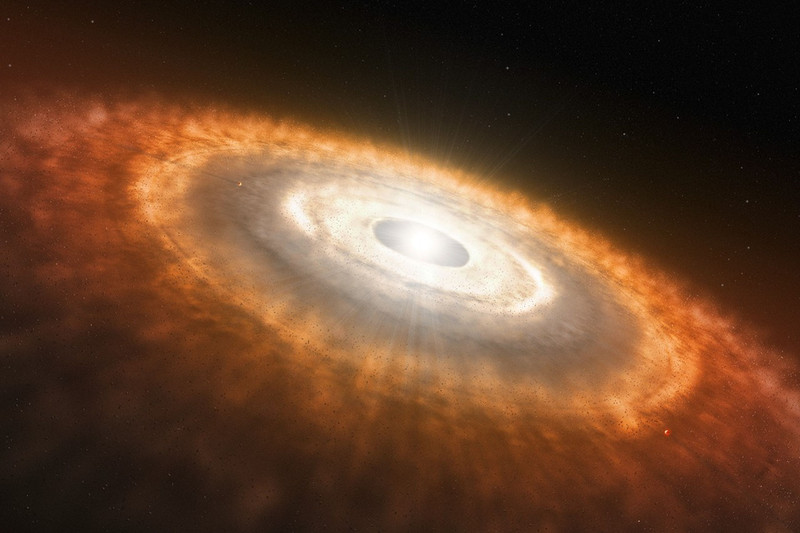
NASA Reveals New Path for Earth's Essential Life Elements
A recent study, published in Science Advances, uncovers how early Earth may have received phosphorus and nitrogen, highlighting Jupiter's critical role.
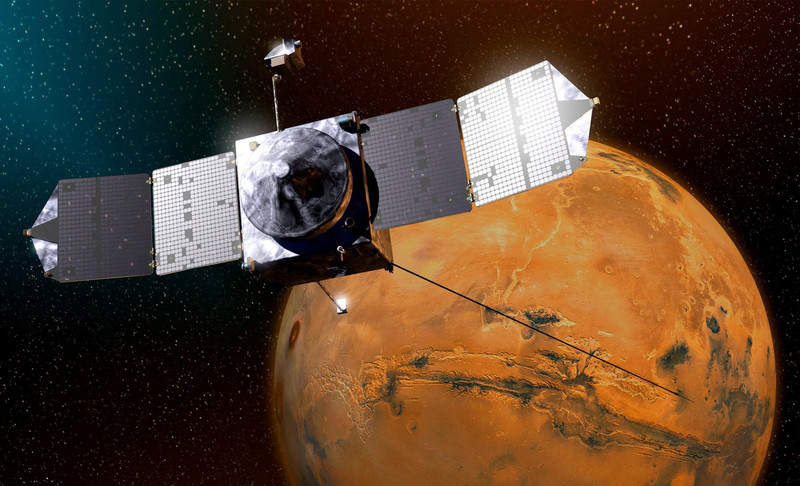
NASA's Maven Mars Orbiter Declared Out of Service After Six Months of Silence
Following an anomaly that disrupted its orbit and depleted its batteries, the Maven spacecraft, vital for understanding Mars' atmosphere, has ended its active mission. Its scientific data remains an invaluable legacy.

NASA Space Robotics Challenge
NASA invites U.S. researchers to submit proposals for experiments using a robotic arm that will be sent to low Earth orbit as part of the Fly Foundational Robots mission.
Latest news
View all
Stuntman Hollywood: Returns After 19 Years to PS5, Xbox Series, and PC
The iconic action and vehicular stunt franchise makes its comeback courtesy of Saber Interactive, promising a dose of nostalgia and adrenaline for the new generation.

Windows Drops NTLM: Microsoft Boosts Security with Kerberos
Microsoft is taking a crucial step to bolster security in Windows 11, announcing the deprecation of NTLM, its oldest authentication protocol, in favor of Kerberos.

Google Launches Gemma 4 12B: Local AI for Your Laptop with 16GB RAM
Google's new artificial intelligence model aims to democratize access to generative AI, allowing it to run on average consumer computers.
Comments (0)
No comments yet. Be the first!
Leave a comment