
James Webb Delivers Bad News for TRAPPIST-1, But Hope Remains
New observations from the James Webb Space Telescope suggest two rocky planets in the TRAPPIST-1 system lack atmospheres, a crucial finding for the search for life.
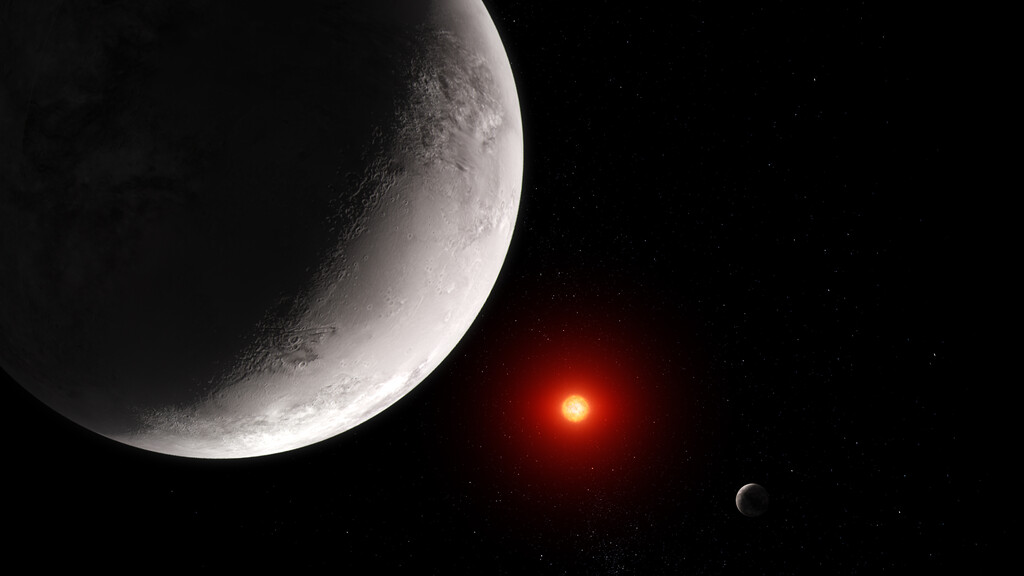
The James Webb Space Telescope has unveiled crucial data regarding the TRAPPIST-1 system, a collection of seven rocky planets orbiting a red dwarf star. An international team of astronomers utilized its powerful infrared instruments to study the atmospheres of two of these worlds. Initial results suggest an absence of atmosphere on TRAPPIST-1a and TRAPPIST-1b, impacting the search for extraterrestrial life in this promising natural laboratory.
This planetary system draws significant scientific attention due to its potential for hosting habitable planets. All seven exoplanets are rocky, with some being similar in size to Earth. They orbit very closely together, concentrating their paths within a distance smaller than that between Mercury and the Sun. The star TRAPPIST-1 is a red dwarf, less energetic than our own Sun, allowing for moderate temperatures despite the close proximity.
James Webb's observations focused on TRAPPIST-1a and TRAPPIST-1b, the two innermost planets. The telescope employed its infrared radiation analysis instrument to create detailed thermal maps. These maps revealed that both planets lack a significant atmosphere, a discouraging finding for the possibility of life.
The absence of an atmosphere could stem from the TRAPPIST-1 star itself. Red dwarfs, though less luminous, emit intense flows of radiation and energetic particles. These stellar phenomena are capable of eroding and destroying planetary atmospheres over time. Without a protective atmosphere, life as we know it is unviable.
The absence of atmosphere on TRAPPIST-1a and TRAPPIST-1b poses a significant challenge for habitability.
Furthermore, all planets within the TRAPPIST-1 system are "tidally locked." This means their rotation and orbital periods are synchronized. As a result, one side of the planet perpetually faces the star, experiencing eternal day, while the other remains in constant night.
When a tidally locked planet lacks an atmosphere, temperatures become extreme. The dayside can reach between 100ºC and 200ºC, while the nightside remains frozen. An atmosphere, conversely, would distribute heat, maintaining a more stable temperature across the entire planet.
Despite these initial findings, hope persists for the rest of the system. Only two of the seven planets were analyzed. The other five TRAPPIST-1 exoplanets still hold their secrets. This system remains a high-priority target for astrobiology and future James Webb investigations!
Article topics
Related articles
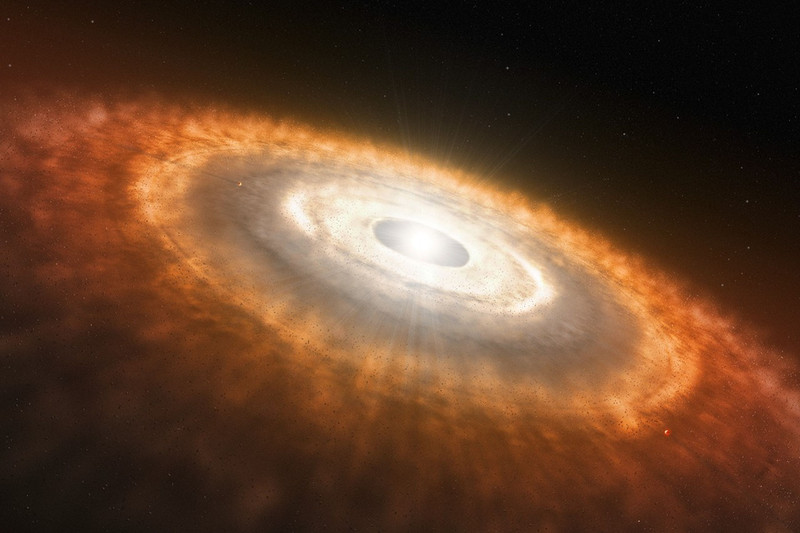
NASA Reveals New Path for Earth's Essential Life Elements
A recent study, published in Science Advances, uncovers how early Earth may have received phosphorus and nitrogen, highlighting Jupiter's critical role.
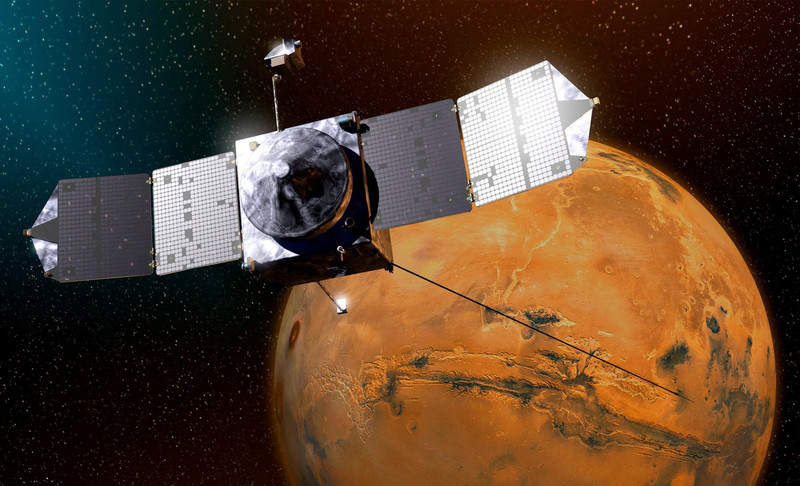
NASA's Maven Mars Orbiter Declared Out of Service After Six Months of Silence
Following an anomaly that disrupted its orbit and depleted its batteries, the Maven spacecraft, vital for understanding Mars' atmosphere, has ended its active mission. Its scientific data remains an invaluable legacy.
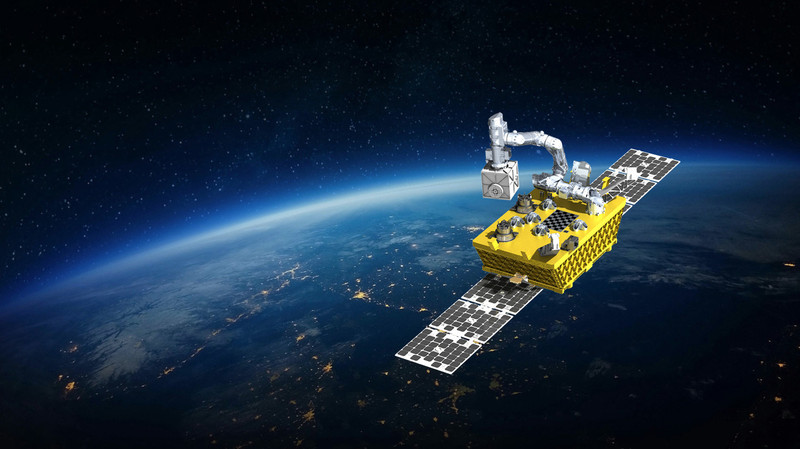
NASA Space Robotics Challenge
NASA invites U.S. researchers to submit proposals for experiments using a robotic arm that will be sent to low Earth orbit as part of the Fly Foundational Robots mission.
Latest news
View all
Stuntman Hollywood: Returns After 19 Years to PS5, Xbox Series, and PC
The iconic action and vehicular stunt franchise makes its comeback courtesy of Saber Interactive, promising a dose of nostalgia and adrenaline for the new generation.

Windows Drops NTLM: Microsoft Boosts Security with Kerberos
Microsoft is taking a crucial step to bolster security in Windows 11, announcing the deprecation of NTLM, its oldest authentication protocol, in favor of Kerberos.

Google Launches Gemma 4 12B: Local AI for Your Laptop with 16GB RAM
Google's new artificial intelligence model aims to democratize access to generative AI, allowing it to run on average consumer computers.
Comments (0)
No comments yet. Be the first!
Leave a comment