
How Artemis II Astronauts Train to Safeguard Muscles and Bones in Deep Space
Astronauts on the Artemis II mission, marking humanity's return to lunar orbit, are undergoing a rigorous physical training regimen to counteract the devastating effects of microgravity on their muscles and bones, utilizing innovative technology like the inertia flywheel.
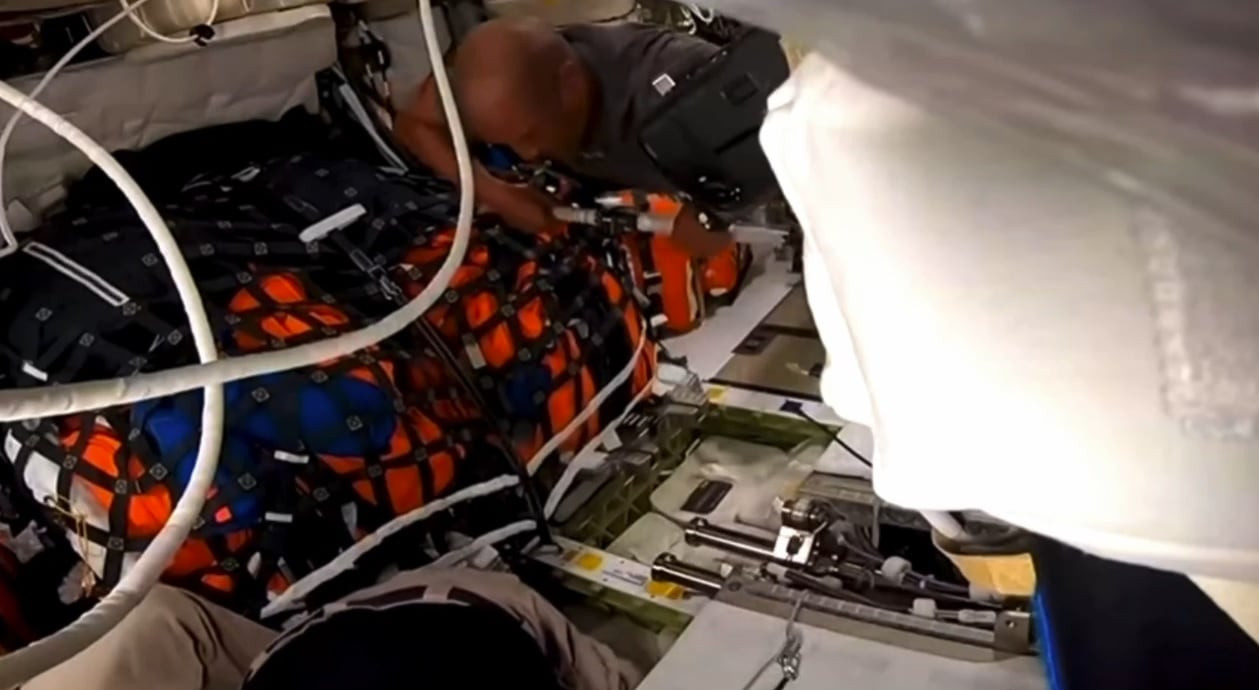
The Microgravity Challenge: Protecting the Human Body in Space
In the vast and hostile environment of space, the human body faces unique challenges that can severely compromise astronaut health. Recently, an image of pilot Victor Glover, a member of the Artemis II mission, performing physical exercises during a NASA broadcast, highlighted the critical importance of this practice. Far from being a secondary routine, physical training is a cornerstone for protecting the crew's musculoskeletal systems. In the absence of Earth's gravity, muscles experience rapid atrophy, losing volume and strength, while bones, deprived of their usual load, decrease in mineral density. The National Aeronautics and Space Administration (NASA) estimates that astronauts can lose between 1% and 1.5% of bone density in just one month in orbit, an alarming figure that not only weakens the skeleton but also increases the risk of kidney stones and other metabolic complications due to increased calcium in the bloodstream.
Artemis II: The Return to the Moon and Human Resilience
The Artemis II mission represents a historic milestone: the first crewed journey to the Moon in over half a century, laying the groundwork for future lunar exploration missions and, eventually, to Mars. The crew, comprising NASA astronauts Reid Wiseman, Victor Glover, and Christina Koch, along with Canadian Jeremy Hansen from the Canadian Space Agency (CSA), is preparing for this unprecedented challenge with a meticulously designed training strategy. While morning workouts are used to test the Orion spacecraft's life support systems before leaving Earth orbit, the primary physical focus is on mitigating the effects of microgravity. Muscle mass reduction in microgravity is a well-documented phenomenon, attributable to the absence of the constant resistance that Earth's gravity imposes on legs, back, and other key areas. Even with two hours of daily exercise on prolonged missions, muscle atrophy is an almost inevitable phenomenon. For Artemis II, a ten-day mission, the plan seeks to minimize these adverse effects on the astronauts' musculoskeletal systems, ensuring their optimal physical condition for mission success and post-flight recovery.
Innovation for Deep Space: The Inertia Flywheel System
Given the nature of deep space missions, where every gram and every cubic centimeter counts, NASA and its partners have had to innovate in exercise solutions. Unlike the International Space Station (ISS), which features bulky exercise equipment exceeding 1800 kg and occupying 240 cubic meters, the Orion spacecraft requires a compact and efficient alternative. This is where the inertia flywheel comes into play, a fundamental piece of technology that redefines physical training in space. This ingenious device weighs just 14 kilograms and occupies the space equivalent of a carry-on suitcase, meeting the strict weight and volume limitations of missions beyond low Earth orbit. Its design allows it to offer effective resistance training without sacrificing space or adding excessive load to the spacecraft, a critical factor for the viability of long-duration missions.
How the Flywheel Works: Versatile Training in a Compact Package
The inertia flywheel system is a marvel of compact engineering. It consists of a flywheel, pulleys, a torque limiter, and a structure that, as a whole, is roughly the size of an extra-large shoebox. Its operating principle is similar to that of a rowing machine or ergometer, allowing astronauts to perform a wide range of aerobic and resistance exercises. The astronaut securely fastens themselves with a strap to a bar or harness and pulls it, activating the flywheel mechanism. The resistance generated by the flywheel's inertia provides a constant and controllable load, essential for stimulating muscle growth and maintaining bone density. Thanks to this system, crew members can perform key movements such as bicep curls, squats, deadlifts, ergometric rows, and calf raises, thus covering major muscle groups. Furthermore, the flywheel's load is easily adjusted via a selector, allowing the exercise intensity to be adapted to each astronaut's individual needs, ensuring comprehensive and personalized training in the most extreme conditions.
Beyond Artemis II: The Future of Space Exercise
The implementation of the inertia flywheel in missions like Artemis II is not only crucial for astronaut health on this specific journey but also sets a vital precedent for future space exploration. As humanity ventures further from Earth, towards the Moon and Mars, the ability to maintain crew physical health efficiently and with limited resources becomes indispensable. These types of technological innovations in space exercise are fundamental to overcoming the physiological challenges of microgravity, enabling longer and safer missions. NASA's and its partners' commitment to research and development of solutions like the inertia flywheel underscores the understanding that space exploration is not just about rockets and destinations, but also about the resilience and well-being of the human body in the most extreme environments. Thus, every squat and every row performed in the Orion spacecraft contributes not only to an astronaut's health but to the advancement of all humanity on its journey through the cosmos.
Related articles

NASA Reveals New Path for Earth's Essential Life Elements
A recent study, published in Science Advances, uncovers how early Earth may have received phosphorus and nitrogen, highlighting Jupiter's critical role.
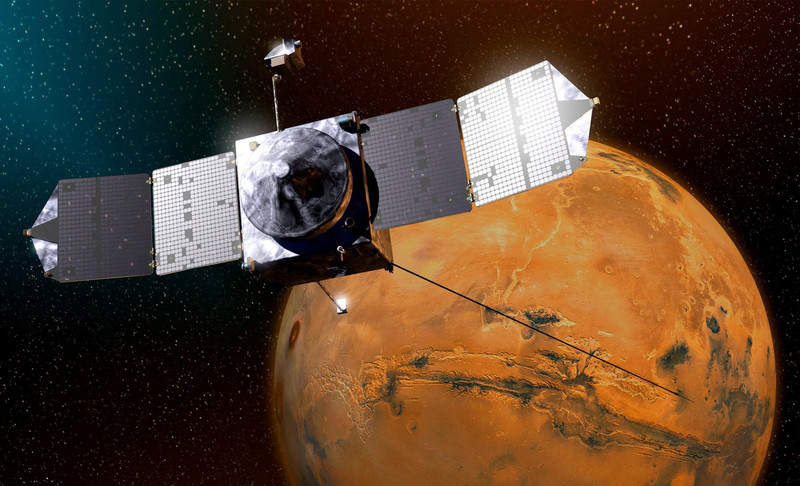
NASA's Maven Mars Orbiter Declared Out of Service After Six Months of Silence
Following an anomaly that disrupted its orbit and depleted its batteries, the Maven spacecraft, vital for understanding Mars' atmosphere, has ended its active mission. Its scientific data remains an invaluable legacy.
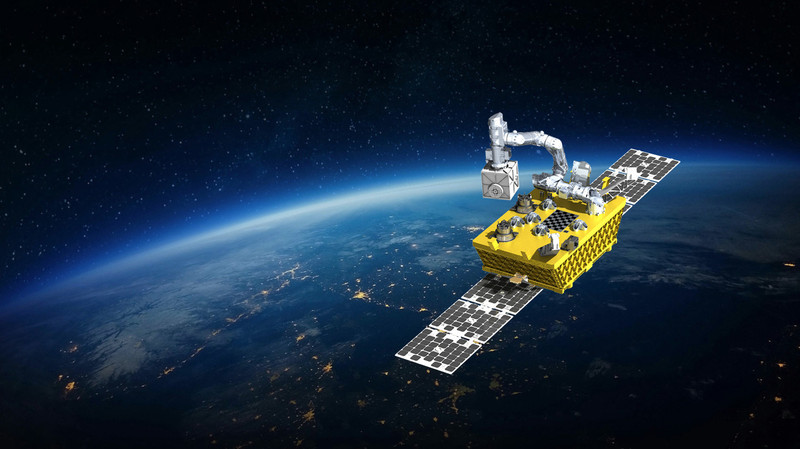
NASA Space Robotics Challenge
NASA invites U.S. researchers to submit proposals for experiments using a robotic arm that will be sent to low Earth orbit as part of the Fly Foundational Robots mission.
Latest news
View all
Stuntman Hollywood: Returns After 19 Years to PS5, Xbox Series, and PC
The iconic action and vehicular stunt franchise makes its comeback courtesy of Saber Interactive, promising a dose of nostalgia and adrenaline for the new generation.

Windows Drops NTLM: Microsoft Boosts Security with Kerberos
Microsoft is taking a crucial step to bolster security in Windows 11, announcing the deprecation of NTLM, its oldest authentication protocol, in favor of Kerberos.

Google Launches Gemma 4 12B: Local AI for Your Laptop with 16GB RAM
Google's new artificial intelligence model aims to democratize access to generative AI, allowing it to run on average consumer computers.
Comments (0)
No comments yet. Be the first!
Leave a comment