
DragonFire: UK's Laser System Shoots Down Drones for the Cost of Two Beers
The United Kingdom has unveiled DragonFire, an air defense laser system capable of neutralizing high-speed drones. This breakthrough redefines military strategy with unprecedented economic efficiency.
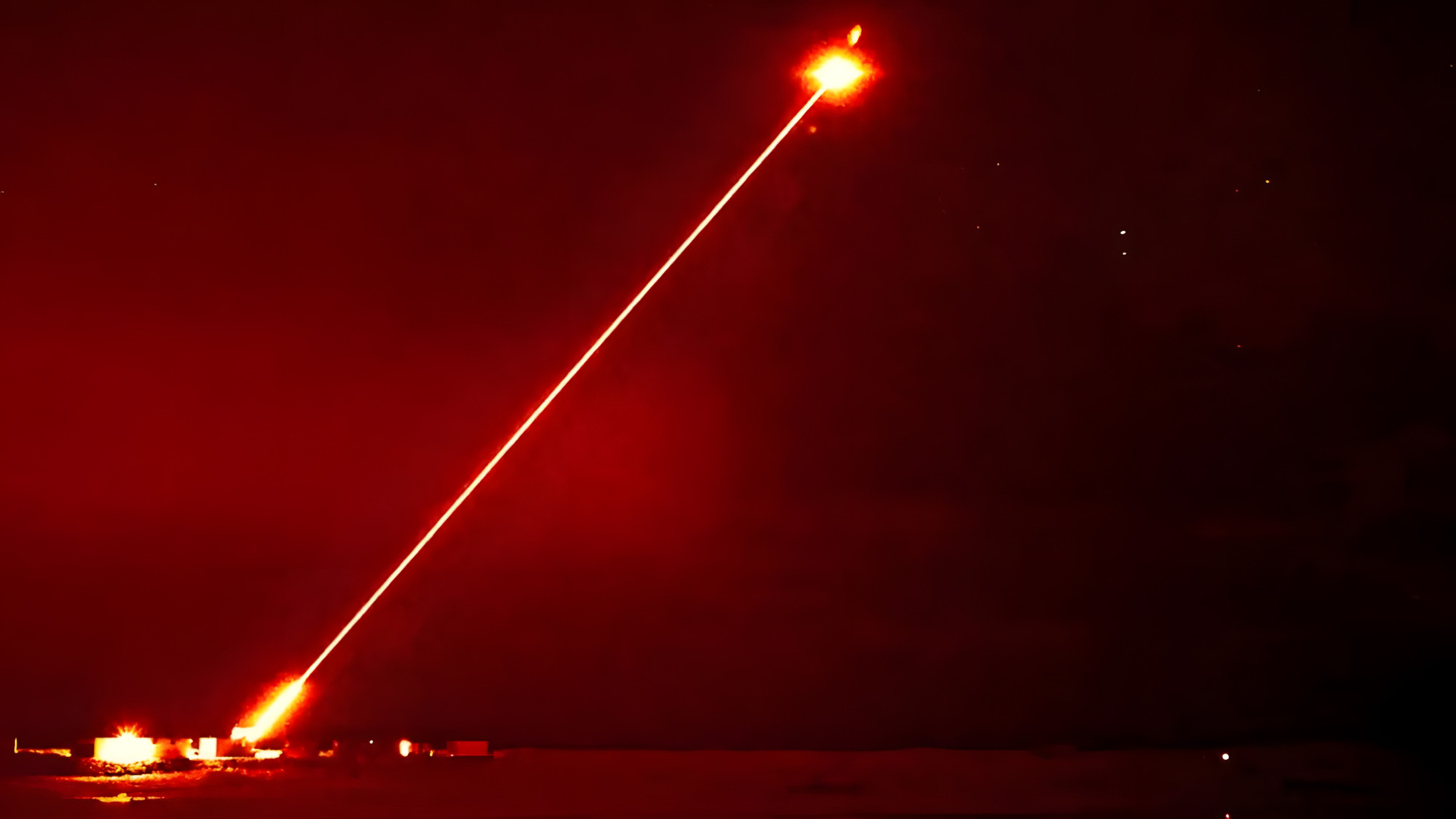
The United Kingdom has achieved a groundbreaking defense breakthrough with its DragonFire laser system. This technology can shoot down drones flying at 650 km/h. This development marks a crucial milestone in the evolution of directed energy weapons. Moreover, each shot costs only about £10, equivalent to two beers, fundamentally redefining military strategy against modern threats.
For some time, armies have pursued the idea of weapons that fire energy instead of projectiles. Experiments with systems capable of concentrating heat at a distance were already underway during the Cold War. However, technical limitations relegated them to tests and prototypes for many years. Today, advances in power generation and beam control have allowed this ambition to emerge from the laboratory.
The DragonFire program represents a turning point. It rapidly transitioned from a technology demonstrator to an operational system within a few years. The United Kingdom decided to accelerate its deployment for 2027. It will be integrated into the Royal Navy's Type 45 destroyers. Thus, the country becomes the first European NATO member to deploy a functional naval laser.
Each shot costs only about £10, equivalent to two beers.
This move is not only technological but also doctrinal. It implies changing how maritime air defense is conceived. It integrates new layers that do not rely on traditional ammunition. DragonFire's true brilliance lies in its economic efficiency. Each discharge consumes electricity costing merely £10.
This stands in stark contrast to the hundreds of thousands a conventional interceptor missile can cost. Imagine, the price of a single shot is comparable to a couple of pints at the pub. This difference completely shifts the balance between attack and defense. We saw it in Ukraine and now in Iran: in scenarios where cheap drones are launched by the dozens, responding with expensive missiles became unsustainable.
A laser like DragonFire allows maintaining pace without depleting critical resources. This difference makes the laser an especially attractive tool in modern conflicts. Target saturation is more important than individual sophistication. DragonFire's precision is astonishing. It can hit coin-sized targets at a kilometer's distance. The system maintains the beam on moving targets until structural failure occurs.
Its architecture combines multiple fiber lasers into a single high-quality beam. Electro-optical sensors and continuous tracking systems expertly guide this beam. Furthermore, its sustained firing capability eliminates one of the main limitations of conventional weapons: the need for reloading. This enables it to engage multiple consecutive threats in a matter of seconds. It is the ideal answer against drone swarms.
Article topics
Related articles

NASA Reveals New Path for Earth's Essential Life Elements
A recent study, published in Science Advances, uncovers how early Earth may have received phosphorus and nitrogen, highlighting Jupiter's critical role.
NASA's Maven Mars Orbiter Declared Out of Service After Six Months of Silence
Following an anomaly that disrupted its orbit and depleted its batteries, the Maven spacecraft, vital for understanding Mars' atmosphere, has ended its active mission. Its scientific data remains an invaluable legacy.

NASA Space Robotics Challenge
NASA invites U.S. researchers to submit proposals for experiments using a robotic arm that will be sent to low Earth orbit as part of the Fly Foundational Robots mission.
Latest news
View all
Stuntman Hollywood: Returns After 19 Years to PS5, Xbox Series, and PC
The iconic action and vehicular stunt franchise makes its comeback courtesy of Saber Interactive, promising a dose of nostalgia and adrenaline for the new generation.

Windows Drops NTLM: Microsoft Boosts Security with Kerberos
Microsoft is taking a crucial step to bolster security in Windows 11, announcing the deprecation of NTLM, its oldest authentication protocol, in favor of Kerberos.
Google Launches Gemma 4 12B: Local AI for Your Laptop with 16GB RAM
Google's new artificial intelligence model aims to democratize access to generative AI, allowing it to run on average consumer computers.
Comments (0)
No comments yet. Be the first!
Leave a comment