
Boeing's Moon Rocket Faces Uncertain Future Under Trump's NASA
Despite recent achievements and the ambitious goals of the Artemis program, Boeing's Space Launch System (SLS) rocket faces an uncertain future as the Trump administration reportedly considers competitive alternatives for NASA's lunar exploration.
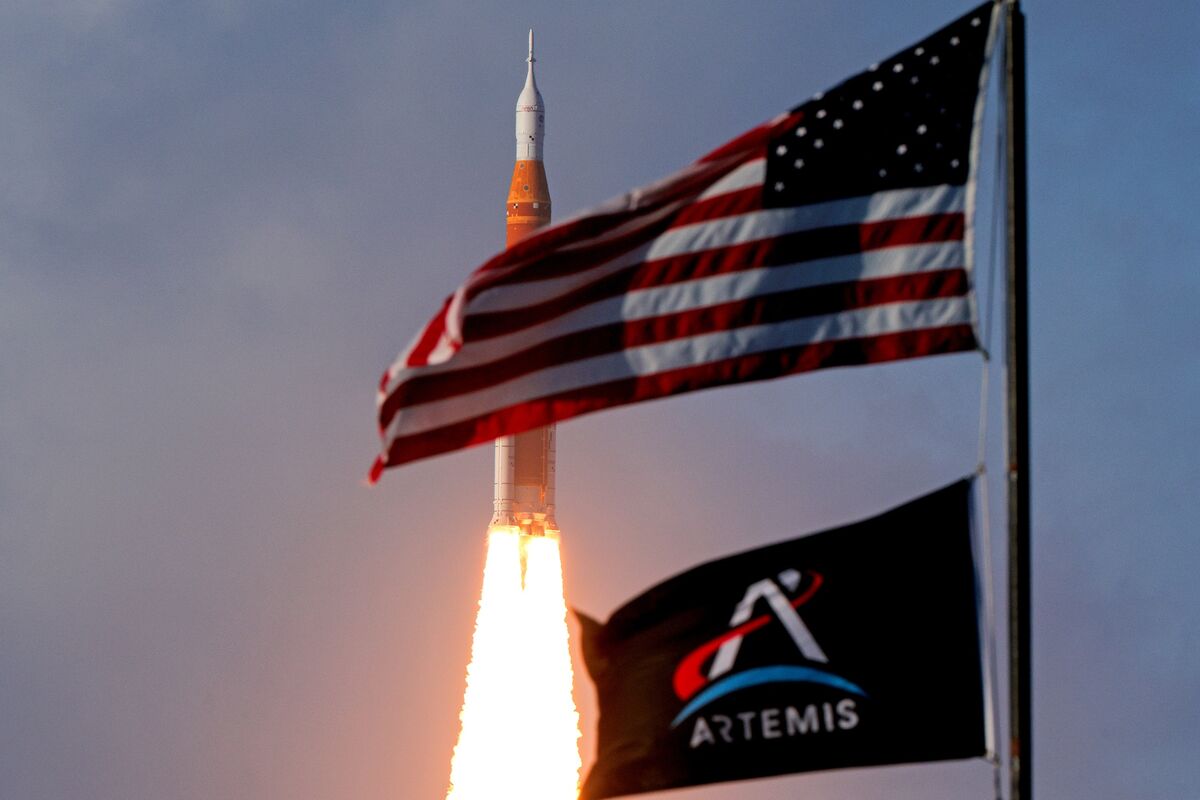
NASA’s Space Launch System (SLS) rocket, a flagship project developed by Boeing Co., has been instrumental in the Artemis program, designed to return humanity to the Moon. While the uncrewed Artemis I mission already pushed the boundaries of deep space travel for a human-rated capsule, the upcoming Artemis II mission is poised to carry astronauts farther into space than ever before. Despite these significant achievements and the anticipation of future launches, such as the one slated for April 1 from Launch Complex 39B at Kennedy Space Center, the future of Boeing’s moon rocket faces an uncertain path as the Trump administration reportedly explores competitive alternatives.
The SLS and the Artemis Program: A Giant of Exploration
The SLS stands as the most powerful rocket NASA has built since the Apollo-era Saturn V. Its development, with Boeing as the prime contractor, has been a monumental endeavor spanning over a decade and requiring billions of dollars in investment. Designed to be the heavy-lift launch vehicle for the Artemis missions, the SLS is crucial for transporting the Orion capsule, astronauts, and large payloads to lunar orbit and beyond. The Artemis I mission, which successfully completed an uncrewed journey around the Moon in 2022, validated much of the system's technology and capability, laying the groundwork for human return to the lunar surface.
The Shadow of Political Uncertainty
The mention that the Trump administration is “looking to competitors for a replacement” introduces a layer of political uncertainty that is not unfamiliar to large-scale space programs. Historically, NASA projects have been subject to shifts in direction with each new presidential administration, often leading to reviews, budget cuts, or even the cancellation of long-term programs. A potential re-evaluation of the SLS under a new administration could stem from various factors, including concerns over cost, development timelines, or the pursuit of more innovative and potentially more economical solutions from the commercial space sector.
The Rise of Commercial Competitors
The landscape of space exploration has dramatically changed in recent years with the emergence of commercial space companies such as SpaceX, Blue Origin, and United Launch Alliance (ULA). These companies are developing their own heavy-lift, reusable launch vehicles, like SpaceX's Starship or Blue Origin's New Glenn, which promise to drastically reduce launch costs and accelerate access to space. The Trump administration, known for its emphasis on efficiency and collaboration with the private sector, might see these alternatives as an opportunity to optimize NASA's budget and foster competition, potentially challenging the dominant position of Boeing's SLS.
Implications for Boeing and NASA's Strategy
For Boeing, this situation represents a significant challenge. The SLS has been a high-profile contract and a consistent source of revenue and expertise for the company. Should NASA opt to reduce its reliance on the SLS or seek a replacement, Boeing could see its role in the future of human spaceflight diminished. For NASA, the decision is complex: balancing the investment already made in the SLS with the potential for more agile and cost-effective solutions offered by the commercial sector. The agency's strategy for returning to the Moon and, eventually, to Mars, will largely depend on how it navigates this intersection between established technology and emerging innovation.
A Future in Constant Flux
Ultimately, the future of Boeing's moon rocket, and by extension, a significant part of the Artemis program, hangs in a political and economic balance. While the SLS and Orion continue to demonstrate their technical prowess with missions like the upcoming Artemis II, decision-makers in Washington might be charting a new course. Space exploration, by its very nature, is a long-term endeavor requiring vision and consistency. However, the political reality and the dynamism of the commercial space market ensure that the path to the stars is never linear, and even giants like the SLS must adapt to an ever-evolving environment.
Related articles

NASA Reveals New Path for Earth's Essential Life Elements
A recent study, published in Science Advances, uncovers how early Earth may have received phosphorus and nitrogen, highlighting Jupiter's critical role.
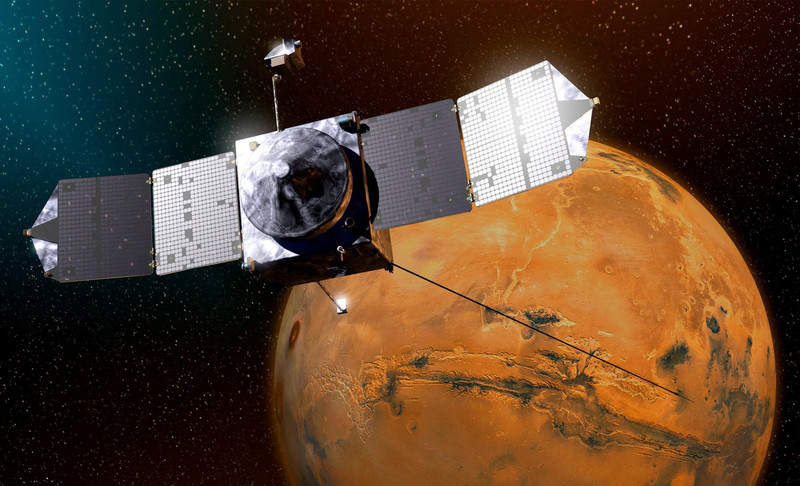
NASA's Maven Mars Orbiter Declared Out of Service After Six Months of Silence
Following an anomaly that disrupted its orbit and depleted its batteries, the Maven spacecraft, vital for understanding Mars' atmosphere, has ended its active mission. Its scientific data remains an invaluable legacy.
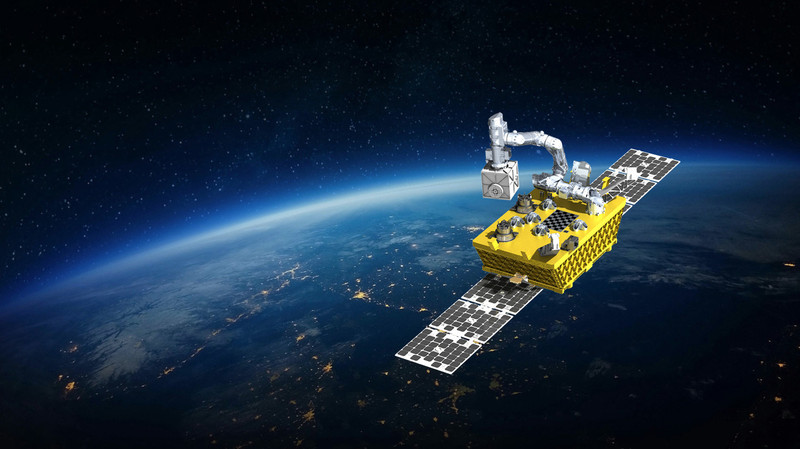
NASA Space Robotics Challenge
NASA invites U.S. researchers to submit proposals for experiments using a robotic arm that will be sent to low Earth orbit as part of the Fly Foundational Robots mission.
Latest news
View all
Stuntman Hollywood: Returns After 19 Years to PS5, Xbox Series, and PC
The iconic action and vehicular stunt franchise makes its comeback courtesy of Saber Interactive, promising a dose of nostalgia and adrenaline for the new generation.

Windows Drops NTLM: Microsoft Boosts Security with Kerberos
Microsoft is taking a crucial step to bolster security in Windows 11, announcing the deprecation of NTLM, its oldest authentication protocol, in favor of Kerberos.

Google Launches Gemma 4 12B: Local AI for Your Laptop with 16GB RAM
Google's new artificial intelligence model aims to democratize access to generative AI, allowing it to run on average consumer computers.
Comments (0)
No comments yet. Be the first!
Leave a comment