
Blue Origin Achieves Milestone: New Glenn Rocket Reuses Booster in Orbit
Jeff Bezos's company demonstrates its capability to recover key components, an advancement positioning it against competitors in the space race.
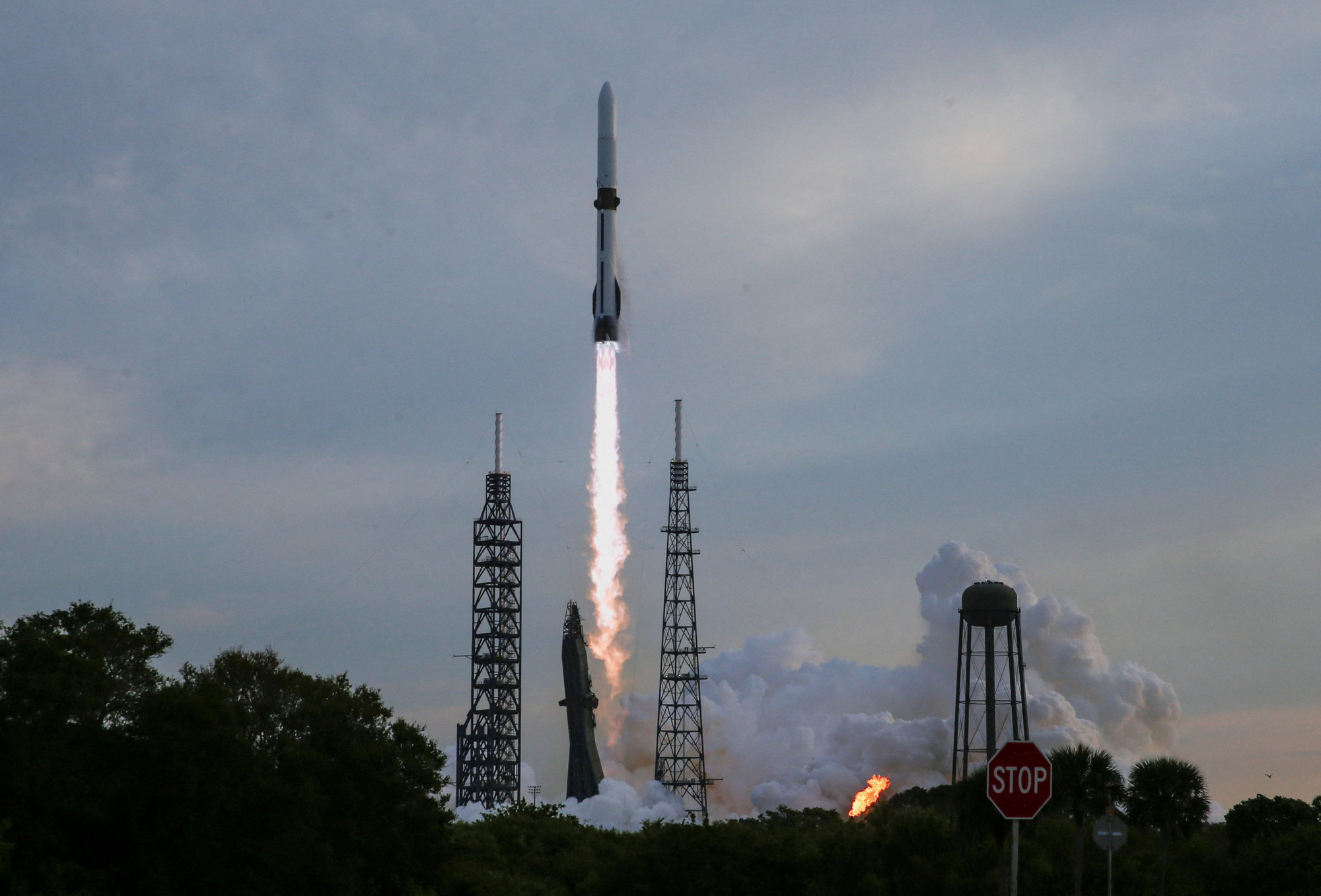
Blue Origin, Jeff Bezos's space company, achieved a pivotal milestone by reusing a New Glenn rocket booster in orbit for the first time. This breakthrough followed the rocket's third spaceflight, launching from Cape Canaveral, Florida, at 7:25 AM local time. The mission carried a satellite from AST SpaceMobile Inc. This success demonstrates Blue Origin's capability to match SpaceX's logistical prowess in rocket recovery.
The launch proceeded precisely from the Cape Canaveral pad. Just ten minutes after liftoff, at 7:35 AM, the New Glenn's first stage successfully returned. It landed vertically onto a recovery barge in the Atlantic Ocean. This recovery method sets a standard previously dominated only by SpaceX after orbital missions.
AST SpaceMobile Inc.'s satellite served as the mission's primary payload. Its deployment was expected approximately 75 minutes after launch. This marks the first satellite launched by the U.S. tech company in 2026. AST SpaceMobile already had seven spacecraft in orbit at the start of the year.
The company announced ambitious plans for 2026 in March. They intend to launch up to 60 additional satellites. The goal is to strengthen a network offering direct mobile connectivity. These figures reflect AST's rapid expansion in an increasingly competitive space telecommunications market.
This flight is crucial for the New Glenn project's commercial viability. The program has faced years of delays, with longer-than-expected intervals between missions. In November 2025, Blue Origin had already recovered a booster during the rocket's second flight. This step was essential for systematic component reuse and cost optimization.
The capability for reuse is key to optimizing costs and accelerating operations.
The demonstration of in-orbit reusability represents a critical advancement. Dave Limp, Blue Origin's CEO, shared optimistic projections. He estimates between eight and twelve New Glenn launches for 2026. Limp stated, "We have plenty of hardware to do it." He attributed these goals to "unprecedented demand" for launches. The expansion of satellite services drives this growth.
Limp revealed that in early 2025, they projected six to eight flights for that year. However, they ultimately completed only two launches. This new reusability capability is vital for meeting ambitious future targets. Competition in the space sector remains fierce.
These developments unfold amidst an intense global technological race. SpaceX and Amazon.com Inc. are competing to provide connectivity to devices from space. Amazon, notably, acquired Globalstar Inc. on April 14. With this acquisition, Amazon formally announced its entry into the satellite sector.
Article topics
Related articles

NASA Reveals New Path for Earth's Essential Life Elements
A recent study, published in Science Advances, uncovers how early Earth may have received phosphorus and nitrogen, highlighting Jupiter's critical role.
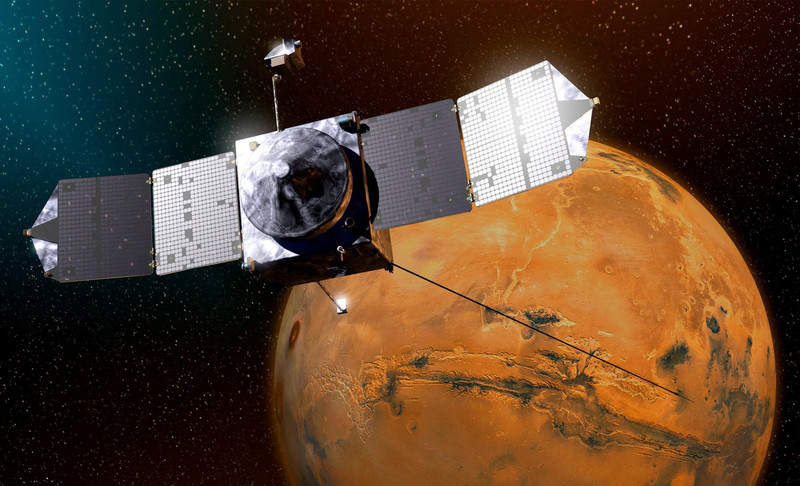
NASA's Maven Mars Orbiter Declared Out of Service After Six Months of Silence
Following an anomaly that disrupted its orbit and depleted its batteries, the Maven spacecraft, vital for understanding Mars' atmosphere, has ended its active mission. Its scientific data remains an invaluable legacy.
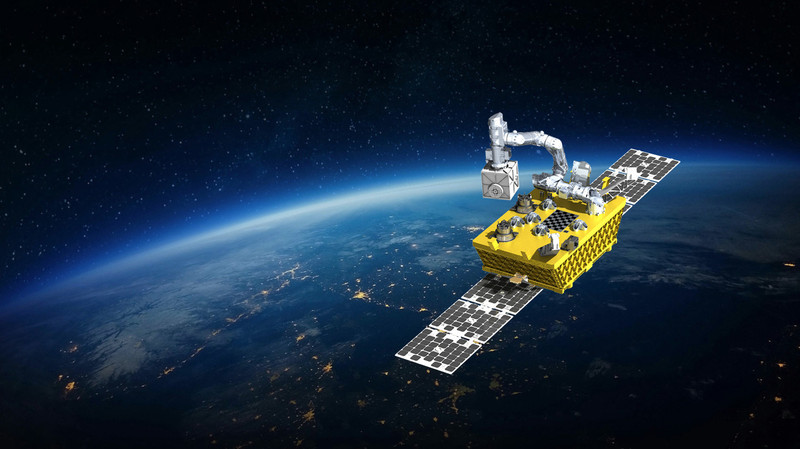
NASA Space Robotics Challenge
NASA invites U.S. researchers to submit proposals for experiments using a robotic arm that will be sent to low Earth orbit as part of the Fly Foundational Robots mission.
Latest news
View all
Stuntman Hollywood: Returns After 19 Years to PS5, Xbox Series, and PC
The iconic action and vehicular stunt franchise makes its comeback courtesy of Saber Interactive, promising a dose of nostalgia and adrenaline for the new generation.

Windows Drops NTLM: Microsoft Boosts Security with Kerberos
Microsoft is taking a crucial step to bolster security in Windows 11, announcing the deprecation of NTLM, its oldest authentication protocol, in favor of Kerberos.
Google Launches Gemma 4 12B: Local AI for Your Laptop with 16GB RAM
Google's new artificial intelligence model aims to democratize access to generative AI, allowing it to run on average consumer computers.
Comments (0)
No comments yet. Be the first!
Leave a comment