
Artemis II: Unveiling the Far Side of the Moon and the Journey Back to Earth
The Artemis II mission has achieved a critical milestone by traversing the Moon's far side and re-establishing communication with Earth, offering new insights into crewed space exploration and the enigmatic lunar hemisphere.
A Historic Milestone in Crewed Lunar Exploration
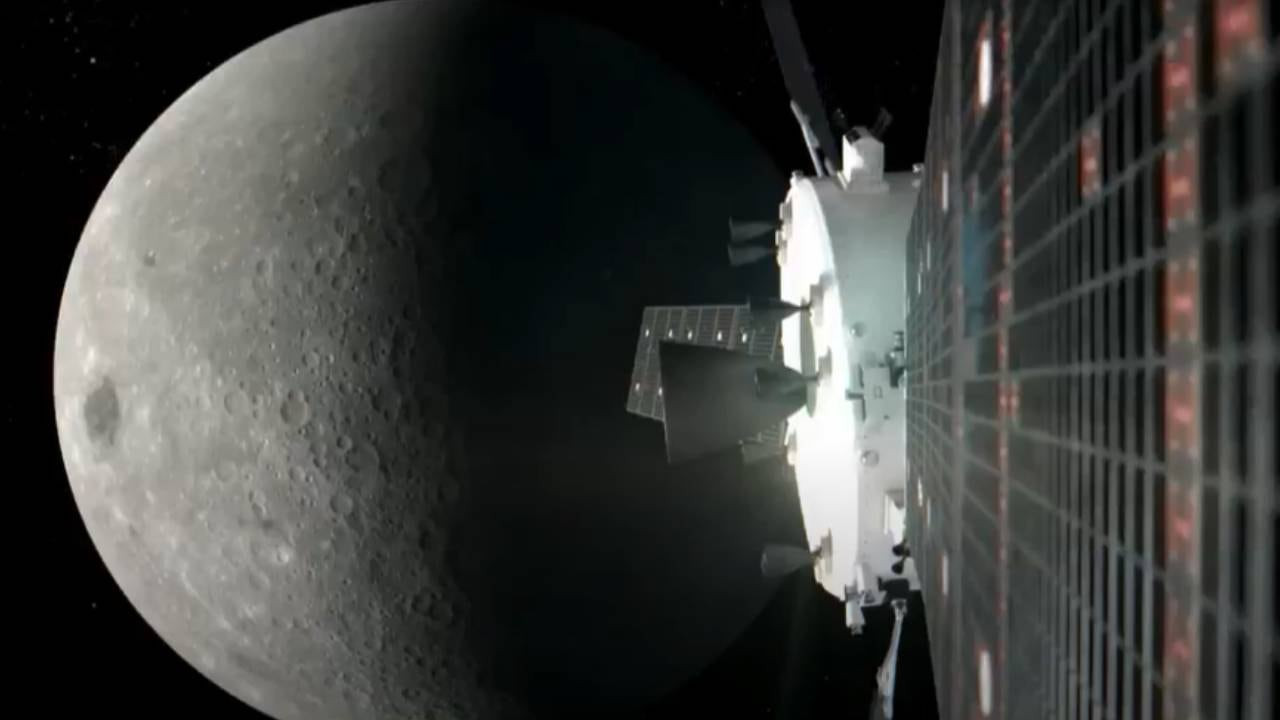
The Artemis II mission has achieved a significant breakthrough in crewed space exploration by successfully completing its traverse of the Moon's far side and re-establishing communication with Earth. This momentous occasion, confirmed by NASA, occurred when the Orion capsule was at a record-breaking distance of 406,771 kilometers from our planet—the farthest ever reached by a crewed mission. Following a period of radio silence, astronaut Christina Koch conveyed a message of calm and enthusiasm: "It's great to be back in communication with you. We are on our way back to Earth." This accomplishment not only underscores the technical prowess of NASA and its partners but also opens a new chapter in humanity's ambition to return to the Moon and, eventually, venture further to Mars.
The "Absolute Silence": A Planned and Overcome Challenge
The Orion capsule's passage over the Moon's far side represented one of the mission's most anticipated, yet also most thoroughly planned, moments of tension. For approximately 40 minutes, the spacecraft lost all communication with mission control in Houston. This interruption was not an unexpected failure but a direct and planned consequence of orbital physics: the Moon's mass itself blocked the transmission of radio signals between the capsule and Earth. NASA had fully anticipated this situation, recalling how the historic Apollo missions in the 1970s faced similar conditions. Before Artemis II, only 21 astronauts had experienced this "absolute silence" during a flyby of the far hemisphere, highlighting the exclusivity and rigor of this experience for the Artemis II crew. This challenge, far from being an obstacle, became a testament to the mission's resilience and preparation.
The Far Side: An Invaluable Natural Laboratory
What the Artemis II astronauts observed on the Moon's far side differs markedly from the region visible from Earth. Its surface is notably more mountainous and densely riddled with craters, featuring a scarcity of the vast volcanic plains, known as "maria," that characterize the near side. Furthermore, this region is considerably drier. These geological characteristics, as explained by NASA, transform the far hemisphere into an essential natural laboratory for unraveling the satellite's evolution and, by extension, the early origin and development of the Solar System. The absence of a lunar atmosphere allows astronauts to conduct astronomical observations without interference, facilitating the acquisition of high-resolution images and detailed topographical records crucial for future missions and scientific understanding.
Human Observation and Cutting-Edge Technology in Action
During the far side flyby, the Artemis II crew—comprised of Reid Wiseman, Victor Glover, Christina Koch, and Jeremy Hansen—deployed a combination of advanced technology and invaluable human observational capabilities. They utilized professional Nikon cameras equipped with lenses up to 400 millimeters and 14-24 millimeter lenses, supplemented by mobile phones, to capture images and videos under various lighting conditions. The Orion capsule itself is outfitted with an impressive array of 32 cameras and two additional professional photographic devices. The astronauts conducted real-time observations, noting subtle variations in the lunar surface's color and brightness. This direct, qualitative information is invaluable, as it aids in interpreting images taken by robotic probes and orbiters, adding a layer of detail and context that only human perception can provide.
Adapting to Light and Shadow on the Far Hemisphere
Contrary to popular belief, the Moon's far hemisphere does not remain perpetually dark. Approximately 20% of its expanse receives sunlight at any given time, meaning the Artemis II astronauts had to rapidly adapt to dynamic lighting changes to optimize the quality of their observations. This lighting variability presented both a challenge and an opportunity to capture the lunar surface under different angles and conditions. NASA has emphasized that "human eyes and brains are very sensitive to subtle changes in color, texture, and other surface features," underscoring the invaluable role of direct observation in identifying geological details and phenomena that might otherwise go unnoticed by automated systems. The crew's ability to process and contextualize these real-time observations is a testament to the irreplaceable role of humans in deep space exploration.
The Legacy of Artemis II: A Bridge to the Future
The success of Artemis II in its journey around the Moon's far side and its return to Earth is not merely a technical achievement but a foundational step toward the long-term vision of space exploration. This mission has validated critical systems, provided essential data about the lunar environment, and demonstrated human capability to operate in deep space. The knowledge gained regarding the far side's geology, observation techniques, and the resilience of the crew and the Orion spacecraft will be crucial for future Artemis missions, including the anticipated return of humans to the lunar surface. Artemis II is more than just a trip around the Moon; it is a bridge connecting our present with a future where humanity ventures further than ever before, laying the groundwork for a sustainable presence on the Moon and the eventual exploration of Mars.
Related articles

NASA Reveals New Path for Earth's Essential Life Elements
A recent study, published in Science Advances, uncovers how early Earth may have received phosphorus and nitrogen, highlighting Jupiter's critical role.
NASA's Maven Mars Orbiter Declared Out of Service After Six Months of Silence
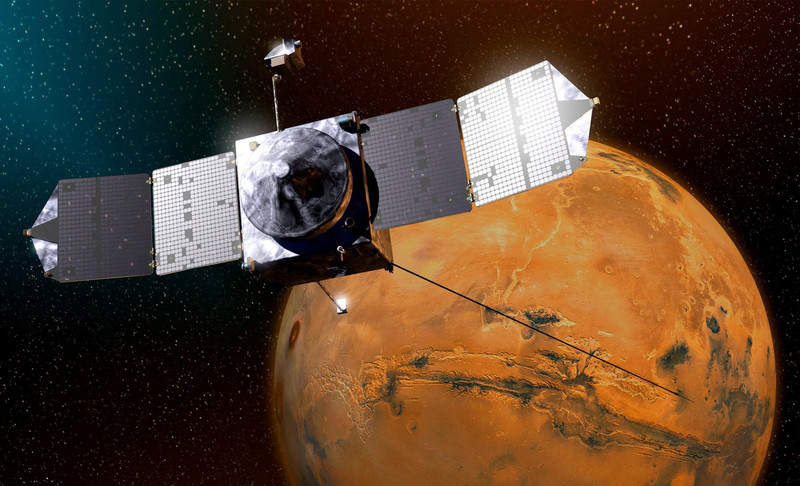
Following an anomaly that disrupted its orbit and depleted its batteries, the Maven spacecraft, vital for understanding Mars' atmosphere, has ended its active mission. Its scientific data remains an invaluable legacy.
NASA Space Robotics Challenge
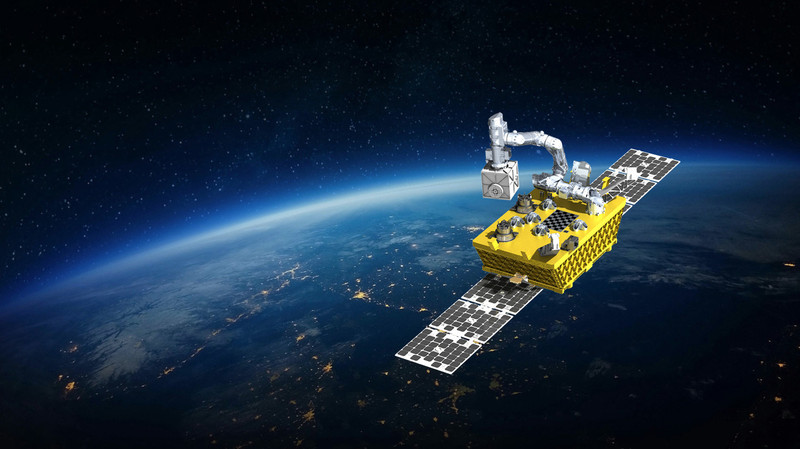
NASA invites U.S. researchers to submit proposals for experiments using a robotic arm that will be sent to low Earth orbit as part of the Fly Foundational Robots mission.
Latest news
View all
Stuntman Hollywood: Returns After 19 Years to PS5, Xbox Series, and PC
The iconic action and vehicular stunt franchise makes its comeback courtesy of Saber Interactive, promising a dose of nostalgia and adrenaline for the new generation.

Windows Drops NTLM: Microsoft Boosts Security with Kerberos
Microsoft is taking a crucial step to bolster security in Windows 11, announcing the deprecation of NTLM, its oldest authentication protocol, in favor of Kerberos.

Google Launches Gemma 4 12B: Local AI for Your Laptop with 16GB RAM
Google's new artificial intelligence model aims to democratize access to generative AI, allowing it to run on average consumer computers.
Comments (0)
No comments yet. Be the first!
Leave a comment