
AES 128 remains secure in a post-quantum world
Despite advances in quantum computing, experts confirm that AES 128 still offers strong protection today.

The widely used AES 128 encryption standard remains secure even as quantum computing advances. Cryptography expert Filippo Valsorda clarifies that the common belief about its vulnerability is a myth based on misconceptions.
Since its adoption by NIST in 2001, AES has been a trusted encryption method, with key sizes of 128, 192, and 256 bits. Among these, 128 bits became the preferred choice for its balance of security and efficiency. Over 30 years, no vulnerabilities have been found, and brute-force attacks would take billions of years, even with the combined power of bitcoin mining resources in 2026.
The concern arises from quantum algorithms like Grover’s, which could theoretically halve the effective security. However, Valsorda explains that such a reduction isn’t straightforward in practice, as the parallelization needed for a relevant quantum computer is not yet feasible. The cryptography community remains confident in AES 128’s resilience for the foreseeable future.
In summary, the idea that AES 128 will become obsolete due to quantum computers is a myth that doesn’t reflect current technological realities. The security community continues to trust this standard and develop new methods to protect data in an increasingly digital and quantum era.
Article topics
Related articles

NASA Reveals New Path for Earth's Essential Life Elements
A recent study, published in Science Advances, uncovers how early Earth may have received phosphorus and nitrogen, highlighting Jupiter's critical role.
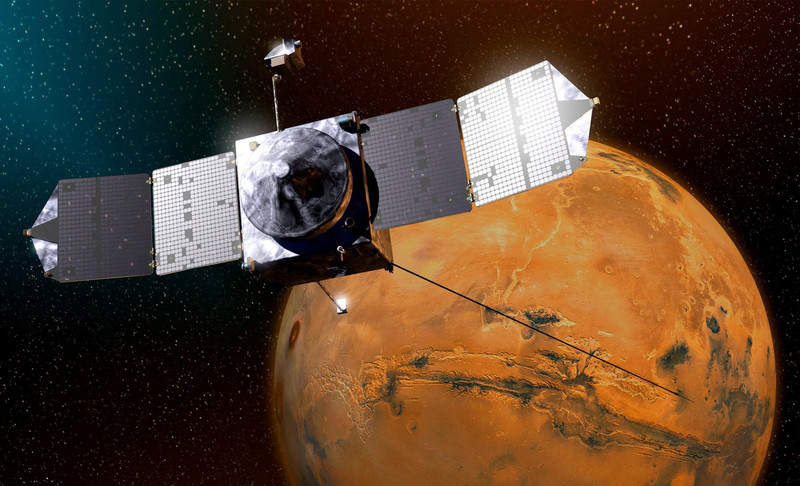
NASA's Maven Mars Orbiter Declared Out of Service After Six Months of Silence
Following an anomaly that disrupted its orbit and depleted its batteries, the Maven spacecraft, vital for understanding Mars' atmosphere, has ended its active mission. Its scientific data remains an invaluable legacy.

NASA Space Robotics Challenge
NASA invites U.S. researchers to submit proposals for experiments using a robotic arm that will be sent to low Earth orbit as part of the Fly Foundational Robots mission.
Latest news
View all
Stuntman Hollywood: Returns After 19 Years to PS5, Xbox Series, and PC
The iconic action and vehicular stunt franchise makes its comeback courtesy of Saber Interactive, promising a dose of nostalgia and adrenaline for the new generation.

Windows Drops NTLM: Microsoft Boosts Security with Kerberos
Microsoft is taking a crucial step to bolster security in Windows 11, announcing the deprecation of NTLM, its oldest authentication protocol, in favor of Kerberos.
Google Launches Gemma 4 12B: Local AI for Your Laptop with 16GB RAM
Google's new artificial intelligence model aims to democratize access to generative AI, allowing it to run on average consumer computers.
Comments (0)
No comments yet. Be the first!
Leave a comment