
27 Planets Found Orbiting Two Suns, Just Like in Star Wars
An astronomical discovery has revealed 27 potential planets orbiting twin stars, a phenomenon previously more common in science fiction than reality.

The Star Wars galaxy just got a little closer to reality! A fascinating astronomical discovery has unveiled 27 candidate planets that orbit two suns. This finding, which instantly evokes the worlds of Tatooine, significantly expands our understanding of planetary system diversity across the universe.
The study, spearheaded by researchers from the University of New South Wales (UNSW), leveraged data from the Kepler space telescope. While the final confirmation of their planetary nature is still underway, the preliminary results are incredibly promising. The team has already identified 27 such objects in their pilot study and is gearing up for the most exciting phase: determining which are indeed real planets.
The variety among these candidates is astonishing. Some possess masses similar to Neptune, while others are colossal, exceeding Jupiter's mass by up to ten times. Their distances from Earth also vary considerably, ranging from 650 to 18,000 light-years away, offering a glimpse into the vastness of the cosmos.
This discovery is particularly significant because over half of the stars in the universe are part of binary or multiple star systems. Until now, our understanding of these environments has been limited, meaning we've been overlooking a substantial portion of the cosmic landscape. As Montet, one of the researchers, aptly put it, “we’ve painted half the picture, and the other half of the canvas is completely blank.”
The team is already planning their next steps, which will involve utilizing the Anglo-Australian Telescope. The goal is to obtain detailed light spectra that will confirm the planetary nature of these candidates. They will also work to rule out the presence of other celestial objects like brown dwarfs, white dwarfs, or black holes, ensuring the accuracy of the findings.
“If circumbinary planets turn out to be habitable, that means life could exist anywhere.”
Optimism is palpable among the scientists. They envision a future where the analysis of massive datasets will allow for the cataloging of thousands of Tatooine-like worlds. The implication that these circumbinary planets could be habitable opens up the possibility that life exists in countless corners of the universe.
Margo Thornton, part of the research team, emphasizes that this quest reflects our existential curiosity. Understanding the diversity of other worlds, she believes, is the crucial first step in answering the profound question: are we alone in the universe?
Article topics
Related articles
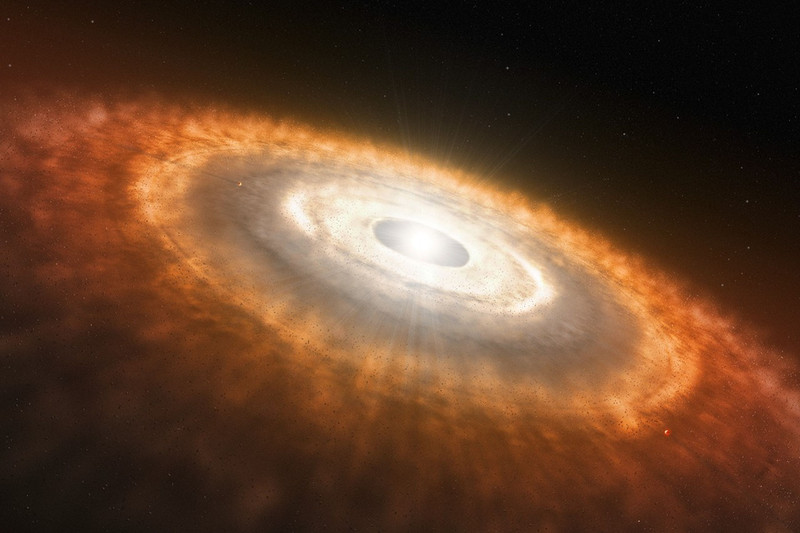
NASA Reveals New Path for Earth's Essential Life Elements
A recent study, published in Science Advances, uncovers how early Earth may have received phosphorus and nitrogen, highlighting Jupiter's critical role.
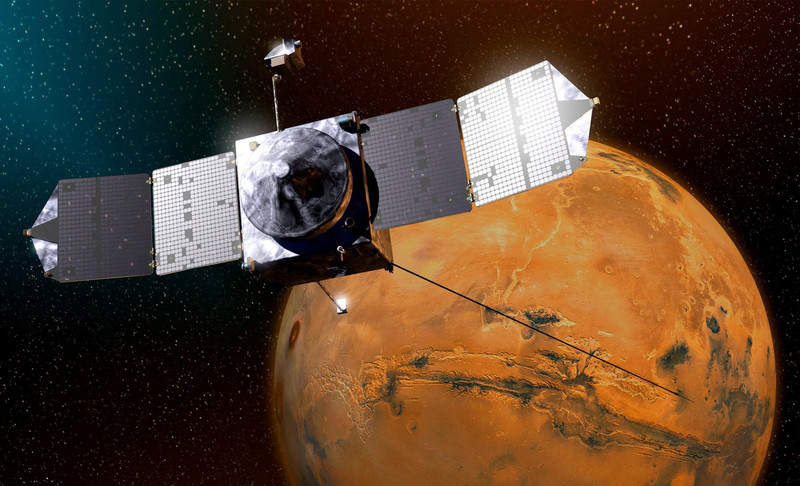
NASA's Maven Mars Orbiter Declared Out of Service After Six Months of Silence
Following an anomaly that disrupted its orbit and depleted its batteries, the Maven spacecraft, vital for understanding Mars' atmosphere, has ended its active mission. Its scientific data remains an invaluable legacy.
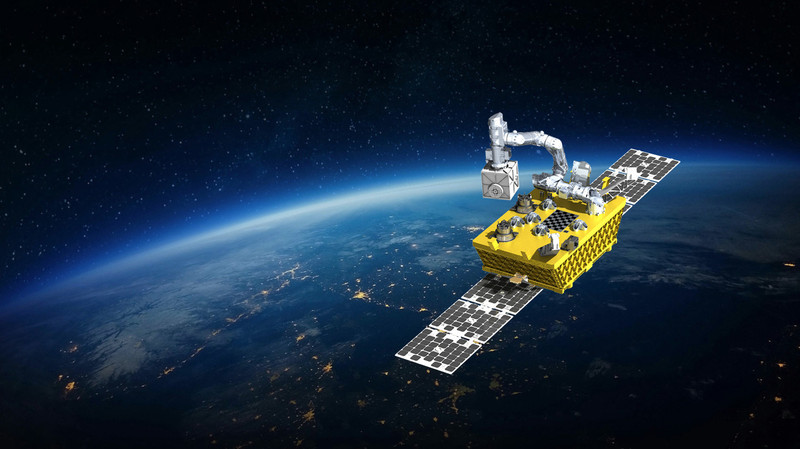
NASA Space Robotics Challenge
NASA invites U.S. researchers to submit proposals for experiments using a robotic arm that will be sent to low Earth orbit as part of the Fly Foundational Robots mission.
Latest news
View all
Stuntman Hollywood: Returns After 19 Years to PS5, Xbox Series, and PC
The iconic action and vehicular stunt franchise makes its comeback courtesy of Saber Interactive, promising a dose of nostalgia and adrenaline for the new generation.

Windows Drops NTLM: Microsoft Boosts Security with Kerberos
Microsoft is taking a crucial step to bolster security in Windows 11, announcing the deprecation of NTLM, its oldest authentication protocol, in favor of Kerberos.
Google Launches Gemma 4 12B: Local AI for Your Laptop with 16GB RAM
Google's new artificial intelligence model aims to democratize access to generative AI, allowing it to run on average consumer computers.
Comments (0)
No comments yet. Be the first!
Leave a comment