
Vercel Unveils Zero-Configuration Go Backend Support
Vercel, the leading frontend development platform, has introduced revolutionary zero-configuration deployment support for Go backends. This enhancement elevates Go to a 'first-class backend' status, drastically simplifying the process for developers and optimizing resource management.

A New Era for Go Backends on Vercel
Vercel, widely recognized for its focus on developer experience and performance optimization for frontend applications, has taken a significant step towards solidifying its platform as a comprehensive solution. The company has officially announced support for Go backends with 'zero-configuration' deployment capabilities. This new feature represents a major milestone, as Vercel now recognizes Go servers as first-class backends, integrating them natively into its ecosystem and eliminating the traditional complexities associated with their deployment.
Simplifying Deployment with Zero-Configuration
The promise of 'zero-configuration' lies at the heart of this new functionality. Historically, developers looking to integrate backends on Vercel often resorted to conventions like the /api folder for serverless functions or manual configurations in vercel.json to redirect requests. With this update, Vercel completely automates the process. The platform now automatically detects and provisions the necessary resources, configuring the Go application without requiring manual intervention or additional configuration files. This not only accelerates the development cycle but also reduces the learning curve and the likelihood of errors, allowing teams to focus more on business logic and less on infrastructure.
Go as a First-Class Backend: Power and Efficiency
The elevation of Go to 'first-class backend' status on Vercel underscores the platform's commitment to technological diversity and efficiency. Go, known for its exceptional performance, robust concurrency, and clean syntax, is a popular choice for building high-performance APIs and microservices. By treating Go in this manner, Vercel not only simplifies the lives of Go developers but also opens its platform to a wider range of applications that demand the power and reliability Go can offer. This native integration ensures that Go backends benefit from Vercel's optimized infrastructure from day one, without the need for complex adaptations.
Fluid Compute and Active CPU Pricing: Intelligent Scaling
One of the most notable features of this new support is its integration with Vercel's Fluid Compute technology, which comes with active CPU pricing by default. This means that Go backends deployed on Vercel will automatically scale with traffic, dynamically adjusting to demand without manual intervention. The most innovative aspect is the pricing model: developers will only pay for the active CPU time their applications actually use, rather than paying for idle capacity. This approach is fundamental for cost optimization, especially for applications with variable traffic patterns, ensuring that resources are used efficiently and that expenses align directly with actual usage.
Impact on Full-Stack Development and the Ecosystem
This Vercel initiative has significant implications for full-stack development. By simplifying the integration of robust Go backends with its cutting-edge frontend capabilities, Vercel positions itself as an even more attractive solution for teams looking to build complete, high-performance applications. The combination of rapid deployments, automatic scaling, cost efficiency, and the power of Go creates an unparalleled development environment. This evolution not only benefits individual developers but also strengthens the Vercel ecosystem, attracting a broader community of backend engineers and consolidating its vision for a faster, more accessible web for everyone.
Article topics
Related articles

Windows Drops NTLM: Microsoft Boosts Security with Kerberos
Microsoft is taking a crucial step to bolster security in Windows 11, announcing the deprecation of NTLM, its oldest authentication protocol, in favor of Kerberos.

Chrome Bolsters Security with DBSC Against Cookie Theft
Google Chrome has rolled out a new DBSC feature, linking sessions to your hardware to protect accounts from credential theft attacks.

Roku's home screen gets an AI-powered refresh for 2026
Roku is rolling out a significant update to its main interface, promising a more personalized experience with integrated advertising.
Latest news
View all
Stuntman Hollywood: Returns After 19 Years to PS5, Xbox Series, and PC
The iconic action and vehicular stunt franchise makes its comeback courtesy of Saber Interactive, promising a dose of nostalgia and adrenaline for the new generation.
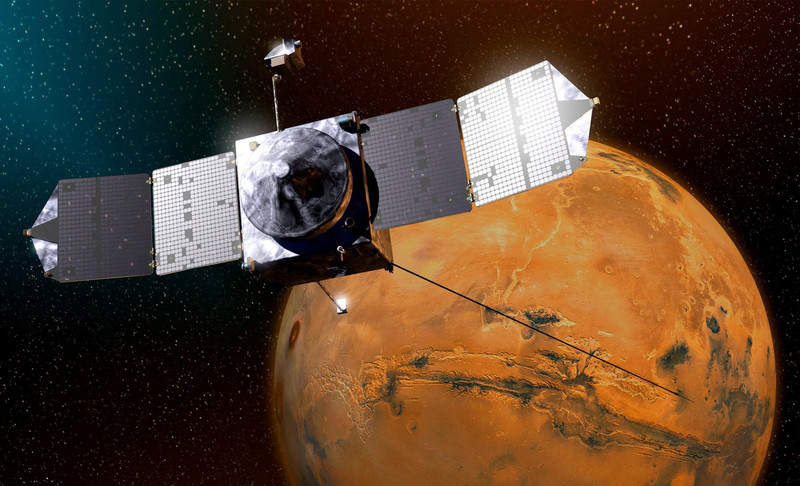
NASA's Maven Mars Orbiter Declared Out of Service After Six Months of Silence
Following an anomaly that disrupted its orbit and depleted its batteries, the Maven spacecraft, vital for understanding Mars' atmosphere, has ended its active mission. Its scientific data remains an invaluable legacy.

NASA Reveals New Path for Earth's Essential Life Elements
A recent study, published in Science Advances, uncovers how early Earth may have received phosphorus and nitrogen, highlighting Jupiter's critical role.
Comments (0)
No comments yet. Be the first!
Leave a comment