
Starlink Internet Gets Faster: FCC Approves Lower Elevation Angles
The U.S. Federal Communications Commission (FCC) has approved a key request from SpaceX. This decision allows Starlink antennas to receive satellite signals with greater flexibility, enhancing service speed and coverage.

Starlink, Elon Musk's innovative satellite internet service, is poised to deliver faster browsing and expanded coverage. The U.S. Federal Communications Commission (FCC) has authorized Starlink antennas to receive signals at lower elevation angles. This approval, requested by SpaceX in March, marks a significant advancement for users worldwide.
To understand the importance of this change, it is crucial to grasp Starlink's operational principle. The system relies on a constellation of low-Earth orbit satellites communicating with ground-based parabolic antennas. These antennas must point skyward to capture signals, and the "elevation angle" refers to the angle between the horizon and the satellite's position. Previously, antennas could only connect if the satellite was at a minimum elevation of 25 degrees above the horizon.
SpaceX's application to the FCC sought to modify these technical conditions. The request covered current antenna models, including the Starlink Mini, the second-generation antenna, and the original first-generation model. The recent FCC approval reduces the minimum allowed elevation angle to 20 degrees above the horizon.
While Elon Musk's company has not publicly detailed this specific enhancement, the authorization aligns with broader FCC initiatives. The regulatory body aims to modernize satellite internet regulations, many of which date back decades. This technical adjustment represents a concrete step towards superior performance for space-based connectivity systems.
Lowering the minimum elevation angle from 25 to 20 degrees allows Starlink antennas to maintain connection for longer and under more varied conditions.
A lower minimum elevation angle brings direct and highly positive effects to the user experience:
- Increased Coverage: Antennas can connect to a satellite for an extended period, even when it is closer to the horizon. This is vital in areas with partial obstructions like trees, buildings, or mountains.
- Fewer Interruptions: By maintaining the link for longer, the possibility of losing connection as a satellite moves away is reduced. Service stability improves significantly.
- Improved High-Latitude Service: In regions near the poles, satellites often appear closer to the horizon. A lower minimum elevation angle greatly facilitates connectivity in these areas.
In summary, this technical modification enables Starlink antennas to maintain connection for longer durations and under more varied environmental conditions. This directly translates into a substantial improvement in service stability and availability. It is excellent news for the Starlink user community and for the future of global connectivity!
Article topics
Related articles

Windows Drops NTLM: Microsoft Boosts Security with Kerberos
Microsoft is taking a crucial step to bolster security in Windows 11, announcing the deprecation of NTLM, its oldest authentication protocol, in favor of Kerberos.

Chrome Bolsters Security with DBSC Against Cookie Theft
Google Chrome has rolled out a new DBSC feature, linking sessions to your hardware to protect accounts from credential theft attacks.

Roku's home screen gets an AI-powered refresh for 2026
Roku is rolling out a significant update to its main interface, promising a more personalized experience with integrated advertising.
Latest news
View all
Stuntman Hollywood: Returns After 19 Years to PS5, Xbox Series, and PC
The iconic action and vehicular stunt franchise makes its comeback courtesy of Saber Interactive, promising a dose of nostalgia and adrenaline for the new generation.
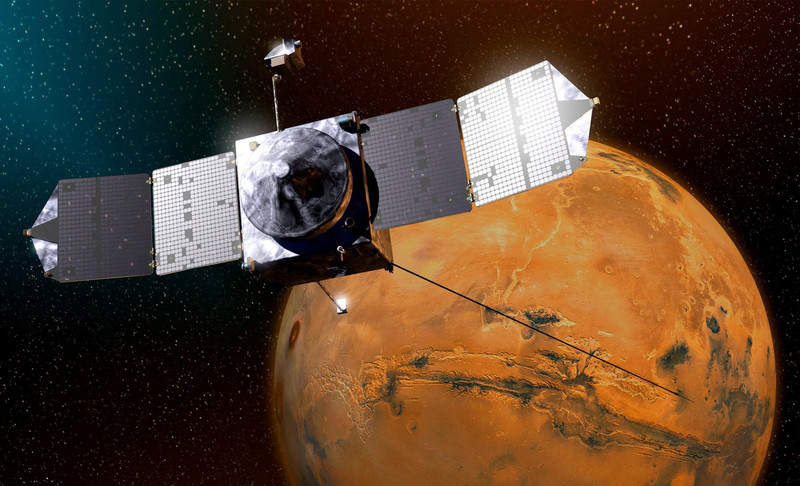
NASA's Maven Mars Orbiter Declared Out of Service After Six Months of Silence
Following an anomaly that disrupted its orbit and depleted its batteries, the Maven spacecraft, vital for understanding Mars' atmosphere, has ended its active mission. Its scientific data remains an invaluable legacy.

NASA Reveals New Path for Earth's Essential Life Elements
A recent study, published in Science Advances, uncovers how early Earth may have received phosphorus and nitrogen, highlighting Jupiter's critical role.
Comments (0)
No comments yet. Be the first!
Leave a comment