
ORBIT Robotics Unveils Helios, the Legless Four-Armed Robot for Space
This innovative design from ORBIT Robotics aims to revolutionize maintenance tasks on space stations, optimizing astronaut time and efficiency.

How many arms does a robot need to conquer space? ORBIT Robotics introduces Helios, a bold proposition featuring four arms and no legs, specifically designed to assist astronauts on space stations and optimize operations in microgravity environments. This radical approach seeks to streamline logistics and significantly reduce labor costs in the future of space exploration.
While the robotics industry often showcases humanoids like Optimus or quadrupeds such as the R1 from Unitree Robotics, a company from China, Helios breaks the mold. Its four-armed, legless design might seem unusual, but ORBIT Robotics envisions it as a true "robot for the future," though its primary utility will fully emerge once space infrastructure becomes more widespread.
With its four arms, Helios is a more optimal candidate for tasks like loading and unloading inventory, sorting objects, and registering stock in microgravity zones.
Currently, space stations do not operate with the same intensity seen in science fiction, but that scenario is drawing closer. When it does, astronauts will appreciate the assistance of robots like Helios. With its four arms, Helios is a more optimal candidate for tasks like loading and unloading inventory, sorting objects, and registering stock in microgravity zones.
According to ORBIT Robotics data, space crews dedicate a significant 35% of their time to maintenance tasks. These are precisely the duties Helios could undertake, freeing astronauts to focus on more critical and complex missions.
The implementation of Helios also promises substantial economic savings. ORBIT Robotics estimates that 50 hours of human labor for loading and unloading would incur a labor cost of 140,000 dollars. The robot offers a much more economical alternative, underscoring its value in long-term operational efficiency.
A fascinating detail about Helios is its mobility system. Instead of heavy motors, its four arms utilize a "tendon system," which lightens its weight and allows for much more fluid movements. Furthermore, it features elbow joints that provide exceptional flexibility and range of motion, crucial for operating in the complex environment of a space station.
While this robot may seem ahead of its time today, it is positioned as an indispensable tool for future space bases. Its legless design restricts it to zero-gravity conditions, but it is precisely in that domain where its efficiency and multitasking capabilities will make it a valuable member of any space team, reducing workload and costs associated with human exploration of the cosmos.
Article topics
Related articles

Windows Drops NTLM: Microsoft Boosts Security with Kerberos
Microsoft is taking a crucial step to bolster security in Windows 11, announcing the deprecation of NTLM, its oldest authentication protocol, in favor of Kerberos.

Chrome Bolsters Security with DBSC Against Cookie Theft
Google Chrome has rolled out a new DBSC feature, linking sessions to your hardware to protect accounts from credential theft attacks.

Roku's home screen gets an AI-powered refresh for 2026
Roku is rolling out a significant update to its main interface, promising a more personalized experience with integrated advertising.
Latest news
View all
Stuntman Hollywood: Returns After 19 Years to PS5, Xbox Series, and PC
The iconic action and vehicular stunt franchise makes its comeback courtesy of Saber Interactive, promising a dose of nostalgia and adrenaline for the new generation.
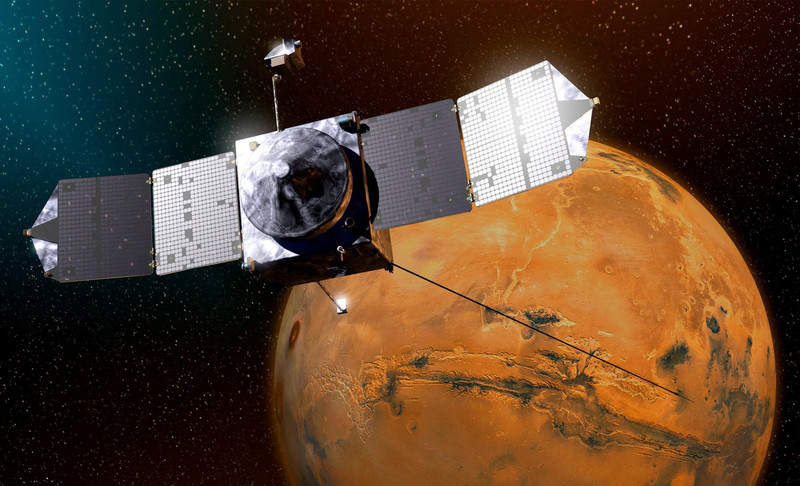
NASA's Maven Mars Orbiter Declared Out of Service After Six Months of Silence
Following an anomaly that disrupted its orbit and depleted its batteries, the Maven spacecraft, vital for understanding Mars' atmosphere, has ended its active mission. Its scientific data remains an invaluable legacy.

NASA Reveals New Path for Earth's Essential Life Elements
A recent study, published in Science Advances, uncovers how early Earth may have received phosphorus and nitrogen, highlighting Jupiter's critical role.
Comments (0)
No comments yet. Be the first!
Leave a comment