
Inflatable drones: the bet for safer and more efficient deliveries
A new generation of lightweight, low-speed drones promises to revolutionize urban logistics, prioritizing safety and sustainability over speed.

The drone logistics sector is experiencing a conceptual shift. Traditionally, the focus has been on developing large aircraft capable of carrying bulky cargo at high speeds over long distances. However, a new perspective suggests that lightweight, slow-moving drones are actually better suited for final-user deliveries.
Companies like France's Celeste Ecoflyers are driving this vision, presenting models such as the dAS10. This drone features an inflatable structure, reinforcing its commitment to safety and energy efficiency. The company argues that this configuration minimizes operational risks and reduces energy consumption.
Cybersecurity is a fundamental pillar of this proposal. Unlike larger, faster drones that could be hijacked for hostile actions, these inflatable models, described as "flying marshmallows," offer superior visibility for pilots. Furthermore, their destructive potential in the event of an impact is significantly limited.
The integration of these drones into manned airspace is facilitated by their increased visibility and low mass. Their presence is less dangerous to other aircraft, and in the unlikely event of a collision, damage would be restricted by the inflatable design itself.
From a logistical standpoint, these lightweight drones reduce infrastructure demands. While heavy drones require large landing areas, inflatable models can operate from rooftops or any flat surface, adapting better to dense urban environments.
Energy efficiency is another strong point. Reducing speed from 200 km/h to 25 km/h can decrease energy consumption by up to 64 times on a 100-kilometer route, according to company calculations. This saving allows for longer flight times and a greater number of deliveries.
The dAS10 model, registered under the F-DCCH, already holds certification according to French regulations for unmanned aerial systems (UAS). With an 8-meter wingspan and pneumatic textile wings, it offers a range of up to 300 kilometers and a battery life of 6 hours. Recent tests at Le Havre airport validated its controls and gliding capability for safe landings.
The company highlights operational robustness and slow speed as strategic advantages. These characteristics, according to Celeste Ecoflyers, reduce risks, cut costs, and promote sustainability in urban logistics.
The inflatable drone proposal introduces an approach focused on integration with existing aviation and reducing environmental impact.
The future of drone deliveries will depend on whether this vision, based on moderation and efficiency, can displace the dominant model focused on speed and scale. The "flying marshmallows" may well become the safest and most practical option for future logistics.
Article topics
Related articles

Windows Drops NTLM: Microsoft Boosts Security with Kerberos
Microsoft is taking a crucial step to bolster security in Windows 11, announcing the deprecation of NTLM, its oldest authentication protocol, in favor of Kerberos.

Chrome Bolsters Security with DBSC Against Cookie Theft
Google Chrome has rolled out a new DBSC feature, linking sessions to your hardware to protect accounts from credential theft attacks.

Roku's home screen gets an AI-powered refresh for 2026
Roku is rolling out a significant update to its main interface, promising a more personalized experience with integrated advertising.
Latest news
View all
Stuntman Hollywood: Returns After 19 Years to PS5, Xbox Series, and PC
The iconic action and vehicular stunt franchise makes its comeback courtesy of Saber Interactive, promising a dose of nostalgia and adrenaline for the new generation.
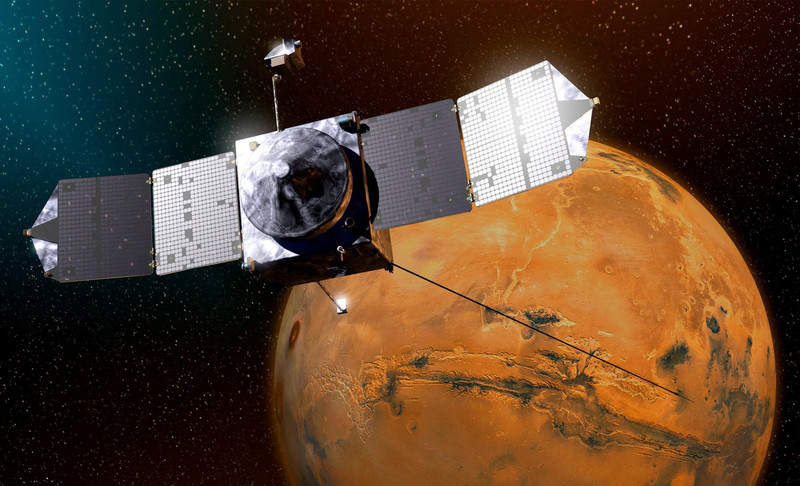
NASA's Maven Mars Orbiter Declared Out of Service After Six Months of Silence
Following an anomaly that disrupted its orbit and depleted its batteries, the Maven spacecraft, vital for understanding Mars' atmosphere, has ended its active mission. Its scientific data remains an invaluable legacy.

NASA Reveals New Path for Earth's Essential Life Elements
A recent study, published in Science Advances, uncovers how early Earth may have received phosphorus and nitrogen, highlighting Jupiter's critical role.
Comments (0)
No comments yet. Be the first!
Leave a comment